
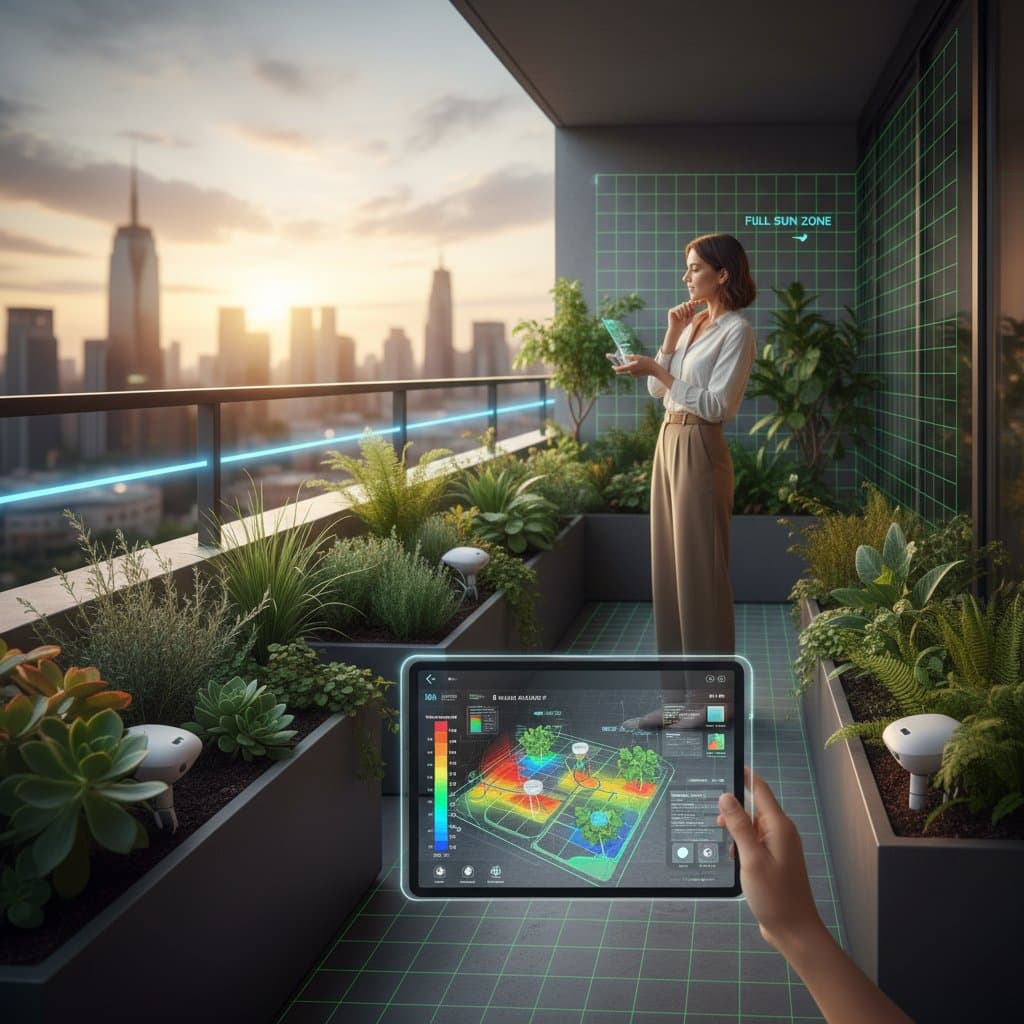
Understanding Balcony Microclimates
Balconies in urban environments create unique conditions for plant growth. Sunlight exposure varies throughout the day, casting shadows from nearby buildings or railings. Wind currents differ by height and orientation, while moisture levels fluctuate based on proximity to walls or edges. These factors combine to form microclimates, which are localized areas with distinct climatic traits separate from the broader regional weather.
Gardeners recognize that even a compact balcony spans multiple such zones. A corner bathed in morning sun might suit heat-loving herbs, while a shaded alcove favors ferns. Without mapping, plants suffer from mismatched conditions, leading to leggy growth or premature decline. Smart apps address this by providing tools to measure and visualize these variations, enabling precise placement for optimal health.
This process begins with observation but relies on data for accuracy. Apps integrate readings from built-in phone sensors or external devices to generate heat maps of light, temperature, and humidity. Users then select plants suited to each zone, drawing from extensive databases of species tolerances. The result is a balcony that functions as a cohesive garden, maximizing space and minimizing effort.
Essential Tools for Microclimate Mapping
Effective mapping requires accessible equipment to capture environmental data. Start with foundational items that leverage smartphone capabilities for immediate results.
Core Equipment
- Smartphone equipped with camera, GPS, and accelerometer for baseline measurements.
- Light meter application to quantify illuminance in lux or foot-candles across surfaces.
- Digital thermometer to record air temperatures at various heights and times.
- Hygrometer for assessing relative humidity, which influences plant transpiration.
- Notebook or spreadsheet application to log observations and track changes.
Advanced Options
- In-ground sensors that monitor soil moisture and temperature up to five centimeters deep.
- Portable weather stations connecting via Bluetooth to provide real-time wind speed data.
- Automated irrigation systems that adjust based on mapped zones and forecasted conditions.
Select tools compatible with your chosen app ecosystem to streamline data integration. For instance, probes that sync directly to mobile devices reduce manual entry errors and enable trend analysis over weeks.
Prioritizing Safety in Balcony Measurements
Urban balconies present hazards like heights and weather exposure, so safety forms the foundation of any mapping project. Secure all devices to prevent accidents, especially in gusty conditions common to high-rises.
Key precautions include:
- Attaching sensors with weatherproof clips or ties to railings and furniture.
- Opting for battery-powered or solar-charged units to eliminate extension cord risks.
- Employing extendable poles or selfie sticks for readings near edges without leaning over.
- Conducting measurements during calm weather to avoid slips on wet surfaces.
After exposure to elements, dry electronics thoroughly and store them indoors. These steps not only protect equipment but also ensure personal well-being, allowing focus on gardening rather than repairs.
Managing Costs and Time Investment
Balcony microclimate projects remain accessible, with initial setups fitting modest budgets. Free resources abound, making entry-level mapping feasible for beginners.
Cost Breakdown
- Light and weather apps: Free downloads with premium upgrades under ten dollars.
- Basic digital thermometer and hygrometer: Fifteen to twenty-five dollars from reliable retailers.
- Entry-level soil sensors: Thirty to fifty dollars per unit, reusable across seasons.
- Comprehensive smart stations: One hundred dollars or more for multi-sensor arrays.
Time commitment starts with two to three hours for site assessment and data collection. Divide this into sessions: one hour for light tracking from dawn to dusk, another for temperature and humidity logs. Ongoing monitoring requires fifteen minutes weekly to update maps and adjust plants. Over time, this investment yields dividends in reduced plant losses and enhanced yields from herbs or vegetables.
Organizing Tools for Efficient Use
Clutter undermines balcony gardening, particularly when tools mingle with pots and soil. Thoughtful storage preserves equipment longevity and facilitates quick access during measurements.
Practical Storage Solutions
- Sealed, waterproof bins positioned under benches or shelves to shield sensors from rain.
- Wall-mounted racks or magnetic strips for handheld meters and probes.
- Labeled compartments within toolboxes to separate electronics from soil amendments.
- Elevated hooks for irrigation timers, keeping them clear of ground moisture.
Regular maintenance, such as cleaning contacts and calibrating devices monthly, extends usability. This organization transforms a chaotic space into a functional urban oasis, where data collection becomes routine rather than burdensome.
Recognizing When Professional Assistance Is Needed
While most mapping tasks suit DIY approaches, certain complexities warrant expert intervention. Structural or electrical concerns demand specialized knowledge to avoid risks.
Seek professional help when:
- Drainage problems cause persistent pooling or leaks affecting lower units.
- Nearby outlets show signs of moisture damage or frequent tripping.
- Integration of powered systems exceeds basic battery setups, such as automated lighting.
Consult licensed electricians for wiring and structural engineers for load-bearing assessments. Landscape architects specializing in urban spaces can refine layouts, considering weight limits and airflow dynamics.
Before engaging services, pose targeted questions:
- Describe your experience with microclimate projects on comparable urban balconies.
- Which sensor technologies do you endorse, and what evidence supports their reliability?
- Will you supply a detailed schematic of light paths, wind patterns, and zone boundaries?
Responses revealing familiarity with compact, elevated gardens indicate the right fit over general landscaping expertise.
Step-by-Step Guide to Mapping and Planting
Embark on mapping with deliberate steps to build a data-informed garden. This methodical process uncovers balcony specifics and guides sustainable choices.
Begin by downloading a light meter app and conducting readings at ten-minute intervals from sunrise to sunset. Sketch a simple floor plan, noting peak illuminance: areas above five thousand lux suit sunflowers, while under one thousand favor shade-tolerant hostas. This initial survey highlights divisions, such as a sunny railing strip versus a north-facing wall shadow.
Incorporate temperature and humidity next. Place probes in potential zones for twenty-four hours, recording minima and maxima. For example, a breezy edge might drop five degrees cooler than sheltered corners, ideal for cool-season greens like lettuce. Feed data into a mapping app to generate color-coded zones, adjusting for seasonal shifts like winter solstice angles.
Select and relocate plants accordingly. Database features in apps suggest varieties: lavender for dry, windy spots; impatiens for humid shade. Monitor weekly, tweaking positions as growth patterns emerge. Within a month, expect vigorous rooting and foliage density, validating the mapping's precision.
Sustaining Vibrant Balcony Zones Year-Round
Mapped microclimates evolve with seasons, requiring adaptive maintenance for enduring success. Quarterly reassessments account for changing sun arcs and temperature swings, ensuring zones remain relevant.
Implement seasonal strategies: prune summer overgrowth to restore airflow, insulate pots against frost, and refresh soil nutrients based on sensor alerts. Apps often include reminders for these tasks, integrating weather forecasts to preempt issues like drought stress.
The payoff extends beyond aesthetics. Healthier plants attract pollinators, boosting urban biodiversity, and yield harvests from compact spaces. This data-driven method empowers gardeners to cultivate resilient greenery, turning balconies into productive retreats amid cityscapes.