
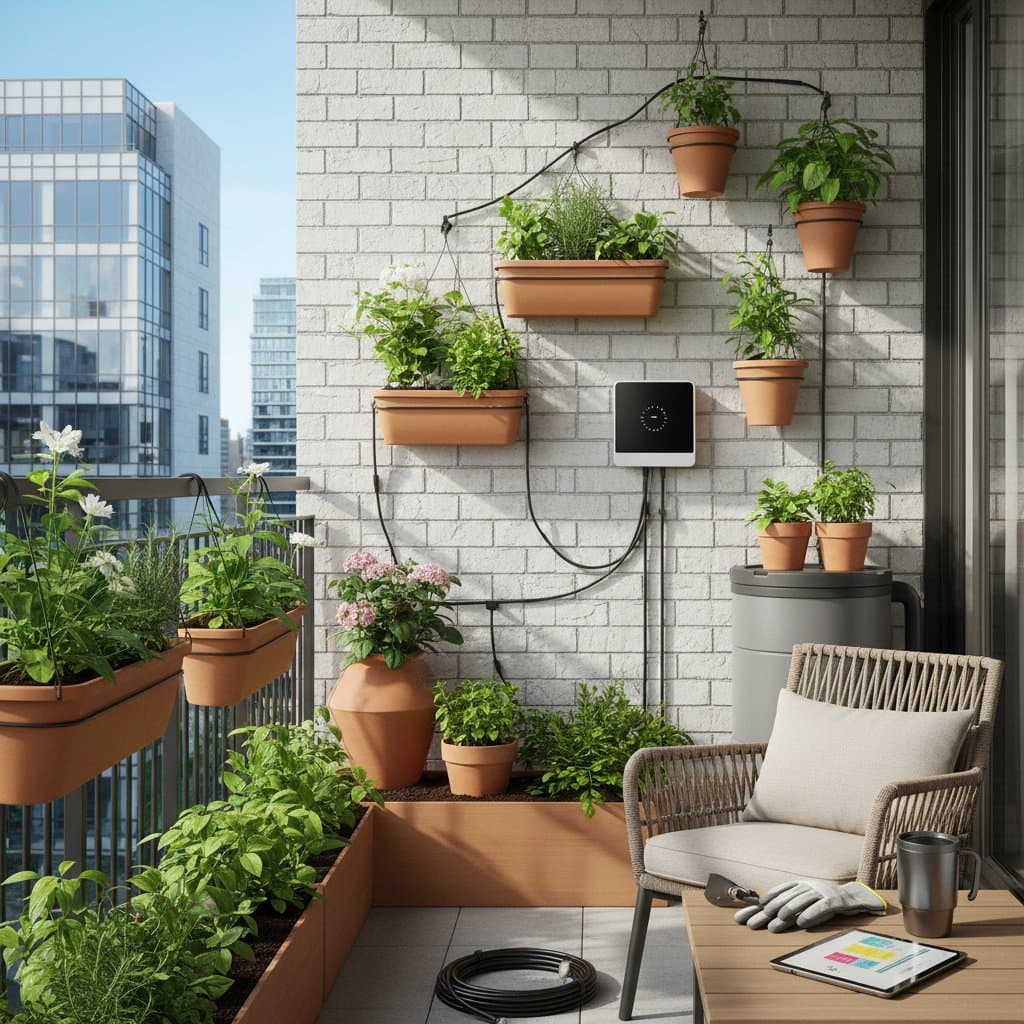
Balconies That Water Themselves: Micro-Drip Future
Your balcony plants need steady moisture, but few city dwellers have time to water daily. A micro-drip irrigation system solves that with quiet precision. It releases water in small amounts right to the root zone. The result is less waste, healthier plants, and more freedom for you. You set it once, and it runs while you work, travel, or rest.
This guide shows how to set up a simple automated micro-drip system on a balcony, what tools you need, and how to keep it running for years.
Overview
A micro-drip system is a network of thin tubing that delivers water through small emitters or drippers. Each dripper releases a tiny stream, often measured in gallons per hour. The slow flow prevents runoff and keeps soil evenly damp. Urban gardeners use it to manage potted herbs, flowers, and small vegetables in tight spaces.
The benefit is control. You decide how long and how often water flows, then the system repeats that pattern automatically. It can run from a small faucet, a balcony rain barrel, or a compact reservoir with a pump. Even a ten-foot balcony can handle one.
Tools and Materials
You need only a few items to install a basic setup:
- 1 timer that connects to a faucet or pump outlet
- 1 main line tube about 25 feet long, usually 1/4 inch (6 millimeters)
- 10 drippers rated at 0.5 or 1 gallon per hour
- 10 connectors or T-fittings to branch lines
- 1 small filter to catch debris
- 1 pressure regulator if your faucet output is strong
- 1 pack of stake clips to anchor tubing to pots
- Scissors and a bucket for testing water flow
Optional upgrades include moisture sensors or Bluetooth controllers, but a manual timer works well.
Steps
Step 1: Plan the layout.
Count your pots and measure the distance between them. Sketch a map before cutting tubing. Keep the main line along a railing or wall and branch short feeder lines to each pot.
Step 2: Cut and connect.
Cut tubing cleanly with scissors. Push connectors into place with firm pressure. Attach drippers at the ends of feeder lines. Each dripper should sit near the plant base, about one inch above soil level.
Step 3: Attach the timer and regulator.
Connect the filter, regulator, and timer to your water source in that order. Hand tighten only, no wrench needed. Test for leaks before adding the network.
Step 4: Flush and test.
Run water for two minutes with the end of the main tube open to clear debris. Close it, then observe each dripper. Adjust flow if a plant looks dry or oversaturated.
Step 5: Set the schedule.
Start with 10 minutes of watering once per day. Check soil moisture after three days. If it feels soggy, cut the time to 5 minutes. If dry, raise it to 15 minutes. Small tweaks make big differences.
Step 6: Anchor and tidy.
Use stake clips to secure tubes along edges. Keep lines off the walking path. A neat layout prevents tripping and keeps the system discreet.
Safety Tips
- Never connect a timer to an ungrounded outlet if using a pump.
- Keep tubes away from heated surfaces or sharp edges.
- Do not leave standing water in open containers, it attracts pests.
- Always shut off the faucet before adjusting fittings.
Troubleshooting
Uneven watering: Check for kinks or clogged drippers. Soak blocked drippers in vinegar for 15 minutes.
Leaks at joints: Cut off the damaged end and reinsert a new fitting. Always keep two spare connectors handy.
Dry spots: Add another dripper or move one closer to the plant base.
Low pressure: Clean the filter or raise the reservoir about two feet higher. Gravity helps restore flow.
Budget and Time
A starter kit costs between thirty and sixty dollars. Expect to spend about one hour on setup and another half hour fine-tuning flow. Replacement drippers cost less than one dollar each. The timer is the main expense, but it lasts for years with fresh batteries.
Avoid cheap tubing that stiffens in the sun. UV-resistant lines hold shape and prevent leaks. Always invest in a good filter since clogging causes most failures.
Maintenance
Check drippers once a month. Replace any that drip unevenly. Flush the main line every season to clear sediment. If you use a rain barrel, clean it quarterly to prevent algae. Store timers indoors during freezing weather to protect seals.
Inspect your tubing length each spring. Plastic shrinks slightly in cold. Push fittings back into place before the first run.
Smart Storage Moves
Keep spare fittings, clips, and a small roll of tubing in a labeled box. Store it near your balcony door so you can fix leaks fast. Wrap your timer in a plastic bag during heavy rain. Keep the user manual in a dry drawer for quick reference.
Your Next Steps
Start with a simple manual timer before adding sensors or app controls. Once you learn the water needs of your plants, upgrade to a smart system that tracks moisture and weather.