
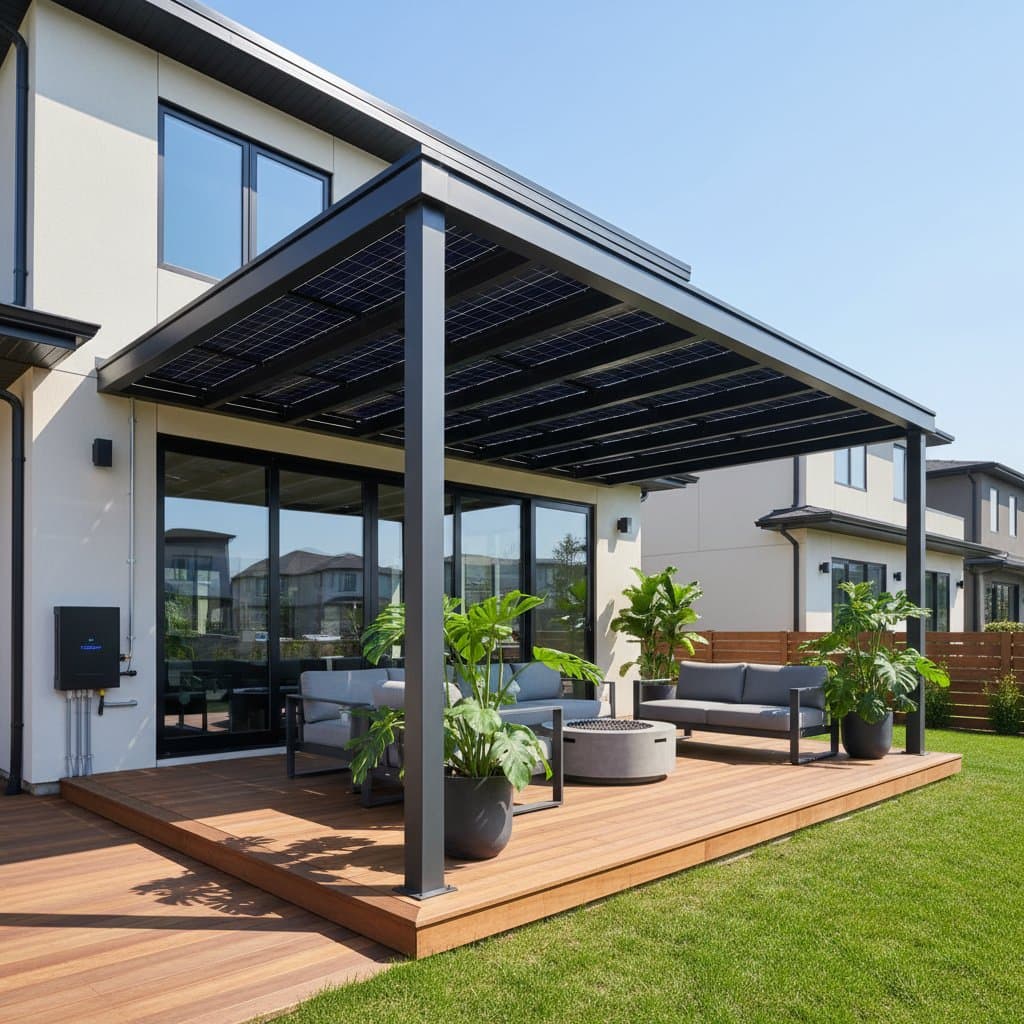
Enhance Your Deck with Solar Pergolas for Shade and Energy Savings
Outdoor spaces like decks offer relaxation and enjoyment, yet intense summer heat often drives people inside. A solar pergola addresses this challenge by combining traditional shade with renewable energy generation. This structure features a framework that supports solar panels, which capture sunlight to produce electricity while blocking direct rays from your seating area.
Solar pergolas provide multiple benefits beyond comfort. They reduce reliance on air conditioning by keeping shaded areas cooler, which lowers overall energy consumption. The generated power can offset household electricity needs, potentially qualifying for incentives that further improve financial returns. This guide covers the essentials of solar pergolas, from design considerations to installation and upkeep, helping you create a functional outdoor extension.
Understanding Solar Pergolas
A solar pergola consists of an open-roofed structure with posts and beams, topped by photovoltaic panels. Unlike fixed rooftop solar arrays, these adaptable designs integrate seamlessly into patios or decks. The panels convert sunlight into direct current electricity, which an inverter transforms into usable alternating current for home appliances or outdoor lighting.
Consider factors such as deck size, sunlight exposure, and local climate when planning. For instance, orient the pergola south-facing in the Northern Hemisphere to maximize solar yield. Panels typically last 25 years or more, with the frame enduring weather if constructed from durable materials like treated lumber or powder-coated aluminum.
Energy output varies by panel efficiency and location. A standard 10-by-10-foot pergola with six 300-watt panels might generate 1,800 watts peak, producing around 2,000 to 3,000 kilowatt-hours annually in sunny regions. This could cover 20 to 30 percent of a typical home's summer cooling needs, depending on usage patterns.
Planning and Materials Selection
Begin with a site assessment to ensure structural integrity. Measure your deck and evaluate load-bearing capacity, as solar panels add 3 to 5 pounds per square foot. Consult building codes for permits, especially if tying into the home grid.
Essential Tools
Gather these tools for a smooth project:
- Tape measure extending at least 25 feet for accurate layout.
- Level and carpenter's square to ensure plumb posts and even beams.
- Power drill equipped with bits suitable for wood or metal fastening.
- Sturdy ladder reaching roof height without instability.
- Safety glasses and heavy-duty gloves for protection.
- Socket set for securing mounting brackets.
Required Materials
Select high-quality components to withstand outdoor exposure:
- Frame kit in pressure-treated wood or corrosion-resistant aluminum.
- Galvanized screws or bolts, approximately 40 to 60 based on dimensions.
- Concrete mix for stable post footings, dug to frost line depth.
- Solar panels rated 250 to 400 watts each, monocrystalline for higher efficiency.
- Adjustable mounting brackets and rails compatible with panel size.
- Electrical conduit, wiring gauge appropriate for output, and a grid-tie inverter.
- Weatherproof sealant for all joints and connections.
- Outdoor-rated junction boxes to house wiring safely.
Source materials from reputable suppliers to avoid compatibility issues. For example, ensure panels match inverter specifications to prevent efficiency losses.
Installation Steps
Approach installation methodically to achieve a secure, efficient setup. If converting an existing pergola, reinforce beams before adding panels.
- Mark and dig post holes, spacing them 8 to 10 feet apart for stability.
- Pour concrete footings and set posts, using a level to maintain vertical alignment.
- Attach crossbeams and rafters, securing with bolts for load distribution.
- Install mounting rails on the roof grid, spacing them per panel requirements.
- Mount panels, tilting them 20 to 40 degrees for optimal angle based on latitude.
- Run conduit from panels to the inverter location, following code for burial depth.
- Connect wiring to the inverter and integrate with your electrical panel if applicable.
- Test the system under sunlight to verify output and safety.
Professional oversight during electrical steps prevents hazards like improper grounding.
Prioritizing Safety
Safety forms the foundation of any solar pergola project. Structural failures or electrical faults can lead to injury or damage.
- Establish secure footing by using extension ladders on flat ground and avoiding overextension.
- Disconnect power sources before any wiring work, verifying with a voltage tester.
- Confirm the framework supports panel weight plus wind loads through engineering calculations.
- Schedule work during calm, dry weather to minimize risks from slips or shifting materials.
Wear appropriate gear at all times and consider buddy systems for elevated tasks.
Cost Analysis and Timeline
Investing in a solar pergola yields long-term savings, but initial expenses require careful budgeting.
- For a do-it-yourself project on a medium-sized deck, expect $3,000 to $6,000, covering panels, frame, and electrical basics.
- Professional services range from $8,000 to $14,000, including custom designs and code compliance.
- Timeline involves two weekends for DIY efforts, focusing one on framing and another on electrics; pros complete in one to two days.
Recent declines in panel costs, now under $1 per watt, enhance affordability compared to full roof installations. Start small with four panels to test viability, then scale up. Savings strategies include sourcing local lumber or aluminum, while essential investments like certified inverters ensure reliability.
Annual returns might recoup costs in 5 to 10 years through energy bill reductions of $200 to $500, plus potential rebates.
Maintenance for Longevity
Regular care preserves performance and appearance across seasons.
Spring Preparation
Clean accumulated debris and inspect for material degradation. Tighten fasteners and apply fresh sealant to prevent moisture ingress.
Summer Optimization
Prune overhanging branches to maintain unobstructed sunlight. Opt for reflective fabrics on furniture to enhance cooling effects.
Fall Inspection
Remove fallen leaves and check seals against impending rain. Examine cables for wear before temperature drops.
Winter Protection
Gently remove snow accumulations using soft tools to avoid surface damage. Monitor for ice buildup that could strain supports.
Annual professional inspections every few years catch issues early, extending the system's 20-plus-year lifespan.
Engaging Professionals
Certain aspects demand expert involvement to meet standards and maximize benefits.
Seek a licensed electrician for grid connections, inverter setup, or battery integration. They handle grounding, circuit protection, and rebate paperwork.
Consult a structural specialist if your deck exhibits signs of wear, such as splintered wood or sagging joists. Added weight requires reinforcements like sistered beams.
Before committing, pose these inquiries:
- What experience do you have with solar pergola projects?
- What warranties apply to the build and solar components?
- Which incentives or credits can apply to this installation?
- What energy production can this configuration realistically deliver yearly?
Realizing Outdoor Energy Independence
A solar pergola elevates your deck from a simple shaded spot to a productive asset. It delivers immediate shade for comfort and ongoing electricity for savings, fostering extended use of your outdoor area. With thoughtful design, quality construction, and diligent maintenance, this investment enhances lifestyle while contributing to sustainable living.