
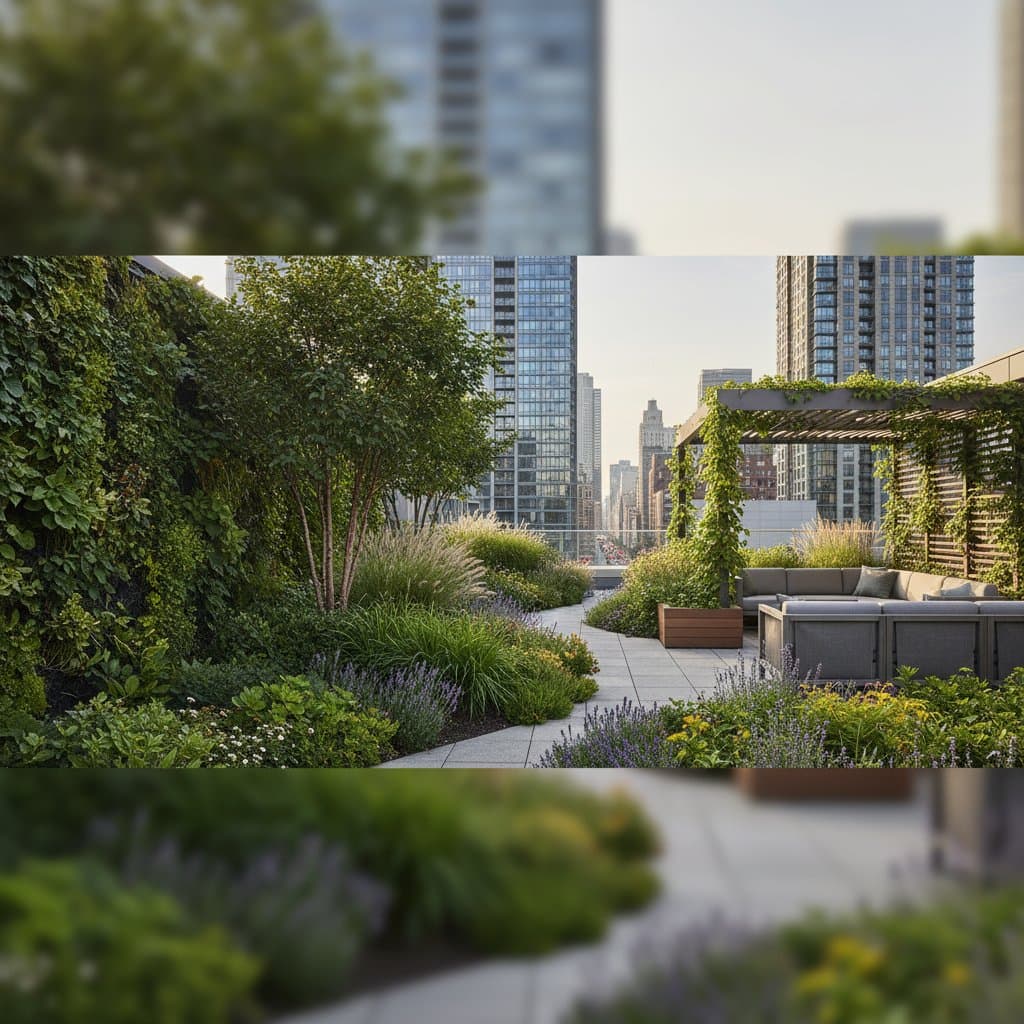
Silencing City Noise with Acoustic Rooftop Gardens
Urban environments pulse with constant sound. Sirens wail, construction rumbles, traffic roars, and HVAC units hum relentlessly. Residents often close windows to block the intrusion, yet the noise persists. Increasingly, people turn to rooftops for sanctuary. An acoustic rooftop garden transforms this underutilized space into a verdant buffer that absorbs and disperses sound waves. Residents benefit from tranquility, shade, and improved air quality, all without descending from the building.
This guide details the mechanisms behind noise reduction in rooftop gardens, highlights effective plants and materials, and outlines safe, cost-effective design strategies. Studies indicate that well-designed installations can lower perceived noise levels by up to 7 decibels, creating a noticeably quieter atmosphere.
Essential Tools and Materials
Assemble a focused set of items to ensure structural integrity, proper drainage, and optimal sound absorption. Select components that withstand urban exposures like wind and sun.
Key Materials
- Modular planter boxes or raised beds with a minimum depth of 8 inches to support root growth and sound-dampening soil layers
- Lightweight growing medium blended with compost and perlite for aeration and moisture retention
- Geotextile liner to prevent root penetration into roofing membranes
- Drainage mat or 1-inch gravel layer to facilitate water runoff and reduce pooling
- Rubber pavers or recycled composite decking for stable, heat-resistant walkways
- Windbreak panels or trellises to shield plants and further diffuse airborne noise
- Automated watering system equipped with a timer for consistent hydration
Required Tools
- Tape measure for precise layout planning
- Utility knife for cutting liners and mats
- Drill with outdoor-rated screws for secure assembly
- Level to verify even surfaces and prevent water accumulation
- Safety harness for tasks near roof edges
- Work gloves and non-slip shoes to protect against hazards
Target an initial plantable area of about 100 square feet, assuming the roof load capacity permits. This scale provides sufficient density to achieve measurable acoustic benefits, such as the targeted 7-decibel reduction.
Selecting Noise-Reducing Plants
Plant selection influences acoustic performance significantly. Varieties with thick foliage and pliable stems excel at scattering sound frequencies and mitigating wind gusts. Prioritize species adapted to rooftop challenges, including intense sunlight, shallow soils, and variable temperatures.
Recommended Small Trees and Shrubs
- Boxwood (Buxus species) offers dense, evergreen coverage for consistent sound barriers
- Clumping bamboo provides height and a natural rustling effect that masks urban din
- Japanese holly (Ilex crenata) delivers structured form and persistent foliage
- Juniper (Juniperus species) suits arid, exposed locations with its resilient needles
Effective Perennials and Grasses
- Feather reed grass (Calamagrostis acutiflora) creates vertical elements that diffuse high-frequency sounds
- Hosta thrives in partial shade beneath larger specimens, adding layered texture
- Lavender attracts pollinators while contributing aromatic, sound-absorbing leaves
- Daylilies (Hemerocallis species) require minimal upkeep and fill mid-level spaces
Versatile Ground Covers
- Creeping thyme spreads rapidly to seal soil surfaces and suppress reflected noise
- Sedum tolerates drought and covers sunny, low-moisture zones
- Ajuga establishes quickly for broad, low-growing mats
Incorporate at least three tiers of vegetation: low ground covers, mid-height perennials, and tall screens. This stratification enhances overall sound muffling through varied densities and heights, outperforming uniform plantings.
Common Challenges and Solutions
Anticipate potential issues to maintain garden efficacy. Address them promptly to preserve noise reduction and plant health.
Standing Water Near Drains
Verify roof slope and remove accumulated debris. Install additional gravel beneath problematic planters to improve percolation.
Rapid Plant Drying
Apply 2 inches of mulch to retain soil moisture. Cluster species with comparable hydration requirements. Test and adjust the irrigation timer for optimal delivery.
Persistent High Noise Levels
Incorporate vertical windbreak screens or increase soil depth in select zones by 2 inches. Deeper substrates enhance sound absorption capabilities.
Overheated Roof Surfaces
Use light-colored pavers or reflective mulch to lower temperatures. Cooler materials minimize sound wave reflections, improving auditory comfort.
Ongoing Maintenance Practices
Conduct biweekly inspections during active growth periods. Remove wilted foliage to promote circulation and prevent disease. Examine irrigation components for blockages or leaks. Clear drains of leaves and dirt regularly. Replenish mulch biannually to sustain acoustic properties.
Wash windbreak panels using mild soap and water. Secure any loosened fasteners following severe weather events. Consistent care ensures the garden remains visually appealing and acoustically effective throughout the year.
Seasonal Care Guidelines
Adapt routines to urban climate fluctuations for sustained performance.
Spring Preparation
Replant annuals and apply slow-release fertilizer to perennials. Inspect roofing membranes for cold-weather damage. Clean planter surfaces to eliminate winter grime.
Summer Management
Irrigate in the morning to minimize evaporation losses. Deploy shade cloth over vulnerable plants during heat waves. Review irrigation settings each week.
Autumn Adjustments
Prune tall grasses to 6 inches for neatness. Incorporate compost into planting beds and renew mulch layers. Evaluate drainage systems ahead of rainfall.
Winter Protection
Relocate movable planters nearer to building walls for wind protection. Encase tender shrubs in burlap wraps. Deactivate irrigation to avoid freeze damage.
Efficient Storage Strategies
Designate a compact bin for essential tools on the rooftop. Stock it with a hand trowel, pruning shears, hose attachment, and gloves. Store surplus soil and mulch in airtight containers to avoid dampness. Clearly label all items. Positioning supplies within 3 feet of the garden minimizes indoor traversals and streamlines tasks.
Professional Consultation Indicators
Engage a structural engineer for roofs exceeding 20 years in age or showing cracks. Involve a roofing specialist prior to any drilling or anchoring. Secure a licensed plumber or landscaper for integrating irrigation with main water supplies. Inquire about waterproofing warranties before commencing modifications. Proactive verification prevents costly water damage repairs.
Building Your Acoustic Retreat
Initiate the project in a single corner. A modest 6-by-6-foot plot alters the acoustic profile noticeably. Introduce elements incrementally, monitoring plant success and quiet zones. Gradually extend the footprint and refine arrangements based on observations.
Transform your rooftop into a serene haven amid urban clamor. Each added planter, support structure, and foliage cluster fortifies a natural acoustic shield. Proceed with measurements, procure supplies, and quantify the peace you cultivate.