
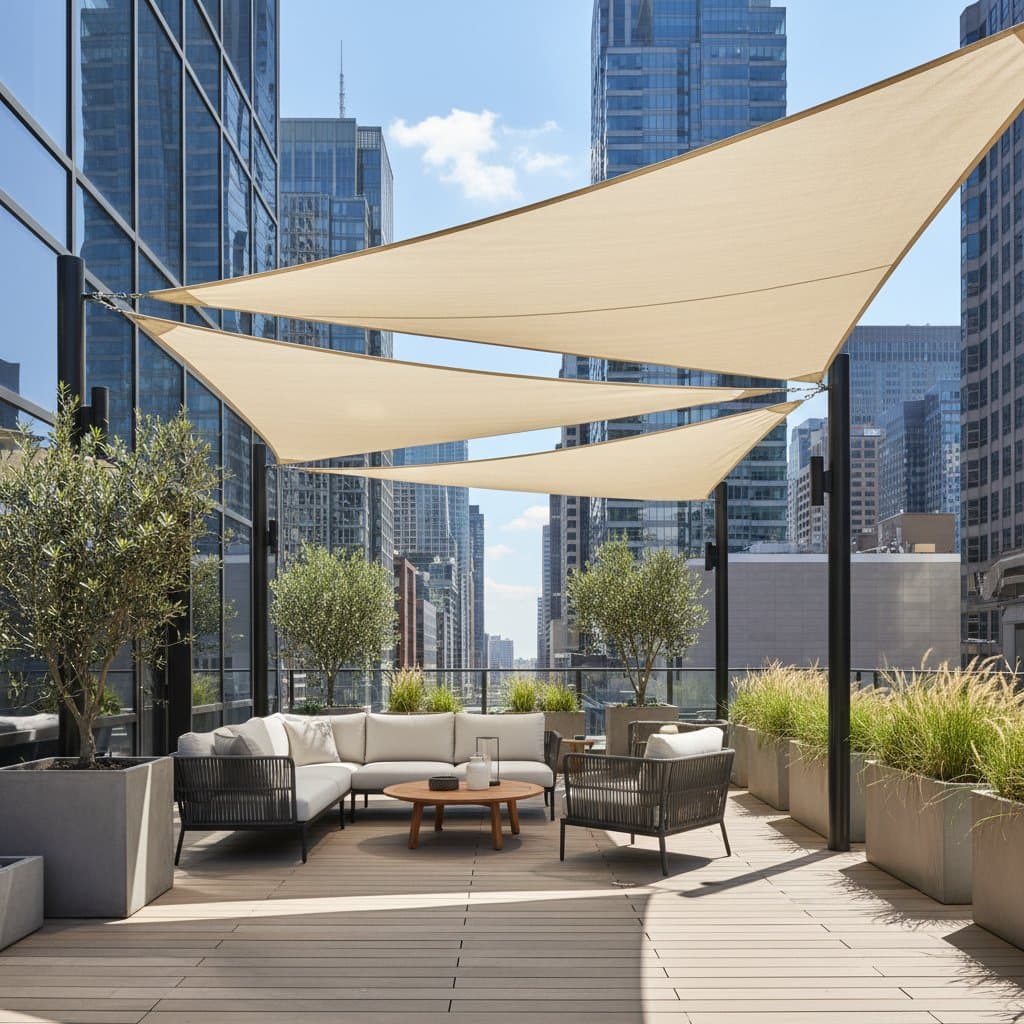
Reduce Rooftop Deck Heat by 40 Percent with Shade Sails
Rooftop decks offer prime urban views, yet intense sunlight on concrete surfaces and metal elements can elevate temperatures to uncomfortable levels, confining users indoors. Shade sails provide an effective solution. These taut fabric structures intercept direct rays, lower ambient heat, and preserve outdoor furnishings from discoloration. Proper implementation yields a 40 percent reduction in heat, restoring usability to these elevated spaces.
Understanding Shade Sails
A shade sail consists of a triangular or rectangular sheet of specialized fabric secured tightly across fixed points. The fabric, engineered for ultraviolet resistance, permits airflow while diffusing sunlight. This design functions as an expansive, permeable canopy tailored to specific zones. In contrast to impermeable roofs, shade sails prevent heat accumulation beneath them, delivering noticeable cooling shortly after deployment.
Installation requires minimal structural alteration, achievable in one afternoon using standard equipment and precise measurements. The result integrates contemporary style, with options for seasonal removal to accommodate varying weather conditions.
Essential Tools and Materials
Gather these items for a successful project:
- One to three shade sails crafted from ultraviolet-stabilized, high-density polyethylene fabric
- Mounting components, including pad eyes, turnbuckles, carabiners, and tensioning lines
- Secure anchors such as wall-mounted plates, railing supports, or independent poles
- Measuring tape, spirit level, power drill, and extension ladder
- Protective gloves and safety eyewear
Select sails featuring strengthened edges and corrosion-resistant hardware. Quality products endure at least five years with appropriate upkeep and storage.
Installation Process
Follow these steps to position your shade sails effectively:
- Measure the coverage area. Maintain a 12-inch (30-centimeter) clearance between sail edges and anchors to facilitate secure tensioning.
- Identify and mark anchor locations. Employ a spirit level to align attachment lines horizontally. On rectangular decks, secure opposing corners at diagonal angles to establish a subtle incline for drainage.
- Secure the anchors. Bore pilot holes into robust materials like concrete walls or metal posts. Refrain from using fragile railings as attachment points.
- Assemble the hardware. Affix pad eyes or eye bolts, then incorporate turnbuckles or lines for tension control.
- Position the sail. Begin at one corner by attaching the carabiner, then extend and secure the remaining corners. Ensure the fabric achieves firmness without excessive strain.
- Verify tension levels. A well-installed sail exhibits no more than 1 inch (2.5 centimeters) of sag at its center.
- Evaluate shading performance. Position yourself under the sail at midday and reposition anchors if sunlight penetrates undesirably.
Key Safety Considerations
Prioritize stability by selecting a firm ladder and donning gloves for hardware manipulation. Postpone installation in gusty conditions, as the fabric may catch wind and pose risks. Maintain a minimum height of 8 feet above seating surfaces to foster circulation and avoid localized warmth. Conduct inspections of anchors biannually to detect corrosion or instability.
Common Issues and Solutions
Sagging occurs from insufficient tension; counteract by rotating turnbuckles two to three full turns. Torn corners benefit from reinforcement via stainless-steel plates. Inconsistent shading often stems from mismatched anchor elevations; elevate or lower one corner by 3 to 4 inches for balance. To manage rainwater accumulation, angle one edge downward by 2 degrees to promote runoff.
Cost and Timeline Estimates
A compact 10-by-10-foot shade sail ranges from 60 to 120 dollars. Accompanying hardware sets contribute an additional 25 dollars. Allocate two to three hours for setup, assuming anchors exist. Expansive decks necessitate multiple sails, potentially totaling 300 dollars or higher, influenced primarily by the quantity of supports or mounts required.
Upkeep Procedures
Remove surface debris weekly using a soft-bristled broom. For thorough cleansing, prepare a solution of mild detergent and warm water, apply with a non-abrasive sponge, and rinse completely. Allow full air drying prior to reinstallation. Dismantle sails ahead of severe winter weather and store them in rolled form to preserve fabric integrity. At season's start, examine seams for wear and repair as necessary.
Extend longevity by applying a fabric protectant spray annually, following manufacturer guidelines. This step repels stains and bolsters ultraviolet resistance, ensuring consistent performance over multiple years.
Seasonal Maintenance Schedule
In preparation for summer, scrutinize all anchors and substitute any rusted elements. Restore tension following substantial rainfall to counteract loosening. During early fall, detach and launder sails before stowing. Maintain a digital checklist to track these routines efficiently across seasons.
Advanced Techniques for Optimal Results
Elevate one corner by 6 to 12 inches relative to others to enhance breeze flow. Pair sails in complementary hues for graduated shading and visual interest. For evening gatherings, integrate low-voltage LED strips along tension lines to illuminate the area subtly without overpowering the design.
Consider wind-resistant configurations by selecting sails with permeability ratings above 90 percent, which minimize lift during breezy periods.
Implementing Your Shade Solution
Survey your rooftop today and identify three viable anchor points. Procure a sail suited to your primary relaxation area and schedule installation for the upcoming weekend. After initial use, assess temperature changes and fine-tune tension accordingly. With verified effectiveness, extend coverage to additional zones like dining or reclining spaces for comprehensive comfort.