
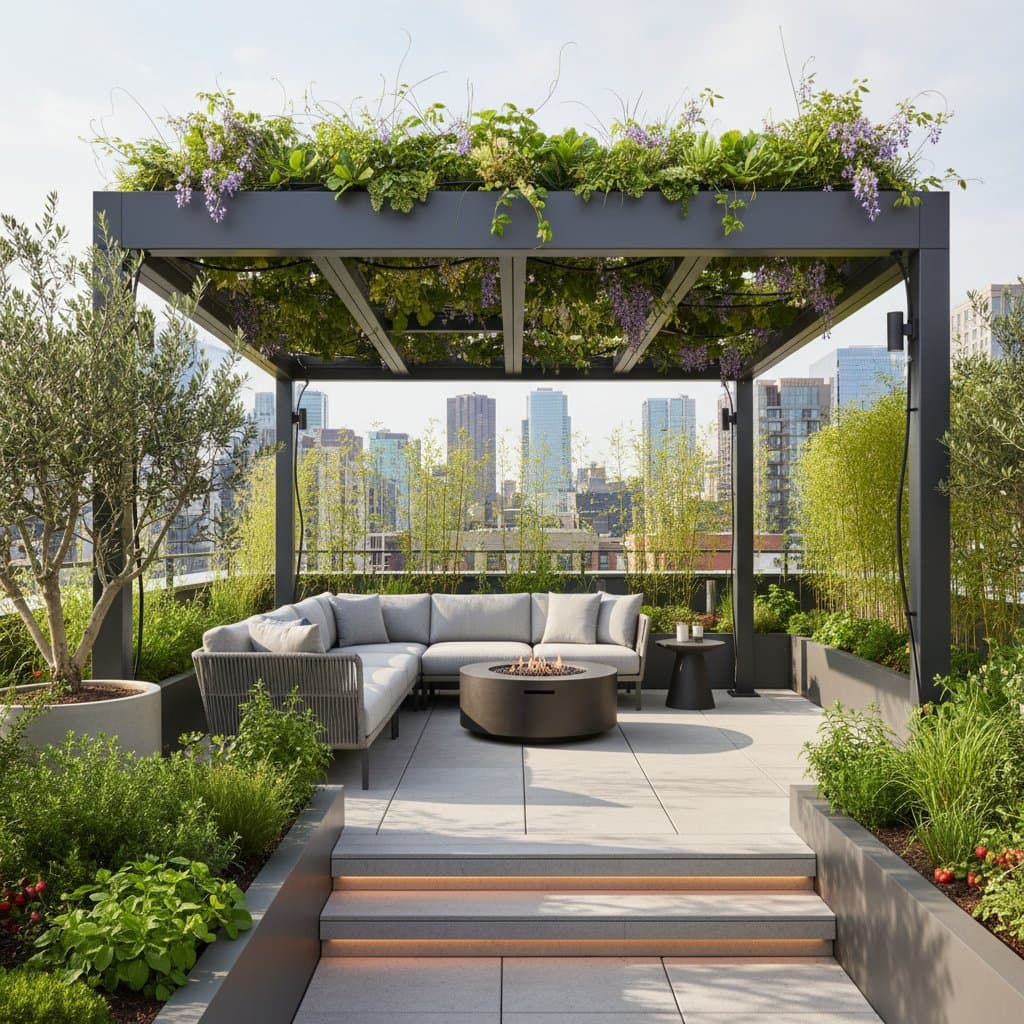
Integrating Shade and Greenery on Urban Rooftops
Urban rooftops often serve as underutilized spaces exposed to intense heat and limited greenery. A living-roof pergola addresses these challenges by combining structural shade with living elements, creating a serene, functional retreat. This approach not only cools the area below but also fosters a vibrant ecosystem that adapts to seasonal changes.
The following sections outline the design principles, construction process, and ongoing care required to build and maintain such a system effectively.
Understanding the Design
A living roof incorporates vegetation, growing medium, and a protective barrier to provide thermal insulation and aesthetic appeal. A pergola consists of an open lattice framework that delivers dappled shade through its beams. Together, these form a living-roof pergola, where climbing plants ascend the structure, rainwater filters through the canopy, and the shaded zone remains comfortable.
This hybrid solution proves ideal for dense urban environments, maximizing limited space while advancing ecological goals. It reduces ambient temperatures, supports biodiversity, and integrates seamlessly with rooftop lifestyles.
Essential Tools and Materials
Gather these items prior to commencement to ensure a smooth process. Select durable, weather-resistant options suited to rooftop conditions.
- Pergola components: 8 to 12 lengths of pressure-treated lumber or corrosion-resistant metal beams, typically 4x4 inches for posts and 2x6 inches for rafters.
- Secure fasteners: Galvanized bolts, concrete anchors, and stainless-steel brackets designed for exterior applications.
- Planting containers: At least three raised beds or modular planters, each with a minimum depth of 12 inches to accommodate root systems.
- Waterproofing layer: A single roll of EPDM rubber membrane or similar, cut to cover the installation area.
- Climbing vegetation: Varieties like clematis, jasmine, or hardy climbing roses, selected for local climate compatibility.
- Supplemental shading: 2 to 4 panels of breathable shade cloth or photovoltaic modules, scaled to the pergola's dimensions.
- Hand tools: Cordless drill, spirit level, adjustable wrench, heavy-duty gloves, and protective eyewear.
Construction Steps
Follow these sequential steps to erect a stable and effective living-roof pergola. Consult local building codes and consider professional input for complex installations.
-
Evaluate structural capacity. Verify that the roof withstands a minimum load of 20 pounds per square foot, including plants and water weight. Engage a structural engineer for a formal evaluation if doubts arise.
-
Apply protective barrier. Unroll the waterproof membrane across the designated area, ensuring 6-inch overlaps at seams. Secure edges with adhesive sealant, particularly at corners and joints, to prevent moisture intrusion.
-
Outline the framework. Employ chalk lines to position post bases 6 feet apart, aligning each with an underlying roof joist for optimal load distribution.
-
Erect the primary frame. Secure posts into place using specialized roof-mount brackets. Fasten with bolts, applying torque gradually to achieve firmness without damaging materials. Don gloves throughout to safeguard against injuries.
-
Attach horizontal elements. Install crossbeams at intervals of 12 to 16 inches to distribute shade evenly. Use a level to confirm alignment after each addition.
-
Position planting units. Site planters adjacent to posts, allowing vines to reach the framework naturally. Maintain 18 inches of clear pathway between units for safe access.
-
Establish vegetation. Fill planters with a well-draining soil mix, plant vines at base level, and water thoroughly. Direct initial growth toward the structure using UV-resistant nylon ties or fine-gauge trellis wire. Prune selectively every few weeks to promote air circulation.
-
Incorporate additional features. For shade cloth, tension it across the beams and fasten with spring clips for adjustability. For solar integration, affix panels via L-shaped brackets and route wiring to a weatherproof inverter, ensuring all connections comply with electrical standards.
-
Validate water management. Simulate rainfall by pouring one gallon of water at each corner. Observe flow toward existing drains, addressing any stagnation immediately.
Key Safety Considerations
Prioritize precautions to mitigate risks associated with elevated work.
- Select footwear with strong traction for all rooftop activities.
- Postpone tasks during rain, high winds, or low visibility.
- Limit soil depth in planters to 12 inches unless structural reinforcement has been certified.
- Route solar electrical components at least 3 feet from any watering systems to avoid hazards.
Common Issues and Solutions
Address potential challenges promptly to preserve the installation's integrity.
- Standing water: Inspect membrane seals and clear minor blockages to restore proper incline.
- Inconsistent shading: Introduce additional beams or select vigorous climbers to fill gaps.
- Stunted plant development: Extend exposure to direct light or apply a slow-release, balanced fertilizer biannually.
- Fastener instability: Re-secure all joints at the start of each season to counteract settling.
Cost and Timeline Estimates
Budget between $600 and $1,200 for core materials and plants, with solar additions ranging from $400 to $800 for a compact setup. Completion typically requires two full weekends using standard tools. Opt for recycled containers or low-maintenance native species to minimize expenses.
Ongoing Care Practices
Regular attention ensures longevity and performance.
- Irrigation routine: Monitor soil dampness bi-daily during peak heat; install a low-flow drip system for automated delivery.
- Vegetation management: Shear vines every 3 to 4 weeks to maintain form and prevent overcrowding.
- Structural review: Examine wood for fissures and hardware for looseness semiannually.
- Debris removal: Clear fallen foliage weekly and hose down shading elements monthly.
Adapting to Seasons
Tailor maintenance to environmental shifts for optimal results.
- Spring preparation: Introduce seasonal climbers and amend soil with organic matter.
- Summer vigilance: Apply 2-inch mulch layers to conserve water and verify drip line functionality.
- Fall cleanup: Reduce vine volume, flush drainage channels, and eliminate accumulated waste.
- Winter protection: Insulate sensitive containers with breathable fabric and confirm runoff paths remain unobstructed.
Efficient Organization Strategies
Maximize space by attaching hooks to posts for hanging tools and irrigation components. Incorporate a sealed storage bench to shelter supplies from elements. Organize containers by seasonal needs for effortless transitions.
Professional Assistance Indicators
Seek expert help if the roof exceeds 500 square feet, involves electrical work beyond basic solar tie-ins, or requires custom engineering. Licensed contractors ensure compliance and enhance durability.
Realizing Sustainable Comfort
A living-roof pergola extends beyond aesthetics to deliver tangible benefits like reduced cooling costs, improved air quality, and a dedicated relaxation zone. Begin modestly with a basic frame and a few planters, then scale up as plants establish. Consistent watering, pruning, and inspections will yield a thriving, low-effort haven that enhances urban living.