
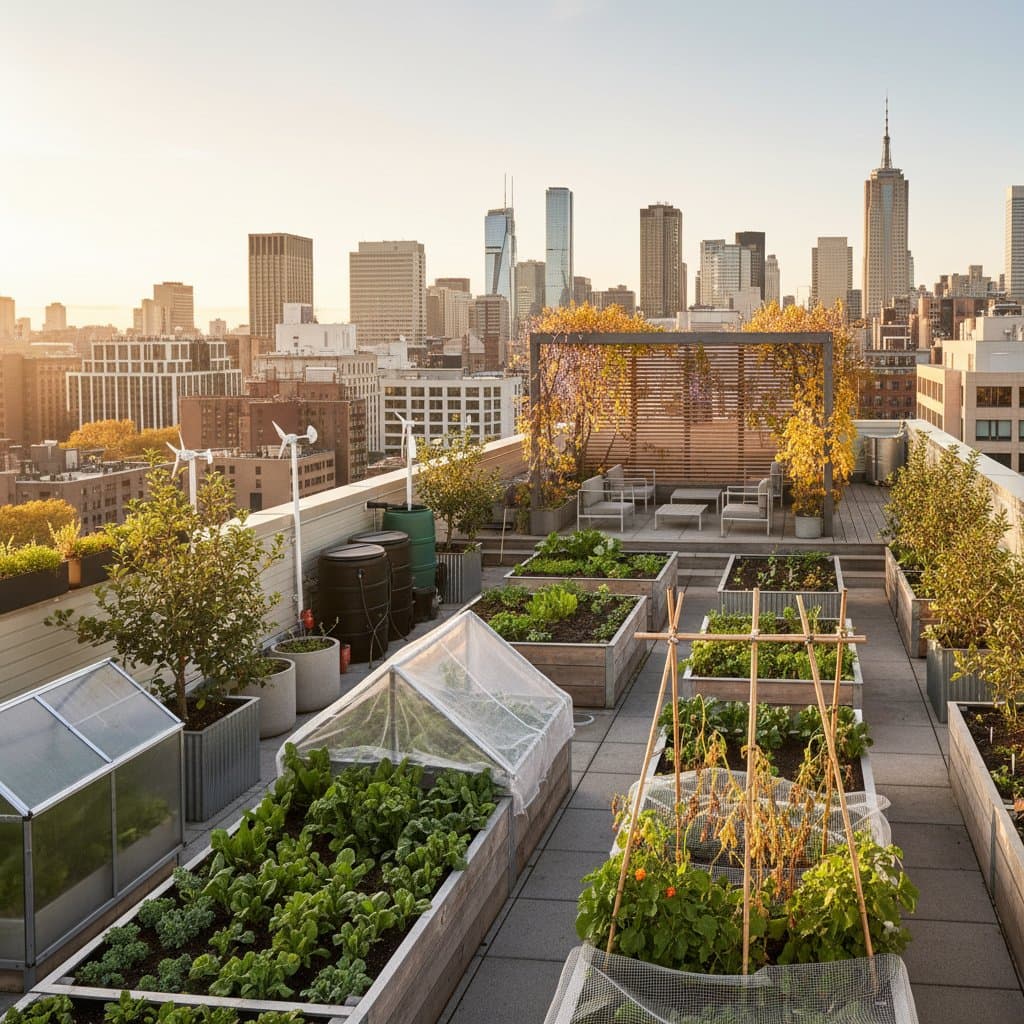
Understanding Your Rooftop Microclimate
Urban rooftops present unique growing conditions shaped by elevation, surrounding buildings, and local weather patterns. Temperature fluctuations can exceed ground-level variations by several degrees, while wind speeds often increase due to reduced friction. To extend your harvest across three seasons, begin by observing these elements over a week: record daily high and low temperatures, note prevailing wind directions, and identify shaded versus sunny zones using a simple journal or app.
This assessment reveals opportunities, such as south-facing areas for heat-loving crops or sheltered corners for tender greens. Adjust your setup accordingly; for instance, position windbreaks like trellises on the exposed sides to reduce gusts by up to 30 percent. Such targeted observations form the foundation for a thriving garden that withstands spring chills, summer heat, and fall cools.
Essential Tools and Materials for Setup
Assemble a core set of supplies to establish a lightweight, durable three-season garden without overburdening your structure. Select containers made from recycled plastic or fabric pots, each at least 12 inches deep to accommodate root growth, with a total capacity matching your available space, such as 10 to 20 units for a 50-square-foot area. Opt for a well-draining potting mix enriched with perlite or vermiculite, calculating 4 to 6 cubic feet per 10 square feet to ensure aeration and moisture retention.
Incorporate one cubic foot of compost per 20 square feet to boost nutrient levels naturally. Apply a 2-inch layer of organic mulch, like straw or bark, to conserve soil moisture and suppress weeds. For protection, acquire frost cloths or floating row covers measuring at least 6 feet by 8 feet each, along with bungee cords for secure anchoring against winds. Essential watering tools include a hose equipped with an adjustable nozzle or a basic drip irrigation kit to deliver consistent hydration without waste.
Complete your kit with lightweight hand tools: a trowel for planting, pruning shears for maintenance, a small rake for soil leveling, and durable gloves. Install an outdoor thermometer to monitor swings, and if intense afternoon sun prevails, add a shade cloth rated for 30 to 50 percent light reduction to shield young plants.
Prioritizing Safety in Rooftop Gardening
Rooftop gardening demands vigilance to safeguard both participants and the structure. Consult your building management or a structural engineer to verify load-bearing capacity, as saturated soil and water can add 50 pounds per square foot or more. Distribute containers evenly, using saucers to catch drips and prevent pooling that could lead to slips.
Navigate the space cautiously, especially after rain or during frost; install non-slip mats at access points like ladders or doors. If incorporating electrical elements such as grow lights or pumps, route cords away from water sources and use ground-fault circuit interrupters. Organize tools in a sealed, weatherproof bin to avoid hazards from rust or scattered items, ensuring quick access while maintaining a tidy environment.
Planning Your Budget and Time Investment
Launch your three-season rooftop garden with an initial outlay of $200 to $400, covering essential containers, soil, and protective covers when purchasing new. Source second-hand pots from community swaps or repurpose household items to halve costs, and generate compost from kitchen scraps to minimize soil amendment expenses. Prioritize investments in high-quality drainage materials and sturdy pots, as these directly influence plant vigor and structural integrity; defer ornamental features until your system proves effective.
Dedicate 4 to 6 hours to initial setup, including container placement and soil filling, followed by 2 hours weekly for routine tasks like watering, pruning, and debris removal. Track progress with a simple log to refine efficiency over time, allowing you to scale efforts as familiarity grows.
Crop Selection and Rotation Strategies
Choose resilient varieties suited to your microclimate for seamless seasonal transitions. In spring, plant cool-season crops such as lettuce, spinach, and radishes, which tolerate nights dipping to 40 degrees Fahrenheit. Transition to summer staples like basil, cherry tomatoes, and peppers, selecting compact cultivars that mature in 60 to 80 days to fit rooftop constraints.
For fall, introduce hardy options including kale, Swiss chard, and carrots, which endure light frosts down to 28 degrees. Implement rotation by dividing your space into zones: dedicate one-third to quick-harvest greens, another to perennials like chives, and the rest to seasonal rotations every 6 to 8 weeks. This approach prevents soil depletion, reduces pest buildup, and maximizes yields, potentially producing 10 to 20 pounds of produce per season in a modest setup.
Seasonal Maintenance Guidelines
Spring Preparation
Thoroughly clean containers with a diluted mild soap solution to eliminate winter residue, salts, and overwintering pests. Begin seeds indoors under grow lights or on sunny sills 2 to 4 weeks prior to the last expected frost, hardening off seedlings by gradual outdoor exposure over 7 to 10 days.
Summer Vigilance
Irrigate in the early morning to minimize evaporation losses, aiming for 1 inch of water weekly, adjusted for rainfall. Inspect plants daily for heat stress indicators, such as wilting leaves or scorched edges, and provide supplemental shade during peak hours. Prune dense foliage to enhance air circulation, deterring fungal issues in humid conditions.
Fall Extension
Harvest mature produce promptly to encourage continued growth, preserving excess through drying herbs on racks or freezing chopped greens in portions. Secure row covers over remaining plants as temperatures drop, tucking edges to trap warmth and extend viability by 2 to 4 weeks. Clean and store unused tools indoors to prepare for dormancy.
Efficient Storage and Organization
Maintain an orderly rooftop to facilitate swift responses to shifting weather. Install vertical shelving or wall-mounted hooks to store tools off the ground, preventing moisture damage. Use labeled, lidded bins for separating soil amendments, compost, and mulch, ensuring easy retrieval during planting cycles.
Consider a compact, weather-resistant bench that serves dual purposes as storage and seating, concealing essentials while enhancing usability. This systematic approach saves time and reduces frustration, allowing focus on cultivation rather than chaos.
Realizing Year-Round Rewards
By integrating microclimate insights, protective strategies, and disciplined routines, your rooftop evolves from a seasonal novelty into a reliable source of fresh, homegrown bounty. This setup not only stretches harvests across spring, summer, and fall but also fosters sustainability through resource efficiency and waste reduction. Embrace these practices to cultivate abundance in urban confines, reaping nutritional and economic benefits for months on end.