
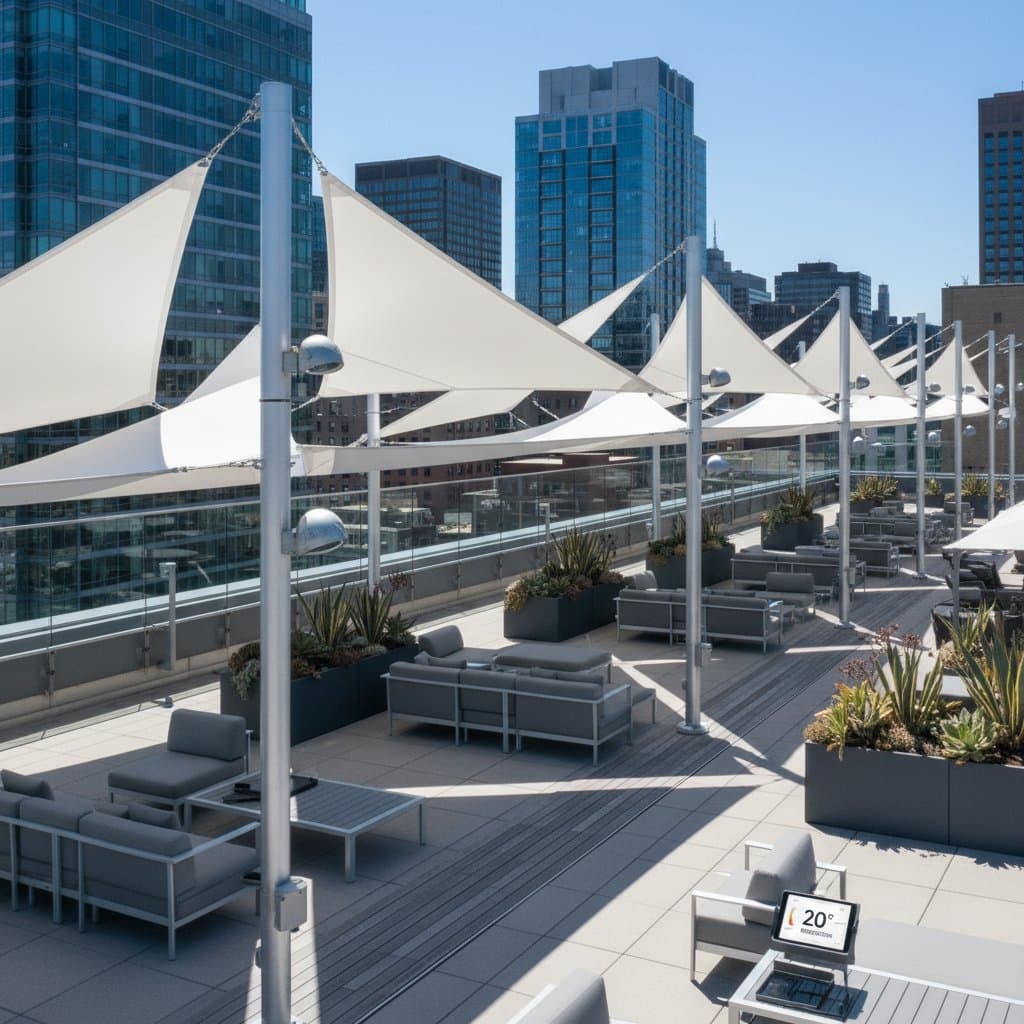
Smart Sails That Track Sun for Rooftop Bliss
You step onto your rooftop and feel the heat rise from the concrete. The view is perfect, but the glare and sun make it hard to stay long. A smart shade sail can fix that. It shifts with the sun, keeping your space cool and usable all day. The goal is simple. You will learn what these sails are, why they matter, and how to set one up for comfort and control.
Overview
A smart sail is a fabric canopy linked to light sensors and small motors. It moves as the sun moves. The sail tilts or stretches to block direct rays, then retracts when shade is not needed. It gives steady comfort without you doing a thing.
Smart sails matter because they protect both people and materials. They cut UV exposure by up to 90 percent, helping your skin and furniture last longer. They also reduce rooftop heat, which lowers cooling costs and stress on your home’s structure. When well placed, a smart sail can drop the surface temperature under it by 15 to 20 degrees Fahrenheit (about 8 to 11 Celsius).
You will see how these sails work, what tools you need, and how to install and maintain them. You will also learn when a professional’s help makes sense.
Tools and Materials
You can start with a small kit or plan a full rooftop system. Most setups need:
- 1 to 2 smart sail panels with built-in motors
- 4 to 6 anchor points rated for outdoor tension loads
- 1 control hub with wireless or app access
- Mounting posts or brackets made of stainless steel or aluminum
- Weatherproof wiring kit with connectors and clips
- Basic hand tools such as a wrench set, drill, and level
- Safety gear including gloves, non-slip shoes, and a stable ladder
Check the sail’s fabric rating. Look for UV protection above 90 percent and a tensile strength over 300 pounds (136 kilograms) per corner. The higher these numbers, the longer the shade lasts through wind and weather.
Steps
1. Map the Sun Path
Spend one sunny day noting where light hits the rooftop. Mark bright zones and shaded spots every two hours. This helps you decide where the sail should move and rest.
2. Choose Anchor Points
Pick solid walls or posts at least 8 feet (2.4 meters) apart. The sail needs tension to stay flat. Use a level to align anchors evenly. If you drill into masonry, wear eye protection and use masonry bits.
3. Mount the Hardware
Attach brackets or posts using stainless bolts. Tighten them fully but avoid over-torquing, as that can crack concrete. Confirm each anchor holds at least 100 pounds (45 kilograms) of pull strength.
4. Connect the Sail
Hook each sail corner to its anchor using the included turnbuckles or carabiners. Leave a small allowance, about 2 inches (5 centimeters), for the motor to adjust tension.
5. Install the Sensors and Hub
Mount light sensors in open air, away from shade or reflection. Connect them to the control hub with the weatherproof cables. Plug the hub into a standard outdoor outlet with a ground fault circuit interrupter (GFCI) for safety.
6. Program Movement
Use the mobile app or built-in panel to set your shade zones. Most systems let you define angles from 0 to 90 degrees. Start with a midrange setting of 45 degrees for balanced light and air.
7. Test the Range
Run a full cycle. Watch how the sail tracks the sun. Adjust anchor tension or sensor placement if the fabric sags or flaps.
8. Secure Loose Ends
Tie off all cables, check bolts, and seal holes with outdoor-grade silicone. This keeps moisture out and prevents rust.
Safety Tips
- Never install the sail in high wind or rain. Wet fabric is heavier and can strain anchors.
- Turn off the power before adjusting any wiring.
- Keep ladders on level surfaces and have someone nearby for support.
- Do not climb onto the sail or use it to hang items. The fabric is strong but not load-bearing.
Troubleshooting
If the sail does not move:
- Check power at the hub. Reset the breaker or outlet.
- Inspect the sensor for dirt. A dusty lens can misread light.
- Confirm the motor cables are tight and dry.
If the sail flaps too much:
- Increase tension by one full turn on each turnbuckle.
- Lower the sail angle slightly to reduce wind catch.
If the fabric pools water:
- Adjust one corner higher by 3 to 4 inches (7 to 10 centimeters). This creates a runoff slope.
Maintenance
Smart sails need light care every season. Wipe the fabric with mild soap and water. Avoid bleach or harsh detergents. Rinse well and let it air dry. Inspect the corners for fraying and hardware for rust. Apply a UV protectant spray once a year to extend fabric life.
Lubricate moving parts with silicone grease every six months. This keeps joints from seizing. For the control hub, check firmware updates through the app. Many brands improve tracking accuracy and energy use through software updates.
Storage
If your area gets heavy snow or strong storms, retract the sail fully and cover it. You can unhook the corners and store the fabric indoors. Roll, do not fold, to prevent creases. Keep it in a dry spot above ground level.
Store small metal parts in labeled bags. This makes reinstallation quicker next season. Clean the sensors before storing to avoid corrosion.
Budget and Time
A smart sail system costs between $600 and $1,800 depending on size and automation level. Basic manual sails start lower, while app-connected models with dual motors reach the higher end. Expect to spend 4 to 6 hours on installation if you have standard tools.
If you need to run electrical wiring more than 10 feet (3 meters), hire a licensed electrician. That adds about $150 to $300, but it ensures safety and code compliance.
Seasonal Reminders
Each spring, check anchor bolts and cables before tensioning the fabric. Clean sensors with a soft cloth. Each fall, inspect the fabric for wear and decide if storage is needed.
When to Call a Pro
Call a professional if:
- The rooftop surface is uneven or made of older concrete.
- You need new wiring or a dedicated outdoor circuit.
- You plan to mount multiple sails that cross over seating or garden zones.
Your Next Steps
- Measure your rooftop and note sun angles for at least one clear day.
- Compare smart sail kits based on fabric strength, UV rating, and motor warranty.
- Plan your first install in a smaller section to learn tensioning and programming before scaling up.