
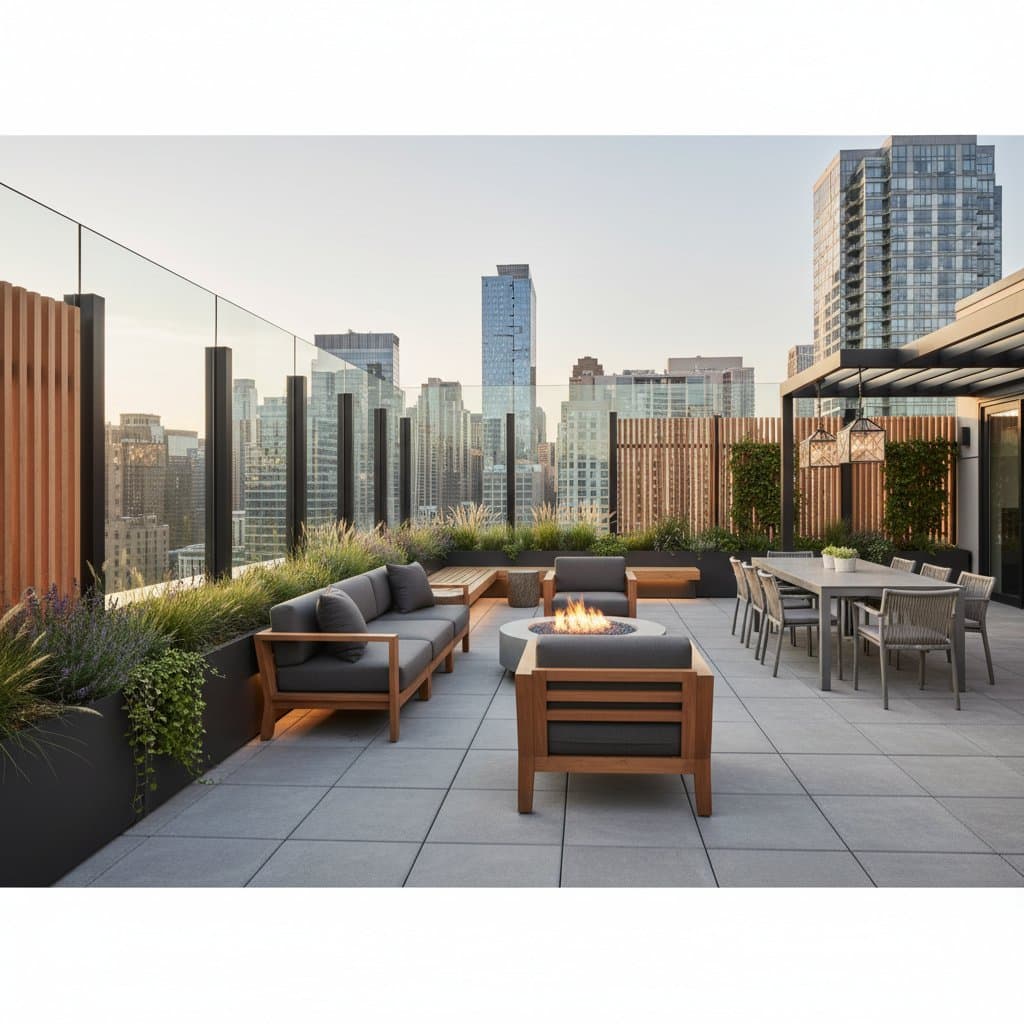
Rooftop Wind Breaks: Stylish Shields for Exposed Decks
If you have ever attempted to enjoy a meal or a quiet evening on your rooftop deck only to have wind disrupt plates or shift chairs, you understand how swiftly open-air freedom transforms into frustration. A rooftop wind break serves as a design element that mitigates strong gusts, enhances privacy, and fosters comfort without obstructing the view. The objective remains straightforward: render your rooftop inviting rather than exposed. This guide details how to select, install, and maintain rooftop wind breaks that perform as effectively as they appear.
Overview
A rooftop wind break constitutes any barrier designed to slow or redirect airflow. Options include glass panels, louvered screens, planter walls, or rows of tall shrubs in containers. Effective designs balance wind blockage, light preservation, and aesthetic integration with the rooftop environment. Such installations can halve wind speeds while maintaining brightness and openness.
Rooftops elevate above adjacent structures, exposing them to intensified wind flows. Elevated decks encounter stronger currents, which complicate relaxation and accelerate wear on furniture, railings, and lightweight objects. Controlled barriers safeguard investments and elevate outdoor enjoyment.
This resource covers optimal wind break types for urban rooftops, essential tools and materials, secure installation procedures, and ongoing maintenance strategies.
Tools and Materials
Assemble appropriate tools and supplies prior to commencement. Most rooftop configurations employ lightweight, modular components manageable without heavy equipment.
Common materials
- Tempered glass panels, at least 3/8 inch thick for durability
- Powder-coated aluminum or steel frames
- Wood or composite slats, sized 1 by 6 inches for screens
- Planter boxes, minimum 24 inches in length for stability
- Outdoor-rated screws and brackets
- Weatherproof sealant and stainless steel hardware
Basic tools
- Drill equipped with masonry or metal bits
- Tape measure and level
- Adjustable wrench and screwdriver
- Safety glasses and gloves
- Silicone or polyurethane caulk
Verify building weight restrictions before incorporating substantial structures. Lightweight modular systems prove safer for typical rooftop decks.
Steps
Adhere to these steps to design and install a rooftop wind break suited to your space and capabilities.
Step 1: Measure and Plan
Begin by measuring the rooftop side most impacted by wind. Employ a compass or conduct a wind test using ribbons to identify prevailing directions. Winds accelerate along edges and corners.
Design a barrier spanning at least two-thirds of the exposed area. A height between 4 and 6 feet provides robust protection without eclipsing the skyline.
Step 2: Choose Your Style
Select materials aligned with your rooftop aesthetic and maintenance preferences.
- Glass panels preserve unobstructed views and deflect robust gusts.
- Wood or composite slats introduce warmth and diffused shade.
- Metal screens deliver longevity and contemporary profiles.
- Planter walls integrate greenery to naturally moderate airflow.
For rental properties, opt for freestanding screens or weighted planters that require no permanent anchors.
Step 3: Prepare the Surface
Clean the installation zone thoroughly. Ensure deck boards or pavers remain level and fastened. If anchors are necessary, mark positions and verify absence of underlying wiring or drainage lines.
Prioritize safety by refraining from drilling into membrane roofs without confirmation from a licensed contractor regarding waterproofing integrity.
Step 4: Install the Base Supports
Position mounting plates or weighted bases along the designated line, spacing them no farther than 4 feet apart for stability. Utilize a level for precise alignment. Secure bolts or screws firmly, avoiding excessive torque that might damage threads.
Step 5: Attach Panels or Screens
With assistance, elevate panels exceeding 3 by 6 feet into position. Slot them into frames or posts, then fasten using brackets. Apply weatherproof caulk to seams to eliminate rattling.
For louvered or slatted panels, orient slats at approximately 45 degrees to disperse wind while permitting light passage.
Step 6: Add Finishing Touches
Seal exposed metal edges. Integrate planters or benches at the base to anchor freestanding elements. Evaluate stability during breezy conditions, adjusting angles or spacing to minimize drafts or vibrations.
Safety Tips
- Wear gloves and eye protection during drilling or cutting operations.
- Collaborate with a partner for panels surpassing 25 pounds.
- Postpone installation amid high winds or precipitation.
- Incorporate guardrails into designs where parapets measure less than 42 inches to meet safety standards.
- Select materials certified for outdoor and UV exposure.
Troubleshooting
Well-constructed wind breaks occasionally require minor adjustments.
Problem: Panels rattle during gusts.
Solution: Incorporate rubber gaskets between metal components or secure bracket screws more tightly.
Why it works: Flexible rubber dampens vibrations, minimizing noise and deterioration.
Next step: Inspect all fasteners biannually.
Problem: Water accumulates near the base.
Solution: Elevate the base using small spacers or install drainage mats.
Why it works: Diverting water averts corrosion and mold development.
Next step: Clear drains and scuppers prior to rainy seasons.
Problem: Planters shift or tip.
Solution: Employ heavier containers or insert sandbags internally.
Why it works: Increased weight counters uplift forces.
Next step: Reexamine following intense wind occurrences.
Maintenance
Consistent upkeep preserves safety and appeal.
- Clean glass panels with mild soap and water biweekly.
- Apply outdoor sealant to wood slats annually to inhibit fading.
- Examine metal frames for rust and apply touch-up paint as needed.
- Prune plants in planters to sustain airflow and curb overgrowth.
- Verify hardware tightness seasonally.
Conduct inspections post-major storms to identify loose elements promptly.
Storage
For modular or temporary screens, store during severe cold or high-wind periods.
- Clean panels thoroughly before storage.
- Stack upright with padding separating layers.
- Position in dry, covered locations shielded from direct sunlight.
- Label components for straightforward reassembly.
For planters, trim and protect sensitive plants or relocate to sheltered spots.
Budget and Time
Expenses vary by material and scale.
- DIY wood or composite screens: 10 to 20 dollars per square foot.
- Tempered glass systems: 25 to 45 dollars per square foot.
- Metal privacy panels: 20 to 35 dollars per square foot.
- Planter wind walls: 15 to 30 dollars per linear foot.
Allocate one to three weekends for basic installations. Professional contractors incur additional labor fees but guarantee time efficiency and waterproofing compliance. Reserve at least 10 percent of the budget for unforeseen materials or repairs.
Seasonal Reminders
Wind dynamics vary seasonally. Periodic checks ensure year-round comfort.
- Spring: Remove pollen and dust from panels; inspect hardware.
- Summer: Verify ventilation to prevent heat accumulation behind solid screens.
- Fall: Eliminate leaves from drainage zones; secure fittings.
- Winter: Clear snow from panels to avoid cracking or overload.
These practices prolong durability and readiness.
When to Call a Pro
Engage a licensed contractor for projects involving membrane drilling, glass exceeding 6 feet, or structural wall attachments. Pose these inquiries:
- Does the roof support additional weight?
- What waterproofing techniques safeguard the membrane?
- How will panels resist uplift?
- Which permits or approvals apply?
Professionals validate load capacities, anchoring protocols, and code adherence. Consultations mitigate risks of leaks or structural issues.
Building Lasting Comfort
Commence modestly to gain assurance. Pursue these actions this week:
- Evaluate wind exposure. Observe gust patterns on a breezy day from your rooftop.
- Draft a layout. Note wind and shade directions; prioritize one protective side.
- Acquire a sample. Test a single panel or planter for visual and tactile fit before full implementation.
Gradually expand, blending materials for optimal function and form. Frosted glass panels paired with tall planters offer privacy and subtle boundaries. Base lighting enhances evening ambiance without excess glare.
A thoughtfully implemented wind break extends your living space serenely. It facilitates reading, dining, or gatherings free from disturbances, fostering stylish urban outdoor living.