
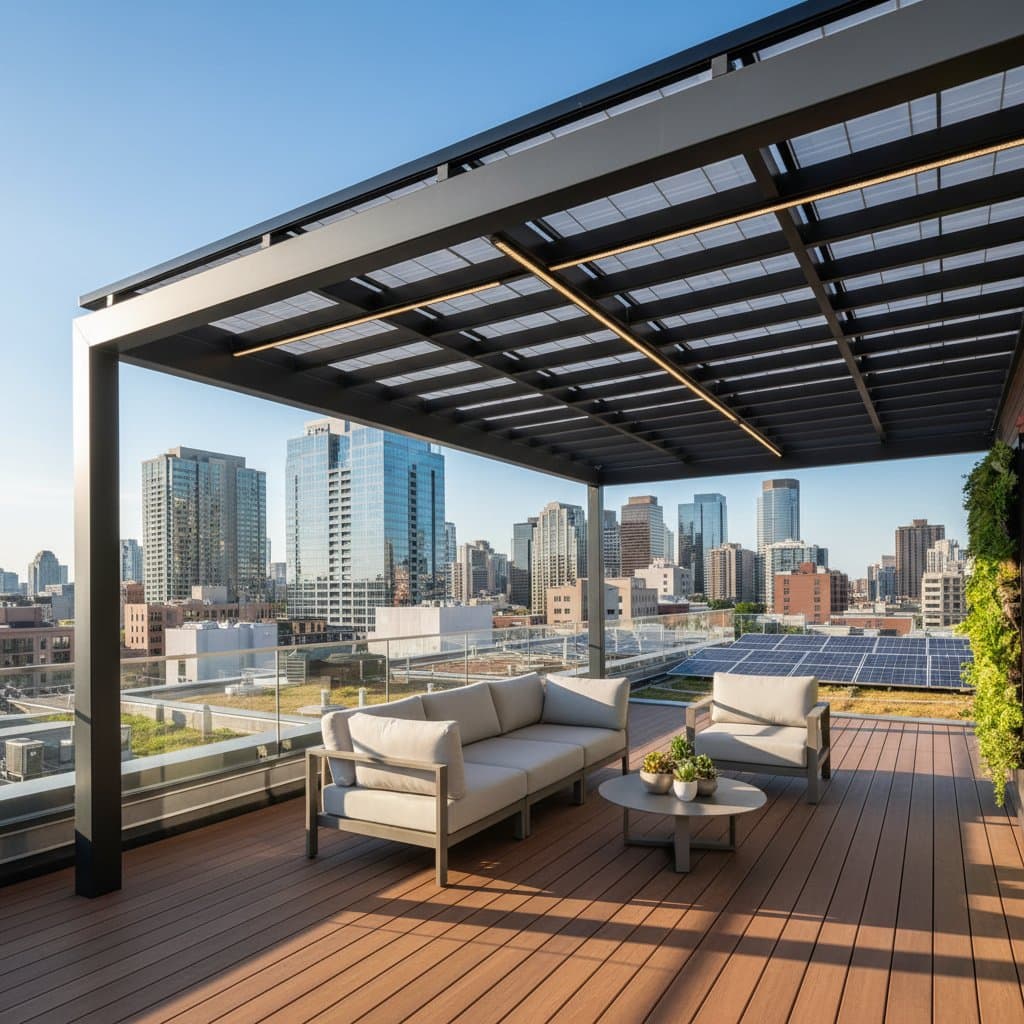
Rooftop Retreats Powered by Solar Innovation
Rooftops in urban settings often serve merely as supports for mechanical equipment. However, thoughtful design transforms these spaces into tranquil escapes that generate renewable energy. A solar pergola integrates shading, seating, and photovoltaic panels to create a multifunctional structure. Residents gain a place to relax, power electronics, and reduce electricity bills simultaneously.
This guide provides a step-by-step approach to planning, constructing, and maintaining a rooftop solar pergola suited to city environments. Readers will discover the fundamentals, required tools, safe installation methods, and ongoing upkeep strategies to ensure reliability across seasons.
Essential Tools and Materials
Preparation involves selecting appropriate tools and verifying roof capacity. Each solar panel typically weighs around 40 pounds, while the pergola framework contributes an additional 300 to 400 pounds. Structural assessment prevents overload and ensures longevity.
Required Tools:
- Tape measure extending at least 25 feet
- Cordless drill with assorted driver bits
- Socket wrench set for secure fastening
- Level and framing square for precise alignment
- Sturdy ladder or dedicated rooftop access system
- Safety harness paired with non-slip footwear
Key Materials:
- Pressure-treated lumber or durable aluminum framing
- Galvanized bolts, anchors, and mounting brackets
- Solar panels, typically 6 to 10 units for standard installations
- Inverter and charge controller for energy conversion
- Wiring harness, junction box, and protective conduit
- Outdoor-rated electrical outlets and integrated LED lighting kit
- Waterproof sealant along with roof flashing for weatherproofing
Maintain a first-aid kit on site. Rooftop work involves inherent hazards, and immediate access to supplies like bandages and antiseptics mitigates minor incidents effectively.
Prioritizing Safety During Construction
Safety forms the foundation of any rooftop project. Adhering to protocols minimizes risks associated with heights and electrical components.
- Secure a harness for all activities within 6 feet of the roof edge; falls represent the primary danger.
- Locate underlying joists with a stud finder before drilling to avoid compromising the roof integrity.
- Select hardware rated for winds exceeding 60 miles per hour, common in elevated urban areas.
- Disconnect all power sources prior to handling wiring; even low-voltage systems pose shock hazards.
- Ensure no standing water contacts electrical connections, despite the sealed nature of solar panels.
These measures not only protect participants but also enhance the project's overall durability.
Installation Guide: Step-by-Step Process
With tools and materials assembled, proceed methodically to build the pergola. Begin during stable weather to facilitate accurate work.
-
Site Preparation: Clear the rooftop area and measure dimensions. Mark the footprint using chalk lines, ensuring at least 3 feet of clearance from edges for safety.
-
Frame Assembly: Construct the base frame on the ground if possible, using pressure-treated lumber or aluminum. Attach crossbeams with galvanized bolts, verifying levelness at each joint.
-
Roof Mounting: Hoist the frame onto the roof with assistance. Anchor to joists using lag bolts and flashing to seal penetrations against leaks.
-
Panel Integration: Mount solar panels onto the frame's top rails with specialized brackets. Connect panels in series or parallel based on system design, routing wires through conduit.
-
Electrical Setup: Install the inverter and charge controller in a weatherproof enclosure. Wire to outlets and lighting, grounding all components per local codes.
-
Final Checks: Test connections with a multimeter, apply sealant to all seams, and inspect for stability before use.
This sequence typically spans two weekends, allowing time for adjustments.
Estimating Costs and Timeline
A rooftop solar pergola investment ranges from $4,000 to $8,000, influenced by material choices and professional involvement. High-quality panels and aluminum construction elevate initial expenses but yield superior performance and lifespan.
Breakdown of expenses includes:
- $1,800 to $3,000 for solar panels and inverter
- $1,000 to $2,000 for framing materials and anchoring hardware
- $500 to $1,000 for wiring, conduit, and sealing compounds
- $800 to $2,000 for licensed electrical services, if required
Allocate two weekends for framing and panel mounting under favorable conditions. Electrical integration and permit inspections extend the timeline by three to five days.
Maintenance Across Seasons
Regular upkeep sustains efficiency and appearance. Tailor routines to seasonal challenges in urban climates.
Spring Maintenance
Examine the structure following winter storms. Tighten any loose fasteners and replace warped elements. Wipe panels clean once frost risks subside to restore full sunlight capture.
Summer Care
Maximize exposure during peak sunlight periods. Monitor the inverter's cooling fan for unobstructed operation and incorporate climbing vines for added shade. Clear debris from ventilation paths to prevent overheating.
Fall Preparations
Remove fallen leaves on a weekly basis to avoid shading and moisture accumulation. Verify LED lighting functionality as daylight diminishes, ensuring reliable evening illumination.
Winter Strategies
Gently remove snow accumulations using a soft-bristled broom. Light coverings often melt naturally, but monitor for excessive weight. Secure or store loose items ahead of high-wind events.
Engaging Professional Assistance
Certain scenarios necessitate expert intervention to guarantee compliance and safety.
Seek a contractor when:
- The roof exhibits signs of deterioration, such as sagging or leaks.
- Electrical experience is limited, particularly for grid-tied systems.
- Building codes mandate licensed professionals for solar installations.
- The structure covers more than 200 square feet, potentially requiring engineering review.
Request documentation of insurance coverage and client references. Insist on a detailed load analysis to affirm structural adequacy. Professionals optimize panel placement according to roof pitch and shading patterns for peak output.
Core Benefits and Performance Insights
- Solar pergolas unite leisure spaces with sustainable energy production.
- Robust anchoring safeguards both the pergola and underlying roof.
- Consistent cleaning and checks preserve panel output at 95 percent efficiency.
- Code-compliant wiring ensures safe, reliable power delivery.
Operational systems deliver consistent savings, often offsetting costs within five years, alongside year-round enjoyment.
Launching Your Project
Initiate with a thorough roof evaluation and layout sketch. Consult local utilities or energy agencies regarding available incentives, which may reduce expenses by 25 percent in qualifying areas.
Proceed in mild weather, enlisting help for handling 40-pound panels. Methodical pacing, joint verifications, and organized tools streamline the process.
Actionable Next Steps
- Assess roof condition for load-bearing capacity and existing leaks.
- Assemble tools and verify safety equipment sizing.
- Erect the frame while routing wiring pathways to minimize later modifications.
- Arrange professional review for grid connections.
- Monitor production via inverter software to evaluate and refine performance.