
- Use insulated gloves whenever you handle electrical connectors or wiring.
- Maintain a safe distance from water sources to protect exposed wiring during the installation process.
- Select cables specifically designed to withstand ultraviolet exposure and harsh weather conditions.
- Avoid exceeding the inverter's rated capacity to prevent circuit overloads.
- Engage a licensed electrician for the final connection to the home grid or any required inspections.
These measures safeguard both the deck installation and the overall electrical integrity of the home.
Troubleshooting Common Issues
Well-executed installations occasionally encounter minor problems. Review these frequent issues along with targeted solutions.
Low or No Power Output:
Ensure every connector is securely fastened and clear of debris. Gently clean the tile surfaces using a soft cloth and mild soap solution. Investigate potential shading caused by nearby plants, furniture, or structures that might block sunlight.
Intermittent Power Fluctuations:
Examine all cables for signs of wear, damage, or moisture ingress. Replace any compromised sections immediately. Confirm that the inverter's ventilation fan operates without obstruction to maintain optimal cooling.
Reduced Efficiency from Surface Imperfections:
Polish each glass surface thoroughly to eliminate smudges or residues. Such contaminants can diminish energy capture by as much as 10 percent, so regular attention prevents performance drops.
Shifting or Loose Tiles:
Tighten the mounting clips or frame anchors as needed. Account for natural expansion and contraction due to temperature variations, which may loosen components over time.
For persistent electrical concerns beyond these initial checks, consult a qualified solar technician. Professionals can perform comprehensive tests on voltage levels and insulation integrity without risking further complications.
Ongoing Maintenance Practices
Solar deck pavers demand far less upkeep than traditional wood or stone alternatives, yet consistent care maximizes their longevity and output.
Monthly Routines:
- Sweep surfaces to remove dust, leaves, and other debris that could obscure sunlight.
- Rinse tiles with fresh water and dry them using a microfiber cloth to avoid streaks.
- Examine wiring for early signs of wear, corrosion, or loose fittings.
Seasonal Upkeep:
- Inspect and reinforce all seals in anticipation of heavy rainfall or snowfall.
- Clear accumulated snow using a plastic shovel to protect the glass from scratches; avoid metal tools.
- Renew sealant applications around conduit entries annually to maintain weatherproofing.
With diligent maintenance, a solar deck paver system can sustain more than 90 percent of its initial energy production capacity for decades.
Proper Storage Guidelines
During renovations, seasonal storage, or disassembly, handle tiles with care to preserve their condition.
- Encase each tile individually in a soft cloth or protective foam padding.
- Arrange tiles in flat stacks within a dry, indoor area away from direct sunlight.
- Elevate connectors off the floor to guard against bending, dirt, or corrosion.
- Mark cables and tile positions clearly to simplify reassembly later.
Steer clear of storage in environments prone to extreme heat or subzero temperatures, as thermal shock poses a risk of cracking the durable glass surfaces.
Cost Considerations and Timeline
Pricing for solar deck pavers fluctuates based on brand quality, tile efficiency ratings, and installation scope. Anticipate costs ranging from $18 to $35 per square foot for a complete professional installation. For a modest 100-square-foot deck, full solar integration might total $1,800 to $3,500, though blending solar and non-solar pavers can halve this investment while still yielding benefits.
Project duration hinges on deck dimensions and electrical intricacies. A do-it-yourself approach for a compact area typically requires one full weekend, including planning and testing phases. Professional crews often complete the work in a single day, but budget an additional $300 to $800 for electrician services if permits mandate certified oversight.
Although upfront costs surpass those of conventional decking materials, long-term savings on utility bills and environmental advantages provide substantial returns on the investment.
Tasks Best Left to Professionals
Homeowners can manage tile layout, surface preparation, and initial placements independently. Delegate these specialized elements to experts:
- Integration of electrical connections with the home's primary panel.
- Comprehensive system testing and compliance inspections.
- Diagnosis and repair of inverter malfunctions or battery-related problems.
When selecting an installer, inquire about expected system capacity, warranty terms, and available monitoring features. A certified solar professional guarantees adherence to local building codes and optimal safety standards.
Seasonal Care Reminders
Spring Preparation:
Evaluate tiles for damage sustained over winter. Thoroughly clean glass surfaces to prepare for peak sunlight intensity.
Summer Monitoring:
Monitor for heat buildup in partially shaded areas. Ensure adequate ventilation beneath the deck to dissipate warmth effectively.
Fall Maintenance:
Clear fallen leaves promptly and verify that drainage paths remain unobstructed to prevent pooling.
Winter Protection:
Remove snow with gentle methods and inspect wire seals for moisture. In regions with severe icing, opt for temporary disassembly or install protective coverings over vulnerable sections.
Incorporating these routines ensures reliable energy capture throughout the year, adapting to changing weather patterns.
Planning Your Installation
With an understanding of solar deck pavers and their operational principles, you possess the knowledge to design an energy-producing outdoor area.
- Evaluate sunlight exposure at your deck site using a compass or mobile application to log hours of direct sun each day. Prioritize the most illuminated zones for initial tile placement.
- Establish a feasible budget by incorporating a mix of solar and standard pavers to harmonize expenses with aesthetic goals.
- Secure professional input from an electrician to validate your proposed layout prior to purchasing components.
Significant changes to your outdoor environment prove unnecessary to embrace sustainable energy. A modest array of tiles suffices to power minor devices, such as pathway lights or small appliances, marking the start of greener living.
Essential Insights
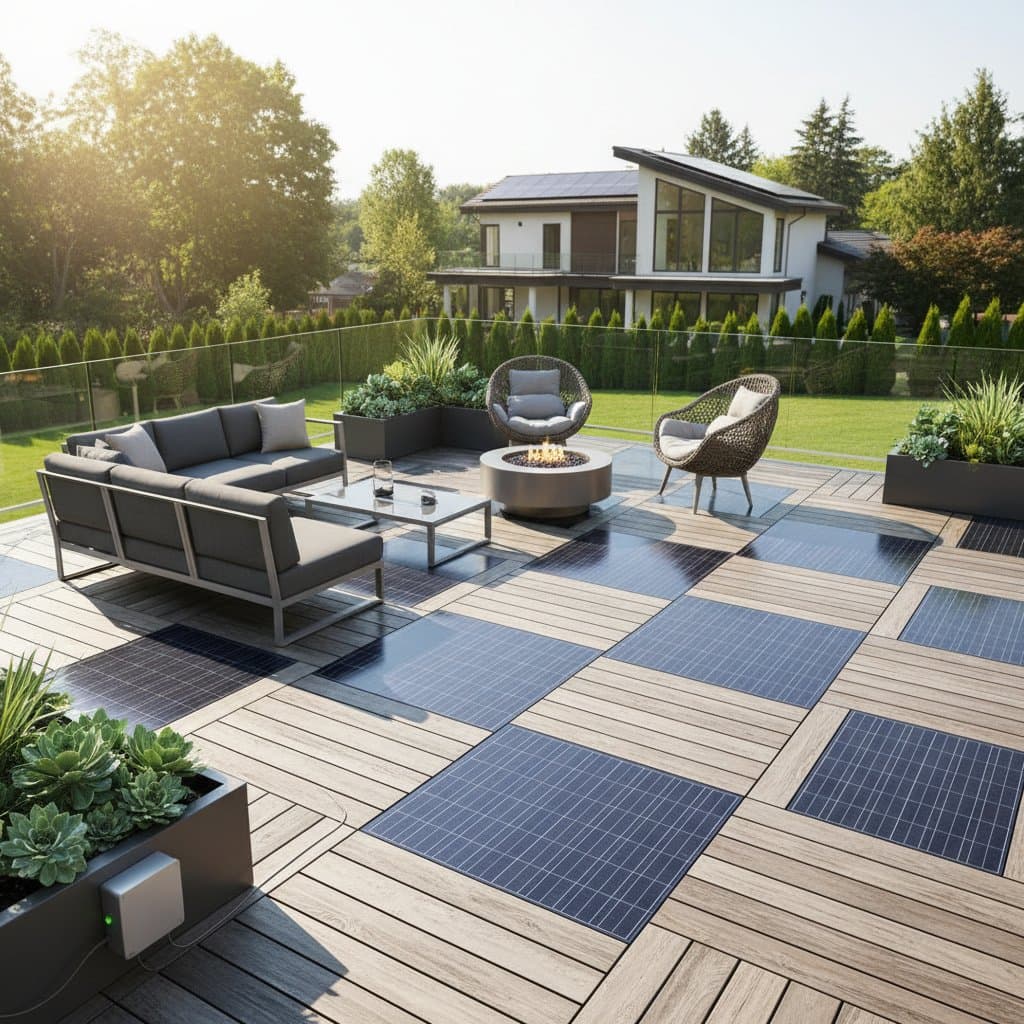
- Solar deck pavers consist of durable outdoor tiles embedded with photovoltaic cells that transform sunlight into usable electricity.
- Individual tiles generate between 5 and 20 watts, scaled by their dimensions and sunlight access.
- Key advantages include reduced utility expenses, unobtrusive integration with landscaping, and multifunctional walking surfaces.
- The installation process mirrors standard deck tiling but incorporates wiring protocols and safety verifications.
- Routine cleaning and periodic inspections preserve high efficiency levels over time.
- Installed costs average $18 to $35 per square foot, with flexible partial-coverage designs to manage budgets.
- Professional assistance remains crucial for grid tie-ins and performance evaluations.
Realizing Sustainable Outdoor Energy
Solar deck pavers integrate renewable power generation seamlessly into daily outdoor activities. They enable enjoyment of patios and decks while contributing to household energy needs through eco-conscious design.
Consider assessing your current deck setup today. Identify sun-drenched areas and envision the steady flow of clean electricity from each integrated tile, fostering both utility and environmental harmony.