
6. Install the Watering System
Thread drip irrigation tubing through each planter box, securing it along the base to deliver water directly to the roots. Connect the tubing to a battery-operated timer attached to a nearby faucet or, for sustainability, a rain barrel system that collects rooftop runoff. Schedule the system for slow, deep watering sessions twice weekly, adjusting based on weather conditions. Rooftop environments accelerate soil drying compared to ground-level gardens, so monitor moisture levels to maintain consistent hydration without waterlogging the soil.
7. Monitor Growth and Make Adjustments
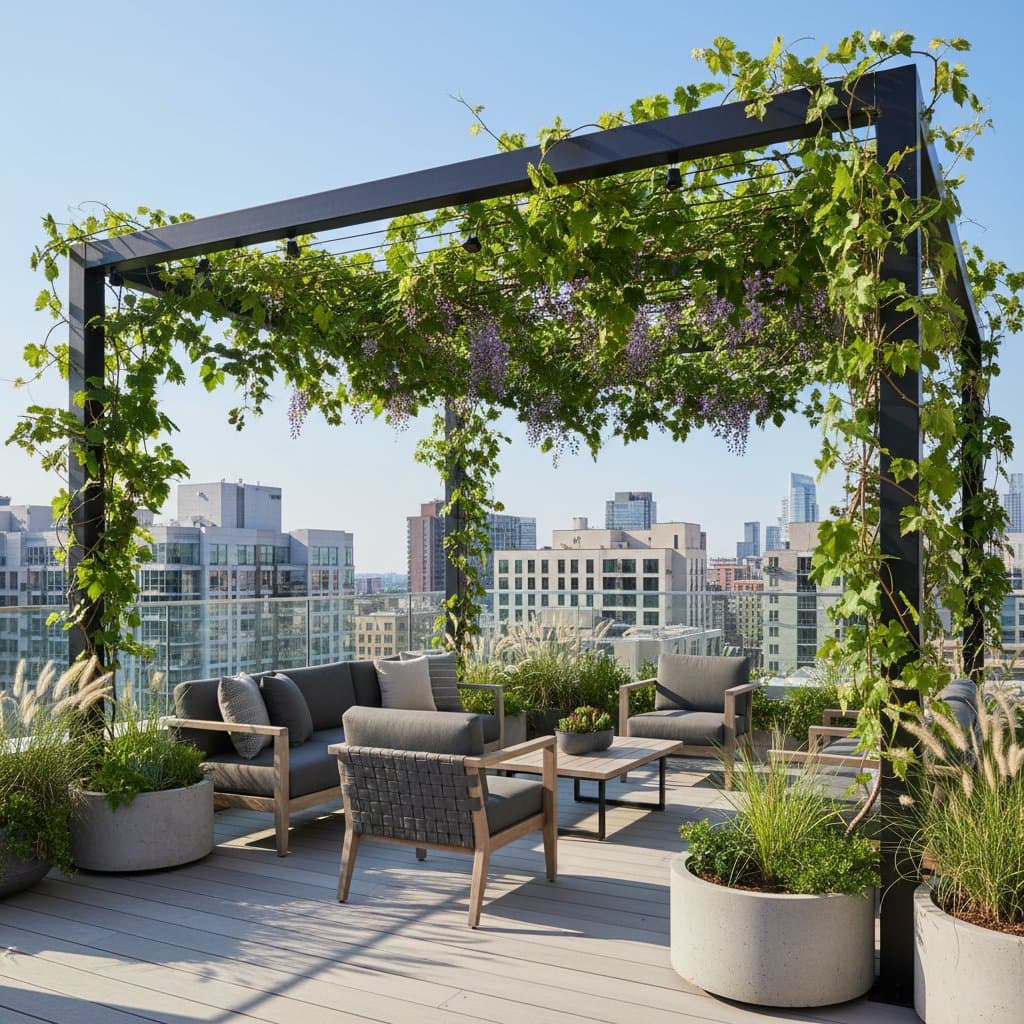
During the initial weeks after planting, inspect the vines every few days to track their growth patterns and ensure they climb toward the pergola beams. Gently reposition ties or clips to encourage even distribution across the structure, preventing overcrowding in any one area. As the canopy develops over time, prune excessive shoots that obstruct airflow or create dense tangles around support wires, promoting healthier overall growth.
Essential Safety Considerations
Before beginning any installation, consult your building's documentation or a professional to verify the roof's load-bearing capacity. Standard pergola kits typically weigh 100 to 250 pounds, or 45 to 115 kilograms, prior to adding plants and soil, which can increase the total significantly. Select kits designed for rooftop use to avoid compromising structural integrity.
Refrain from drilling into the roof's waterproof membrane, as this risks leaks and structural damage. Opt for non-penetrating mounting bases or heavy-duty weighted planters that provide stability without permanent alterations. Position electrical cords for lights or irrigation pumps away from potential puddles to prevent hazards.
Wear protective gloves and safety glasses whenever handling tools for cutting or shaping vines. For all maintenance tasks, rely on a sturdy extension ladder or temporary scaffolding rather than climbing the frame itself, which could lead to instability or falls.
Common Issues and Solutions
Uneven Growth Among Vines
This often stems from inconsistent sunlight exposure or irregular watering patterns across the structure.
To resolve, rotate the planter positions every two to three weeks for balanced light access, and fine-tune the drip emitters to ensure uniform moisture delivery. Introduce reflective mulch or light-colored panels behind less sunny sections to bounce additional sunlight onto the plants.
Leaves Turning Yellow
Excessive watering or inadequate drainage typically causes this symptom, leading to root rot.
Verify that each planter has clear drainage holes and is elevated slightly to allow excess water to escape. Cut back watering to once a week and observe for recovery; healthy green growth should resume within a week or two.
Wobbling Frame After Strong Winds
Loose connections or insufficient anchoring at the base are common culprits in windy urban settings.
Inspect and tighten all bolts and fasteners immediately after storms. Reinforce the setup by adding diagonal cross-bracing between posts or placing additional weighted planters at the corners for enhanced stability.
Visible Pest Infestations
Aphids and leafhoppers frequently target climbing vines, especially in humid rooftop conditions.
Prepare a solution of mild dish soap mixed with water and apply it to affected leaves weekly using a spray bottle, targeting the undersides where pests hide. Attract natural predators like ladybugs by planting companion flowers nearby, or introduce lacewings from a garden supply store.
Leaks Appearing Beneath Planters
Accumulated standing water or clogged roof drains can erode the membrane over time.
Elevate planters on plastic risers or feet to promote airflow underneath. Schedule monthly checks to clear debris from roof drains and scuppers, ensuring proper water flow during rain events.
Project Budget Breakdown
Tailor your living pergola to various budget levels by choosing materials that balance durability and cost.
For a basic setup, expect to spend 400 to 600 dollars on a compact aluminum kit suitable for smaller rooftops. Mid-range options in cedar, which offers natural resistance to weathering, range from 700 to 1000 dollars for broader coverage. Premium composite kits, engineered for longevity in harsh urban climates, fall between 1200 and 1500 dollars.
Budget 10 to 25 dollars per climbing vine, selecting varieties like clematis or kiwi for quick establishment. Allocate 40 to 60 dollars for high-quality potting mix enriched with compost for optimal root health. A complete drip irrigation kit, including tubing, emitters, and timer, costs approximately 80 dollars and simplifies long-term care.
Overall, anticipate total expenses from 600 to 1800 dollars, influenced by scale and material choices. Factor in tools like wire cutters or levels if not already owned, adding 50 to 100 dollars.
Time Investment Overview
Assembling the pergola frame requires one full weekend with the help of a second person to handle lifting and alignment. Planting the vines and filling planters takes a single afternoon, allowing time for soil settling before watering.
Initial vine training demands just a few minutes each week during the first growing season to secure shoots to the beams. Full canopy coverage typically arrives by the second summer, though vigorous climbers such as hops or trumpet vine can shade half the area within three to four months under ideal conditions.
Ongoing Maintenance Practices
Regular attention ensures your living pergola remains vibrant and structurally sound year-round.
Test soil moisture by inserting a finger an inch deep twice weekly; water thoroughly if dry. During peak summer heat, increase to three sessions per week, while scaling back in cooler months to prevent root stress.
Prune vines one to two times annually, focusing on removing dead or diseased sections and redirecting vigorous shoots along the frame. This practice not only shapes the canopy but also reduces weight accumulation that could strain the structure.
Annually clean the frame using a soft brush and mild soapy water solution to remove dirt and pollen buildup. Examine joints for signs of rust or material fatigue, and retighten any loose hardware to maintain rigidity.
In regions with freezing winters, insulate planter roots by wrapping exteriors in breathable burlap or positioning them near building walls for wind protection. Select cold-hardy vine species like Virginia creeper to minimize winter dieback.
Efficient Storage Solutions for Rooftop Tools
Dedicate a weatherproof storage bin on the roof for essentials such as pruning shears, twist ties, and spare irrigation parts, keeping everything organized and accessible. Use labeled stakes or tags in each planter to track vine varieties and their specific needs, simplifying seasonal care.
Store bulk potting soil and granular fertilizers in airtight plastic bins to shield them from rain and humidity. Invest in a lightweight, collapsible ladder that folds flat against the wall, providing safe reach for higher maintenance without cluttering the space.
Indicators for Professional Assistance
Engage experts when dealing with complex rooftop elements like load assessments or custom anchoring. A structural engineer evaluates weight distribution and recommends reinforcements, while a roofer inspects for compatibility with existing membranes.
For electrical needs, such as installing GFCI outlets for timers or low-voltage lighting, hire a licensed electrician to ensure code compliance and safety. Initial consultations typically run 100 to 300 dollars but safeguard against expensive repairs.
Prepare these key questions for any contractor:
- How will you assess and document the roof's load capacity for this installation?
- Which anchoring materials offer the best resistance to urban corrosion and weather?
- What sealing techniques will you apply around any attachments to preserve the roof's waterproofing?
Steps to Sustain Your Pergola
Establish these routines to support steady growth and enjoyment:
- Direct emerging vines toward the beams with soft ties every few days in the early stages.
- After weather events, verify that all anchors and connections remain secure.
- Apply a balanced, slow-release fertilizer in early spring and midsummer to fuel development.
- Arrange seating like a bistro table or lounge chair under the maturing canopy for relaxed outdoor time.
As seasons progress, the foliage lowers ambient temperatures and muffles city sounds, integrating seamlessly with your living space. Begin modestly with a single panel and a few plants to build confidence, then scale up as results inspire further expansion. This approach fosters a deeper understanding of how greenery adapts to urban constraints, yielding enduring benefits in comfort and aesthetics.