
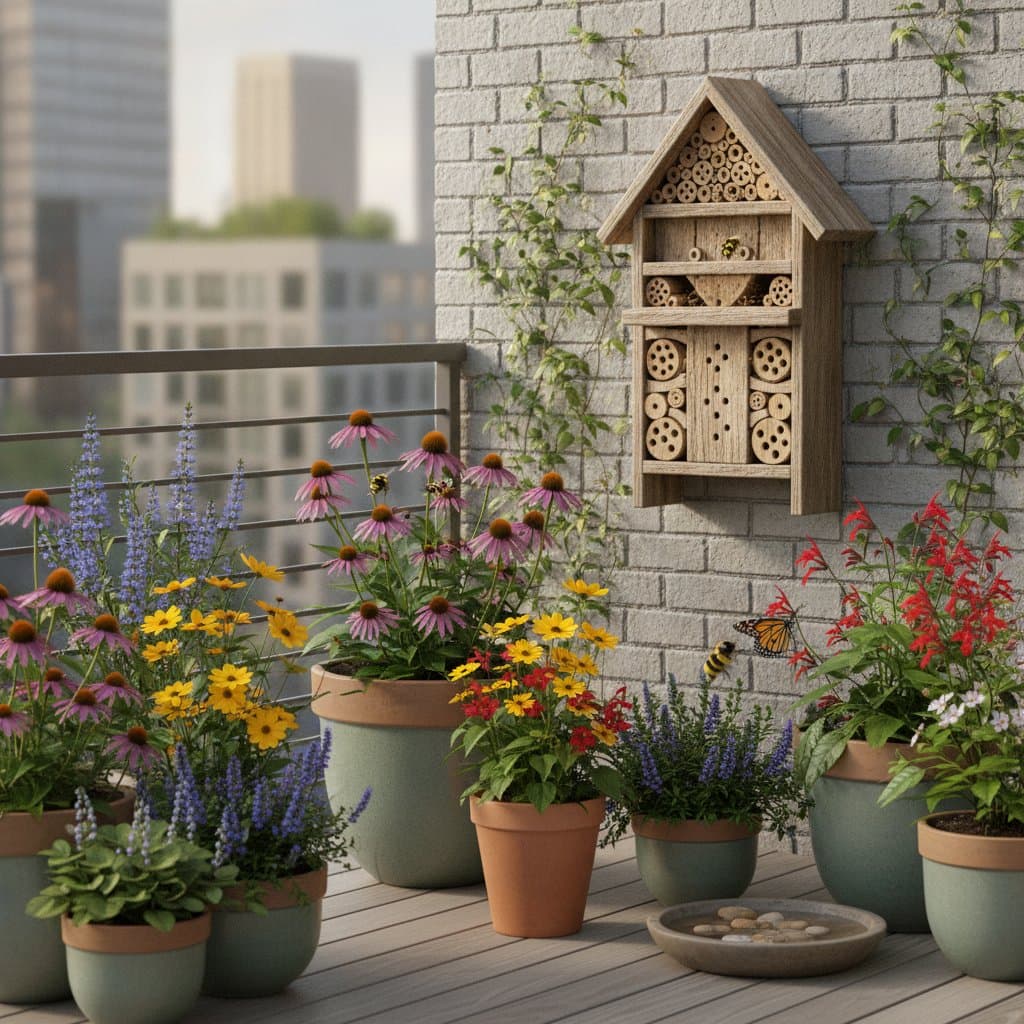
Bee Hotels and Native Blooms Create Pollinator Havens on Urban Balconies
A quiet balcony transforms into a lively habitat with native flowers and a bee hotel. The setup requires only a few square feet along with the right plants and a secure nesting site. The result is a garden that supports pollinators throughout the growing season.
This guide explains how to build a pollinator-friendly balcony. Readers learn how bee hotels function, which native plants pair well with them, and how to maintain both elements. Every recommendation fits small urban spaces.
Overview
A bee hotel is a compact nesting structure built from bamboo tubes, drilled wood blocks, or reed stems. It provides solitary bees with a place to lay eggs and protect larvae. These bees live alone, remain gentle, and focus primarily on pollination rather than hive building.
Native blooms are plant species that grow naturally in the local region. They supply better nectar and pollen for area insects than many imported annuals or hybrids. Combining a bee hotel with native blooms supplies both shelter and food sources. Even one balcony can sustain dozens of pollinators across multiple months.
Tools and Materials
Collect these items before beginning. Most are available at garden centers or hardware stores.
- One bee hotel measuring 8 to 12 inches high with tubes 4 to 6 inches deep
- Mounting hardware such as hooks or zip ties
- Drill and screws for wall or railing attachment
- Three to five medium planters 10 to 12 inches wide
- Well-draining potting mix
- Native flower seeds or young plants
- Watering can
- Gloves
- Weatherproof labels
Total cost ranges from 60 to 120 dollars. Setup requires about two hours.
Steps
Select the Location
Choose a balcony area that receives at least four hours of direct sunlight daily. Bees require warmth for flight and nest construction. Avoid exposed windy spots or deep shade. Install a tall planter or mesh screen as a windbreak when needed.
Install the Bee Hotel
Mount the hotel at eye level or slightly above, roughly 4 to 6 feet from the floor. Orient the entrance toward morning sun when possible. Secure the unit firmly to prevent movement that could disturb nesting. Position it under an eave to stay dry during heavy rain. Wear gloves and maintain stable footing during installation.
Plant Native Flowers
Select three to five species that bloom at staggered times to maintain pollen availability. Reliable choices include purple coneflower for midsummer, black-eyed Susan for late season, wild bergamot for steady nectar, blue false indigo for early spring, and asters for fall. Place each species in its own container or combine them in a trough planter. Space stems about 8 inches apart and water until the soil feels evenly moist.
Provide Water
Bees need shallow water sources for hydration and nest humidity control. Set a bowl filled with pebbles near the plants. Keep water levels low enough to prevent drowning. Refresh the bowl every few days to limit mosquito development.
Observe Activity
Bees arrive once flowers open. Common visitors include mason bees, leafcutter bees, and metallic green sweat bees. Record which plants draw the most insects to guide future selections.
Safety Guidelines
Avoid all pesticides near the hotel. Confirm that mounts remain stable in storms. Wear gloves during planting and cleaning. Keep tube entrances unobstructed. Use only untreated wood for any additional construction.
Common Issues and Solutions
Empty tubes after several weeks usually indicate insufficient nearby blooms or excessive shade. Add more native plants and relocate the hotel to a sunnier position.
Sealed tubes that remain untouched for months contain developing larvae. Leave them undisturbed until emergence the following season.
Mold inside tubes results from poor ventilation or rain exposure. Move the hotel to a drier location and replace affected tubes.
Bird damage can be reduced with a wire mesh guard placed one inch from the hotel surface.
Costs and Time Commitment
Initial expenses total 60 to 120 dollars. The bee hotel accounts for 25 to 45 dollars, planters and soil for 20 to 40 dollars, plants or seeds for 15 to 35 dollars, and hardware for 5 to 10 dollars. Seasonal upkeep averages 10 dollars. Watering takes roughly ten minutes every two days.
Renters should select lightweight movable planters. Owners may install permanent frames for additional hotels.
Seasonal Care
Clean the hotel only after all tubes empty. Brush out debris and replace damaged tubes. Cut back flower stems to six inches at season end so hollow stalks can serve as winter shelter. Refresh soil with compost as needed. Clean water bowls regularly to control algae.
Space-Saving Storage
Vertical racks raise planters off the floor. Store potting mix in sealed bins beneath a bench. Hang tools on hooks. Nest empty planters during off-season periods. Keep seed packets in a labeled dry box sorted by bloom time.
When Professional Help Is Needed
Contact a local pollinator specialist if wasps occupy the hotel or mold spreads rapidly. Building maintenance staff can assess structural concerns from planters or water damage.
Moving Forward
Begin with one hotel and several planters. Track bloom times and bee visits in a simple journal. Share seeds with neighbors to extend the corridor of food and shelter across nearby buildings. The combination of native plants and secure nesting sites turns limited balcony space into a functional ecosystem that supports pollinators and adds seasonal interest.