
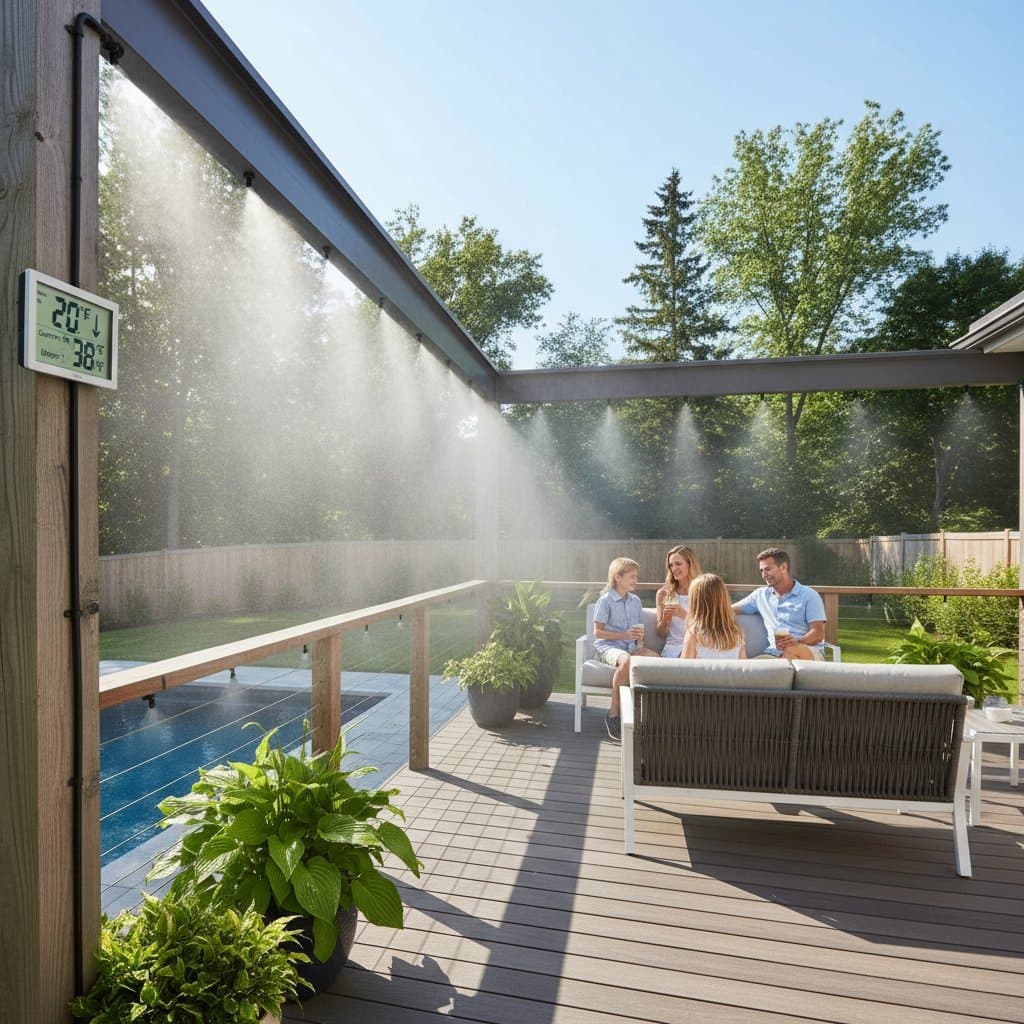
How Misting Fog Systems Work
Misting fog systems utilize the principle of evaporative cooling to lower temperatures on decks and patios. Fine water droplets, released through specialized nozzles, absorb heat from the surrounding air as they evaporate. This process can reduce air and surface temperatures by up to 20 degrees Fahrenheit, creating a refreshing environment even on days exceeding 90 degrees.
The effectiveness depends on factors such as humidity levels, nozzle spacing, and water pressure. In low-humidity conditions, evaporation occurs rapidly, maximizing cooling. Systems typically operate at 40 to 60 pounds per square inch of pressure, ensuring droplets remain suspended long enough to cool without excessive wetting.
Homeowners benefit from this technology through extended outdoor usability. Decks become viable spaces for dining, relaxing, or entertaining without the discomfort of intense heat. Additionally, these systems help protect wood and composite decking from thermal expansion and UV damage caused by prolonged sun exposure.
Essential Tools and Materials
Assembling the necessary tools and materials streamlines the installation process. A basic setup for a standard 10-by-12-foot deck requires items that are readily available at hardware stores. Preparation prevents interruptions and ensures a secure, efficient system.
Tools:
- Tape measure, at least 25 feet long, for accurate perimeter assessment
- Drill equipped with small bits to create pilot holes in mounting surfaces
- Adjustable wrench for tightening fittings and connections
- Hose cutter or sharp utility knife to trim tubing precisely
- Zip ties or small clamps to secure lines along railings or beams
- Ladder for accessing elevated mounting points safely
Materials:
- Misting line kit including at least 10 stainless steel or brass nozzles for durability
- Inline water filter designed for outdoor applications to prevent clogs from debris
- Hose adapter or splitter compatible with standard garden hoses
- End plug to seal the final section of tubing and maintain pressure
- Mounting clips spaced every 2 feet to support the line without sagging
- Optional timer or pressure regulator to automate operation and control flow
Safety Gear:
- Safety glasses to protect eyes during drilling and testing
- Gloves for gripping tubing and tools without slippage
- Non-slip shoes, especially when using a ladder on potentially damp surfaces
Position a bucket near the water source to capture initial sprays and verify nozzle performance before permanent installation.
Step-by-Step Installation Guide
Installing a misting system involves measuring, mounting, and connecting components in a logical sequence. Begin on a dry day to allow for adjustments without interference from weather. The entire process for a small deck typically spans two hours.
First, measure the deck's perimeter where misting lines will run, usually along railings or overhead beams. Account for a water source within 5 feet to minimize hose length and pressure loss. Mark mounting points every 2 to 3 feet, ensuring nozzles face downward at a 45-degree angle toward seating areas.
Next, drill pilot holes at marked spots and attach mounting clips using screws appropriate for the deck material. Thread the misting tubing through the clips, starting from the water source. Cut tubing to fit with the hose cutter, then insert nozzles at intervals of 2 to 4 feet, depending on desired coverage density.
Connect the system to the water source using the adapter and filter. Install the end plug at the tubing's terminus. Test the setup by turning on the water at low pressure; observe for leaks at joints and even mist distribution. Adjust nozzle angles as needed to avoid direct spraying on furniture or walkways.
For enhanced performance, incorporate a pressure regulator if household water pressure exceeds 60 PSI. This prevents nozzle damage and ensures consistent droplet size. Once operational, run a 15-minute trial to assess cooling in different deck zones.
Key Safety Considerations
Prioritizing safety during installation and use minimizes risks associated with water and elevated work. Position all misting lines at least 2 feet away from electrical outlets or fixtures to prevent short circuits from moisture.
Direct nozzles upward or outward to reduce the chance of creating slippery surfaces on the deck floor. If condensation occurs, elevate lines higher or widen spray angles. Disconnect the system during freezing temperatures to avoid ice expansion that could fracture components.
Source water from a clean, potable supply only. Avoid connections to gray water systems, which may introduce contaminants that clog nozzles or affect air quality. Test each connection under full pressure before regular use to identify potential issues early.
Budgeting for Your System
A DIY misting system offers an affordable solution for cooling outdoor spaces. Basic kits for small decks start under $120, covering essential tubing, nozzles, and fittings. Larger installations with 20 or more nozzles and added features may approach $300.
Key cost factors include material quality and accessories. Brass nozzles resist corrosion better than plastic alternatives, justifying a modest premium for longevity. Pressure pumps, which boost performance in low-water-pressure homes, add $50 to $100 to the total.
Timers enable scheduled operation, reducing water usage; basic models begin at $25. Factor in minor expenses like additional tubing for irregular deck shapes. Professional installation, if required, typically ranges from $200 to $500, depending on complexity.
Time investment remains low: a straightforward setup requires about two hours, plus 30 minutes for testing and tweaks. This efficiency makes misting systems accessible for weekend projects.
Maintenance for Long-Term Performance
Regular upkeep ensures the misting system delivers consistent cooling year after year. At the start of each season, inspect all fittings, nozzles, and tubing for wear or damage. Flush the lines with clean water for five minutes to remove accumulated dust, minerals, or insect debris.
Replace any nozzles that produce uneven sprays or sputtering, as blockages reduce efficiency. In high-humidity periods, limit cycles to 10 minutes to avoid over-saturating surfaces, which could lead to mold on cushions or railings.
For windy locations, secure lines on the downwind side of the deck to maximize mist retention. Consider adding lightweight baffles or fabric screens to direct airflow and enhance cooling concentration. Winterize by draining all water from the system and storing components indoors if possible.
These practices not only extend equipment life but also maintain optimal energy and water savings, typically using less than a garden hose for comparable refreshment.
Professional Installation Options
While DIY suits most straightforward decks, certain scenarios warrant expert assistance. Engage a professional for decks with integrated electrical elements, such as lighting or outlets, to ensure tubing routes clear of wiring.
Seek licensed help if the project exceeds 40 nozzles, requires a dedicated high-pressure pump, or involves smart home integration for automated controls. Experts can install a separate water line with a shutoff valve, simplifying future maintenance and reducing reliance on garden hoses.
Professionals perform pre-installation pressure tests to detect weaknesses in lines or fittings, averting costly leaks. Their expertise also optimizes nozzle placement for uniform coverage, particularly on multi-level or irregularly shaped decks.
Steps to Launch Your Cooling Upgrade
Implement your misting system with these targeted actions for quick results. Measure the deck perimeter and select a kit matching your layout, ensuring proximity to a water outlet.
Acquire a filtered 10-nozzle starter kit to prototype the setup affordably. Conduct a 15-minute test run, monitoring temperature drops and humidity changes to refine positioning.
Enjoy the benefits of a cooler deck that encourages more time outdoors. This simple enhancement protects your investment in deck materials while providing reliable relief from summer heat, fostering comfortable gatherings season after season.