
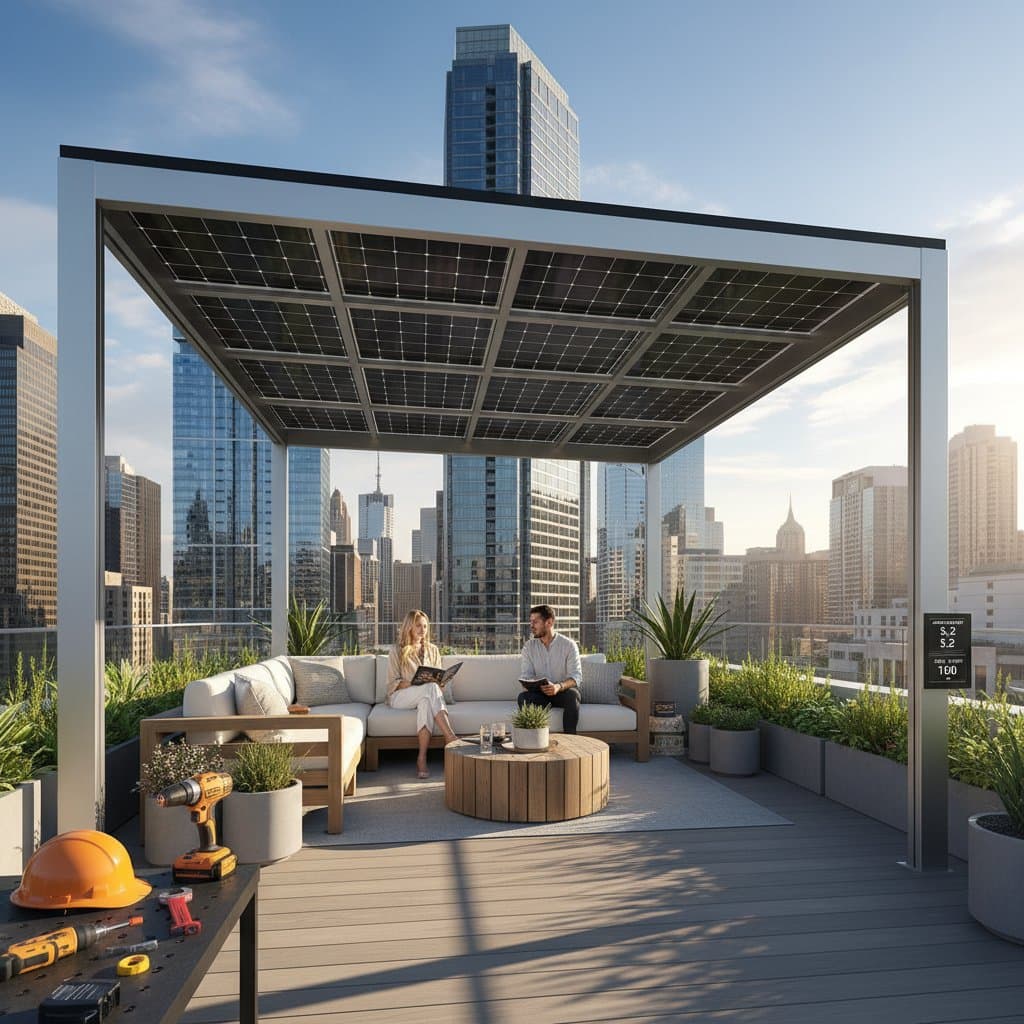
Harness Solar Power and Shade on Your Rooftop
Sunlight often transforms rooftops into areas of intense heat, glare, and underutilization. The same sunlight holds the potential to energize a home and enhance outdoor comfort. A solar pergola achieves these outcomes by providing shade while generating clean electricity for daily use.
The objective remains straightforward: establish a shaded area that produces its own power and reduces reliance on utility services. The following sections detail the nature of a solar pergola, planning and installation processes, and strategies for long-term safe operation.
Understanding Solar Pergolas
A solar pergola consists of a rooftop or backyard framework that integrates solar panels to deliver shade underneath. This design resembles a traditional pergola, yet it substitutes open slats with photovoltaic panels. These panels absorb sunlight, convert it into electricity, and supply it to the home's electrical system or a storage battery.
This configuration offers significant advantages in three key areas:
- Dual-purpose functionality. The structure cools the area below while generating electricity.
- Optimized space utilization. It converts underused rooftop space into a compact energy production site.
- Enhanced comfort and aesthetics. The setup creates a contemporary shaded zone suitable for relaxation or gardening.
A properly constructed rooftop solar pergola typically produces 1 to 5 kilowatts of power, based on the number of panels and their orientation. This output suffices to offset a substantial portion of household electricity consumption, all while fostering an inviting outdoor environment.
Essential Tools and Materials
Construction or commissioning of a solar pergola requires standard tools and robust structural components. The precise inventory varies with rooftop configuration and weight-bearing capacity, yet typical projects incorporate the following:
- Solar panels rated at 250 to 400 watts each, generally numbering 4 to 12 units.
- Metal framing or pressure-treated wooden beams dimensioned to meet rooftop load specifications.
- Stainless steel mounting brackets and bolts for secure attachment.
- An inverter to transform direct current into alternating current.
- Outdoor-rated wiring and conduit for electrical connections.
- Safety equipment including gloves, protective eyewear, and shoes with non-slip soles.
Consult local building regulations prior to commencement. Certain rooftops necessitate a structural evaluation to verify support for the added weight, which ranges from 3 to 6 pounds per square foot in a compact pergola system.
Installation Process
Step 1: Evaluate the Rooftop Space
Begin with precise measurements of the available roof area. A clear space of at least 10 by 10 feet accommodates a modest pergola and allows for safe movement. Identify vents or obstructions that might create shadows.
On flat roofs, secure posts using ballast mounts. For pitched roofs, employ a raised framework to maintain panel levelness and optimal performance.
Step 2: Select Panels and Determine Layout
Choose panels boasting an efficiency exceeding 18 percent to maximize energy capture. Position them facing south in the northern hemisphere or north in the southern hemisphere, with a tilt angle of 25 to 35 degrees. This orientation optimizes sunlight exposure across diverse urban rooftop conditions.
Draft a frame blueprint prior to any drilling. Ensure a minimum 2-inch air gap beneath the panels to mitigate overheating risks.
Step 3: Construct the Pergola Framework
Opt for weather-resistant timber or powder-coated steel. Position vertical posts approximately 6 feet apart to ensure structural integrity.
Anchor the base using heavy-duty brackets and apply roofing sealant to all connection points, thereby preventing water infiltration. Install crossbeams aligned with panel sizes, typically 3 to 4 feet in width per segment. Verify that the frame remains square and level throughout assembly.
Step 4: Mount the Solar Panels
Affix brackets to the beams initially, followed by panel installation. Secure bolts with moderate torque to avoid damage. Link panel cables sequentially, adhering to the manufacturer's guidelines for series or parallel configurations.
Organize wiring neatly using clips along the beam undersides. Eliminate any loose cables that could ensnare debris or retain moisture.
Step 5: Integrate Electrical Systems
Route conduit from panels to the inverter's designated spot, which must remain shaded and well-ventilated. If incorporating battery storage, connect it subsequent to inverter installation. Deactivate main circuit breakers before any wiring procedures.
Engage a certified electrician for the ultimate grid connection and regulatory inspection. This step guarantees adherence to codes and prioritizes safety.
Essential Safety Measures
Conduct work exclusively on dry days to minimize slip hazards. Employ a roof harness near edges for added protection. Refrain from manipulating energized wires; isolate power sources prior to any inspections.
Evaluate the frame's wind resistance, as rooftop winds may intensify by 15 to 20 percent compared to ground level.
Common Issues and Resolutions
Reduced power generation: Clean panels using mild soap and water solutions. Accumulated dust or pollen can obstruct up to 15 percent of incoming sunlight.
Insecure connections: Examine junction boxes and fasteners every few months. Routine tightening with a screwdriver averts potential voltage reductions.
Water accumulation: Verify clear drainage routes and intact seals if pooling occurs near the base.
Unwanted noise or movement: Incorporate rubber washers beneath bolts to dampen vibrations during windy conditions.
Ongoing Maintenance Practices
Solar pergolas demand minimal routine care post-installation. Adopt these protocols to prolong durability and efficiency:
- Clean panels every two to three months, increasing frequency near vegetation or high-traffic zones.
- Scrutinize wiring for signs of rodent activity or degradation.
- Reapply paint or sealant to wooden elements biennially to combat moisture exposure.
- Verify inverter indicator lights monthly to affirm proper function.
Panels generally endure 20 to 25 years, with consistent maintenance sustaining high output beyond warranty terms.
Storage Considerations
For detachable elements like side shades or seating beneath the pergola, relocate them to sheltered storage during severe weather. Collapse or stack furnishings to shield against potential impacts.
Store maintenance supplies, such as cleaning implements and replacement fuses, in an accessible, labeled container proximate to the electrical access point. This arrangement streamlines future upkeep tasks.
Cost Estimates and Timeline
A compact rooftop solar pergola ranges from $6,000 to $12,000 in total expense, influenced by scale and component quality. Self-directed framing reduces costs, though professional electrical integration remains essential.
Anticipate completion over three to six weekends, encompassing construction, inspections, and grid linkage.
Energy cost reductions commence upon activation. Numerous owners recoup investments partially via diminished bills and available incentives.
Seasonal Care Guidelines
- Spring: Inspect all fasteners following winter's expansion and contraction cycles.
- Summer: Clean panels monthly to eliminate pollen buildup and heat-induced residue.
- Fall: Remove fallen leaves from panel peripheries and drainage channels.
- Winter: Gently sweep away light snow using a soft-bristled broom. Avoid scraping ice directly from panel surfaces.
These actions preserve unobstructed sunlight access throughout the year.
Indicators for Professional Assistance
Seek expert involvement in these scenarios:
- Uncertainty regarding roof integrity or age.
- Requirements for electrical permits or grid interconnection approvals.
- Intentions to incorporate battery systems or intelligent monitoring features.
Pose these inquiries to prospective contractors:
- What load-bearing capacity does the pergola design possess?
- How does the wiring safeguard against humidity and ultraviolet degradation?
- Which warranties apply to both panels and the structural framework?
Practical Next Actions
A solar pergola extends beyond mere shade provision. It fosters energy independence, financial savings, and elevated rooftop usability.
To proceed:
- Measure the rooftop expanse and review applicable local regulations.
- Outline a preliminary design incorporating panel quantities and beam intervals.
- Solicit estimates from qualified solar specialists, evaluating materials and coverage terms.
Initiate with a single shaded zone rather than an extensive overhaul. Experience the benefits firsthand as the structure contributes to self-powered living.