
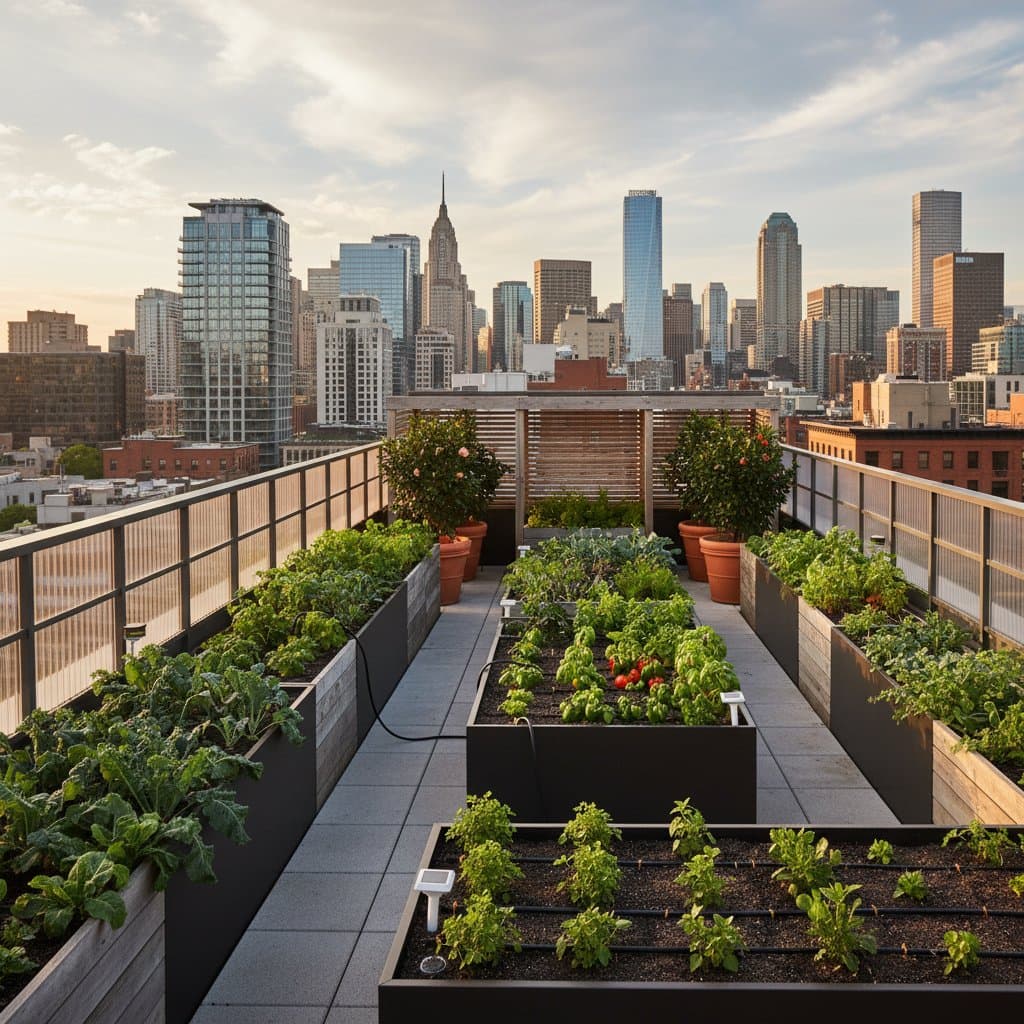
Designing Rooftop Microclimates for Year-Round Harvests
Urban rooftops present unique challenges for growing food. Wind strips moisture from leaves, while intense sun scorches delicate greens. The same spot ideal for a midday meal can mimic a harsh, arid slope for plants. These conditions define a microclimate, a localized pocket of temperature, humidity, and airflow. By understanding and modifying these factors, gardeners extend harvests across all seasons.
The objective involves identifying influences on rooftop microclimates and implementing barriers, shelters, and soil strategies to stabilize plant environments. This guide details spotting problematic areas, installing windbreaks, selecting containers, and maintaining output during harsh weather. Simple adjustments yield resilient, productive spaces without extensive renovations.
Overview
Rooftop microclimates arise from heat retention in surfaces, wind exposure, and shade variations from buildings. Concrete and metal absorb solar energy during the day and release it gradually at night, elevating temperatures. Exposed edges channel gusts that desiccate soil and damage foliage. Strategic modifications create distinct zones suited to diverse crops throughout the year.
Major alterations prove unnecessary. Observation, basic barriers, and adequate soil depth suffice. The focus remains on minimizing plant stress and maintaining consistent growing medium temperatures.
Tools and Materials
Effective microclimate management relies on durable, accessible items. Consider these essentials:
- Containers: Opt for robust plastic or fiber pots with minimum depths of 10 inches (25 cm) for leafy greens and 16 inches (40 cm) for root crops.
- Wind barriers: Employ lattice panels, trellises, or permeable fabric screens reaching approximately 4 feet (1.2 m) in height.
- Mulch: Apply a 2-inch (5 cm) layer of straw, bark chips, or chopped leaves to conserve moisture.
- Thermometers: Deploy several inexpensive outdoor models to monitor temperature variations across zones.
- Watering system: Install drip irrigation or self-watering pots to minimize water loss through evaporation.
- Protective materials: Use light-reflective fabrics, bubble wrap, or foam boards to safeguard sensitive plants during cold periods.
Secure all installations firmly. Rooftop gusts displace unsecured elements rapidly, so incorporate anchors or weights.
Steps
1. Map Your Rooftop Zones
Traverse the roof at morning, noon, and evening intervals. Record locations of peak wind intensity and persistent warmth on surfaces. Identify heat-retaining corners versus moisture-depleting exposures. Use tape or chalk to delineate these zones, informing subsequent crop arrangements.
2. Install Wind Barriers
Position semi-permeable screens along the direction of dominant winds. Solid barriers induce eddies, whereas open designs moderate airflow smoothly. Limit barrier height to one-third that of adjacent structures. Space them 3 to 5 feet (0.9 to 1.5 m) from plantings, anchoring with substantial pots or concrete blocks.
3. Arrange Plants by Thermal Preferences
Position heat-loving crops like peppers, eggplants, and tomatoes adjacent to sun-warmed walls. Cool-tolerant varieties such as lettuce, kale, and spinach thrive in shaded areas behind elevated containers. Leverage container stacking to generate necessary shade patterns.
4. Optimize Soil and Moisture Retention
Deeper pots insulate roots from fluctuations. Layer coarse gravel at the base for drainage, then blend equal portions of compost, peat moss, and perlite. Irrigate during early hours to curb evaporation. Top with mulch to moderate surface temperatures. In winter, encase pot exteriors with bubble wrap or burlap for insulation.
5. Prolong the Growing Season
Deploy movable cold frames or transparent plastic sheeting over raised beds. Ventilate by propping covers ajar to promote circulation. In high-sun areas, suspend shade cloth to temper peak heat. Adjust coverings seasonally and clear vents regularly to avert fungal issues.
Safety Considerations
Verify structural weight capacities prior to placing containers or frameworks. Consult a structural engineer if uncertainties arise. Steer clear of combustible materials near ventilation outlets or wiring. Fasten barriers with clamps or ballast to resist displacement. Wear gloves when manipulating sharp edges or insulators.
Troubleshooting Common Issues
Windburn manifests as desiccated or browned leaf margins. Introduce an additional screen or relocate plants nearer to protective walls. Rapid soil drying indicates insufficient depth or dark pot colors; transition to pale containers and incorporate mulch.
Overheating on southern exposures strains roots. Mitigate with reflective sheeting or panels to deflect solar gain. Stunted growth in shaded zones suggests inadequate light; reposition to central areas for balanced exposure.
Persistent difficulties warrant temperature logging at varied times. Reallocate plant groupings to alternative zones as needed.
Budget and Timeline
Initiate core enhancements for 100 to 200 dollars, encompassing pots, barriers, and mulch. A basic drip setup adds 50 to 100 dollars. Setup requires one weekend, followed by weekly checks of 2 to 3 hours for irrigation and monitoring.
Economize with repurposed pallets as screens or salvaged fabrics for shading. Prioritize depth in containers and stability in fixings; inadequate choices lead to ongoing setbacks.
Ongoing Maintenance
Clean screens of debris to ensure uniform airflow. Inspect fastenings post-storms. Replenish mulch biannually. Renew drip components annually. Rotate crops across zones at cycle ends to equalize nutrient draw and deter infestations.
Evaluate wrappings after frosts, removing them promptly in warming weather to avoid excess heat. Maintain logs of temperatures and yields to discern trends for future cycles.
Professional Assistance
Halt activities if leaks, fissures, or drainage problems appear; engage a contractor for roof evaluation. Experts assess load bearings and install underlayments for heavy setups. For plumbed irrigation, retain a licensed specialist to safeguard against contamination.
Efficient Storage Practices
House surplus soil and mulch in watertight bins shielded from precipitation. Stow tools in sealed cases by entry points. Lean panels vertically when idle. Tag vessels with crop types and dates. Such routines streamline operations and curb spoilage.
Advancing Your Rooftop Garden
Apply these techniques to cultivate a steadfast urban oasis. Experiment with zone mappings each season to refine outputs. Track progress through journals, adjusting for evolving weather patterns. Soon, your rooftop yields consistent, fresh bounty year-round, transforming city constraints into gardening strengths.