
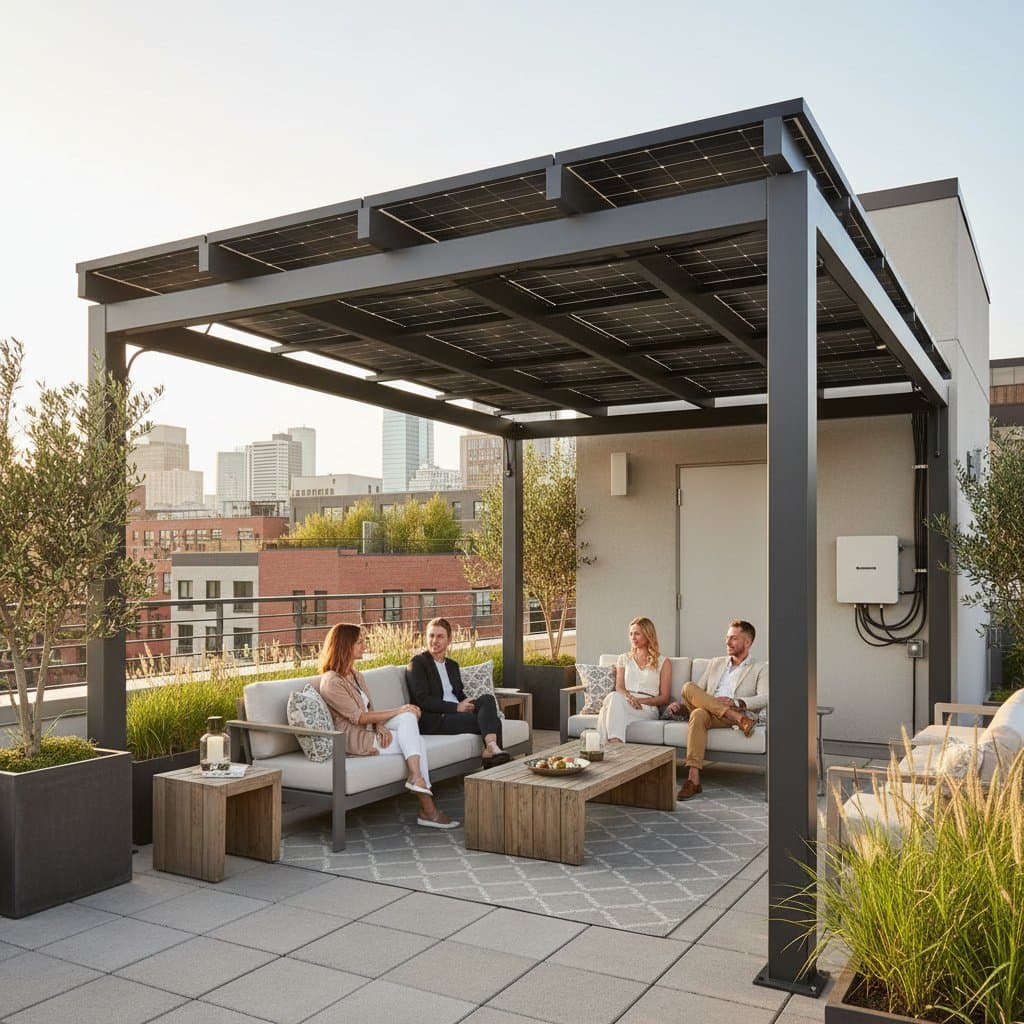
Step 5: Wire and Connect
After securing the solar panels, focus on the electrical integration. Select appropriately gauged positive and negative cables rated for outdoor use and UV exposure to ensure durability. Route these cables through protective conduit attached firmly to the pergola beams using UV-resistant clamps, preventing wear from weather elements.
Connect the cables to the inverter, which converts direct current from the panels into usable alternating current. If integrating with the building's electrical system, link the inverter to a dedicated circuit breaker. For off-grid setups, attach it to a battery bank designed for solar storage. Clearly label every breaker, junction box, and connection point with weatherproof tags to facilitate future maintenance and inspections.
Caution: All electrical work demands review by a licensed electrician. Municipal regulations typically mandate permits, inspections, and official approval prior to energizing the system. Non-compliance risks safety hazards and potential fines.
Step 6: Test and Finish
With connections complete, power up the system and monitor the inverter's display for real-time generation data, such as voltage output and energy yield. Verify functionality by testing any integrated features, including LED lighting strips or power outlets beneath the pergola. Address any discrepancies immediately, such as error codes on the inverter, by consulting the manufacturer's manual.
Enhance the aesthetic appeal by applying a weather-resistant stain or paint to the wooden or metal frame, selecting colors that complement your rooftop decor. Introduce comfortable seating, potted greenery, and weatherproof rugs to create an inviting outdoor lounge. This final touch transforms the structure from a functional installation into a versatile living space.
Troubleshooting Common Issues
Solar pergolas perform reliably with proper care, yet occasional issues arise due to environmental factors or installation variables. Addressing them promptly maintains efficiency and longevity. Below are targeted solutions for frequent challenges.
Low Power Output
- Examine panels for accumulations of dust, pollen, bird droppings, or fallen leaves, which reduce sunlight absorption. Gently clean surfaces using a soft brush and a solution of mild soap diluted in lukewarm water, followed by a thorough rinse to avoid residue buildup.
- Scrutinize all wiring connections for corrosion, loose terminals, or damaged insulation. Tighten clamps and replace any frayed cables to restore conductivity.
- Review inverter configurations to match your system's specifications, and check battery levels if applicable. Firmware updates from the manufacturer may resolve software-related inefficiencies.
Water Leaks at Posts and Joints
- Inspect and install metal flashing around post bases where they meet the rooftop membrane. Apply a high-quality, silicone-based sealant to seal gaps and prevent moisture ingress.
- Evaluate the roof's pitch and pergola alignment to direct water flow away from the structure. Adjust drainage channels or add subtle extensions if pooling occurs.
Uneven Shading or Reduced Exposure
- Prune overhanging tree branches or nearby foliage that obstructs sunlight paths, particularly during morning or afternoon hours. Schedule this maintenance seasonally to optimize year-round performance.
- Experiment with panel tilt angles using adjustable mounts to capture maximum solar rays. Relocate shading elements like furniture or awnings to minimize interference during peak production times.
Noise or Vibration from Wind or Movement
- Conduct a full inspection of bolts, nuts, and braces, tightening any that have loosened due to thermal expansion or gusts. Use lock washers on critical fasteners to resist vibration.
- If persistent rattling occurs, add rubber dampeners or isolators at connection points. Regular checks after storms help identify issues before they escalate.
Storage and Seasonal Care
Urban rooftops face diverse weather patterns, from intense summer heat to winter accumulations. Proactive seasonal maintenance preserves the pergola's integrity and energy output. Integrate these practices into your routine calendar.
In snowy regions, remove accumulations carefully with a soft plastic shovel or broom to avoid scratching photovoltaic surfaces. Metal tools can cause micro-abrasions that degrade panel efficiency over time. After clearing, inspect for ice buildup in seams and apply de-icing solutions safe for solar components.
Prepare fabric elements like cushions and shades for storage by draining moisture and air-drying them completely in a shaded area. Store items in sealed bins to protect against mildew and pests. For battery systems, disconnect and store in a cool, dry indoor space during extended off-seasons.
Cover the entire structure with breathable, waterproof tarps secured against wind, ensuring ventilation to prevent condensation. Confirm that panel angles promote natural drainage, eliminating standing water that could lead to corrosion. In high-wind zones, remove or anchor lightweight accessories such as hanging plants or side panels to avert damage.
During spring reactivation, perform a comprehensive system test, including electrical continuity and structural stability. This preparation ensures seamless operation as temperatures rise.
When to Call a Professional
While many aspects of solar pergola setup suit DIY enthusiasts with basic skills, certain elements require expert intervention for safety and compliance. Recognize boundaries to avoid costly errors or hazards.
Structural Evaluation: Engage a structural engineer to assess your rooftop's load-bearing capacity, factoring in the pergola's weight plus wind and snow loads. They will recommend anchoring methods, such as concrete footings or specialized roof brackets, tailored to your building's design.
Electrical Wiring: Certified electricians handle intricate tasks like grid-tie inverters, which synchronize with utility power, or battery integrations for energy storage. They navigate permitting processes, ensuring adherence to national and local electrical codes.
Code Compliance: Building officials or inspectors verify that the installation meets zoning laws, fire safety standards, and renewable energy incentives. Pre-activation reviews prevent delays or rework.
When selecting professionals, inquire about their portfolio in rooftop solar installations, including urban high-rises. Request details on warranties covering panels, inverters, and structural components, typically spanning 10 to 25 years. Explore packages that include remote monitoring apps for performance tracking and scheduled maintenance visits.
For a hybrid approach, assemble the pergola frame independently using pre-engineered kits, then contract specialists for solar and electrical components. This balances cost control with professional assurance.
Planning Your Solar Pergola Project
Embark on this upgrade with deliberate preparation to maximize benefits. A well-planned installation yields reliable energy production, enhanced usability, and long-term value.
-
Measure Your Available Space: Accurately dimension the rooftop area, accounting for access paths, HVAC units, and safety railings. Sketch layout options to visualize panel placement and shaded zones.
-
Conduct a Load Assessment: Consult a local engineer or contractor to evaluate structural limits. This step identifies necessary reinforcements and informs material choices.
-
Research Solar Components: Evaluate kits from reputable brands, comparing panel efficiency ratings, inverter types, and compatibility with your energy needs. Factor in budgets ranging from basic setups to advanced systems with smart controls.
-
Budget for Total Costs: Tally expenses for materials, labor, and permits, offset by potential rebates or tax credits for renewables. Calculate return on investment through energy bill reductions and property appreciation.
-
Schedule Professional Input Early: Align timelines with weather windows and permitting cycles to streamline execution.
A solar pergola elevates urban living by merging shade, style, and sustainability. It converts underutilized rooftops into productive assets, delivering clean power and serene retreats amid cityscapes.