
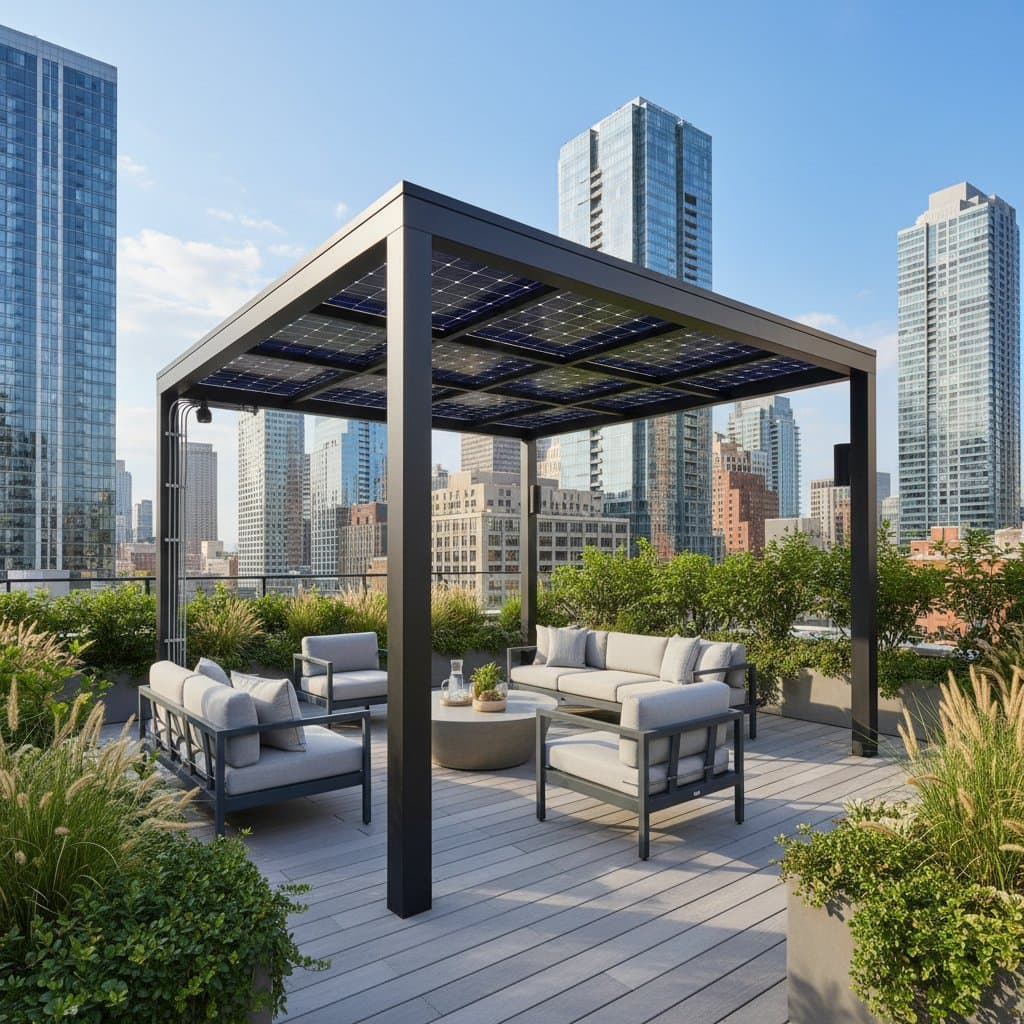
Solar Pergolas: Shade and Electricity for Urban Rooftop Living
Urban rooftops often face intense sunlight, creating uncomfortable heat during peak hours. A solar pergola addresses this challenge by integrating photovoltaic panels into a shaded outdoor framework. This setup not only blocks direct rays but also captures solar energy to power household needs or on-site features.
The structure consists of sturdy posts and beams supporting panels that function as a partial roof. Energy generated flows through an inverter to usable electricity, reducing reliance on grid power. For city dwellers with limited space, this solution maximizes utility while enhancing livability.
Understanding Solar Pergolas
A solar pergola merges traditional shading with renewable energy technology. The frame, typically constructed from durable materials, elevates panels above the seating area to allow airflow and prevent overheating. Panels convert sunlight into direct current, which an inverter transforms into alternating current compatible with standard outlets.
In dense urban environments, rooftops serve as valuable extensions of living space. Solar pergolas optimize this area by providing protection from ultraviolet exposure and high temperatures. The system proves particularly valuable in regions with abundant sunshine, where energy production offsets cooling costs from air conditioning.
Key Advantages
Solar pergolas deliver multiple benefits tailored to urban constraints.
- Combined Functionality: One installation provides both shade coverage and electricity generation, conserving limited rooftop square footage.
- Thermal Comfort: Shaded zones maintain temperatures 10 to 15 degrees Fahrenheit lower than exposed surfaces, extending usable time outdoors.
- Power Production: Configurations with 8 to 12 panels typically yield 2 to 4 kilowatts, sufficient for illuminating pathways, charging electronics, or running ventilation fans.
- Visual Appeal: Sleek designs in aluminum or treated wood complement modern cityscapes, adding architectural interest without overwhelming the skyline.
- Sustainability Gains: Annual output can reduce carbon emissions equivalent to planting dozens of trees, supporting greener urban initiatives.
Homeowners report noticeable drops in summer energy bills, with payback periods ranging from 5 to 10 years depending on local incentives.
Essential Materials and Tools
Selecting quality components ensures longevity and efficiency. Begin by evaluating your rooftop's load capacity, often limited to 20 to 30 pounds per square foot in residential buildings.
- Frame Components: Opt for galvanized steel or cedar lumber treated for weather resistance; steel offers superior strength for panel weight.
- Photovoltaic Panels: Monocrystalline types, sized 60 to 70 inches by 40 inches, provide high efficiency; aim for 300 to 400 watts per panel.
- Secure Mounting Hardware: Use stainless steel brackets and rails designed for rooftop vibrations and wind loads up to 90 miles per hour.
- Electrical Essentials: Include a microinverter or string inverter rated for outdoor use, plus UV-resistant wiring and junction boxes.
- Protective Elements: Apply silicone sealants around connections and schedule conduit pipes to shield cables from environmental damage.
Consult building permits early, as solar installations may qualify for tax credits. Tools required include a level, drill set, torque wrench, and multimeter for testing connections.
Installation Process
Approach the project methodically to achieve a stable, productive system. Professional assessment of structural integrity precedes any work.
1. Site Assessment and Design
Measure the available rooftop area, accounting for HVAC units, vents, and parapets. Design the pergola to span 10 to 20 feet, ensuring at least 3 feet of perimeter clearance for safe access and airflow. Software tools or sketches help visualize panel arrangement for optimal coverage.
2. Optimal Positioning
Orient the structure southward in the Northern Hemisphere to capture peak solar hours from 9 a.m. to 3 p.m. Adjust the tilt angle to match your latitude, typically 15 to 30 degrees, using adjustable mounts for seasonal fine-tuning. Avoid shadows from adjacent buildings through solar path analysis.
3. Frame Construction
Secure posts to reinforced roof sections using lag bolts or weighted bases to preserve waterproofing membranes. Assemble crossbeams with galvanized connectors, verifying plumb alignment at each joint. For sloped roofs, incorporate leveling shims to distribute weight evenly.
4. Panel Integration
Position panels within the frame slats, spacing them 1 to 2 inches apart for ventilation. Fasten with torque-specified bolts to withstand thermal expansion. Route wiring downward through frame channels, labeling connections for future reference.
5. Electrical Integration
Engage a certified electrician to install the inverter near the structure base, connecting to a dedicated circuit. For grid-tied systems, incorporate safety disconnects and meters to monitor output. Battery storage options enhance reliability during cloudy periods.
6. Final Verification
Conduct a comprehensive test: monitor voltage output under full sun and operate connected devices. Inspect all seals and anchors, then document the setup for warranty claims. Integrate features like automated shades for added versatility.
Safety Considerations
Rooftop work demands caution to prevent accidents. Equip yourself with safety harnesses anchored to secure points, and work with a partner for stability.
Select dry, calm days for installation, as wet surfaces increase slip risks. Shut off power sources before handling electrical components, and use insulated tools to avoid shocks. Comply with OSHA guidelines for heights over 6 feet.
Common Issues and Solutions
Reduced performance often stems from accumulated debris or partial shading. Regularly scan for obstructions like chimney stacks that block light paths.
Clean panels quarterly using a soft brush and distilled water solution to remove pollen or pollutants. If wiring faults occur, use a multimeter to identify breaks; replace damaged sections promptly to maintain efficiency.
Upkeep and Longevity
Routine care preserves both aesthetics and output. Sweep away organic buildup weekly, especially after storms, to prevent panel hotspots.
Inspect wooden elements annually for rot, applying marine-grade sealants as needed. Metal frames benefit from rust-inhibiting sprays every two years. Track energy production via app-connected inverters to spot trends early.
Cost Estimates and Timeline
Basic kits for a 100-square-foot pergola range from $3,000 to $6,000, excluding labor. Custom builds with premium panels may reach $10,000 or more, offset by federal rebates up to 30 percent.
DIY projects span four to six weekends, factoring in curing times for adhesives. Professional teams complete installations in 2 to 4 days, including permits and inspections, for a streamlined process.
Professional Installation Guidance
Seek experts for complex roofs or electrical integrations. Verify credentials through the North American Board of Certified Energy Practitioners and request portfolios of similar urban projects.
Discuss warranties covering 25 years for panels and 10 years for structures. Clear contracts on timelines, cleanup, and post-install support ensure a smooth experience.
Implementing Your Solar Pergola
Start by consulting your building management on rooftop access rules. Research local solar programs for funding assistance.
Compare proposals from vetted installers, prioritizing those with experience in high-rise settings. Finalize your design with energy modeling to predict annual savings.
A well-executed solar pergola transforms exposed rooftops into productive retreats. Residents enjoy cooler gatherings powered by the sun, fostering sustainable habits amid city demands.