
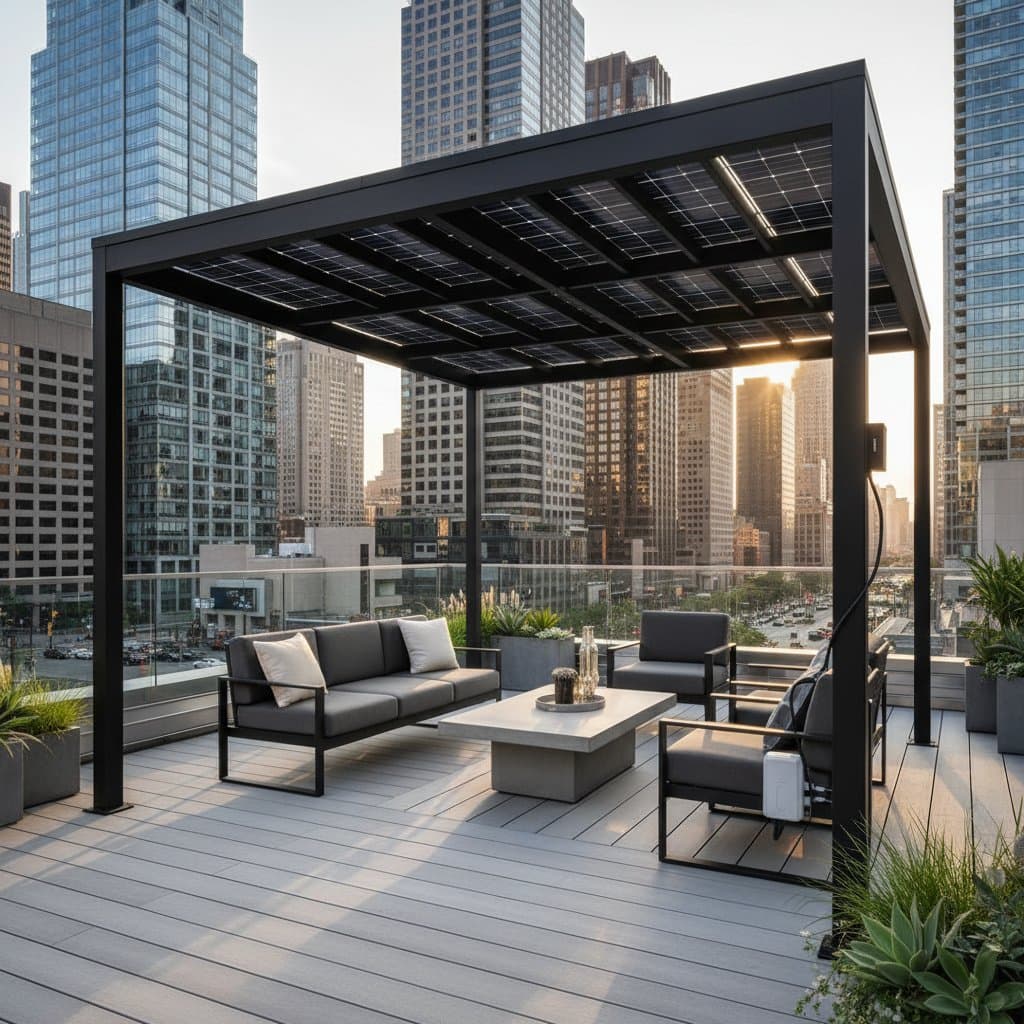
Solar Pergolas: Shade and Power for Urban Rooftops
Urban dwellers often seek ways to expand usable outdoor space while addressing energy needs. A solar pergola addresses both challenges by integrating solar panels into a sturdy frame that provides shade and generates electricity. This setup creates a versatile rooftop area that supports relaxation and sustainability.
The following sections detail the essentials of solar pergolas, from their core components to installation processes and ongoing care. Readers will gain practical knowledge to assess feasibility for their own rooftops.
Overview
A solar pergola consists of a freestanding or attached framework topped with solar panels, replacing traditional roofing materials. These panels serve dual roles: they shield against sunlight and convert solar energy into usable electricity. Systems may connect to a home's electrical grid to reduce utility bills, charge batteries, or operate rooftop appliances such as fans and lighting.
In space-constrained urban settings, solar pergolas maximize limited areas by combining leisure zones with energy production. A standard installation occupies a compact footprint while delivering significant environmental and economic advantages.
Key benefits encompass:
- Shade and thermal regulation: Panels reduce ambient temperatures by 10 to 20 degrees Fahrenheit, fostering comfortable outdoor use during peak heat.
- Energy generation: A 10-by-12-foot structure equipped with 8 to 10 panels typically yields 2 to 3 kilowatts, sufficient for partial household needs or dedicated rooftop features.
- Enhanced property appeal: Functional rooftop installations that produce power increase market value and attract eco-conscious buyers.
- Environmental impact: On-site solar production diminishes dependence on fossil fuel-based grid power, promoting lower carbon emissions.
Essential Materials and Tools
Selecting durable materials ensures longevity against urban weather elements like wind, rain, and UV exposure. Prioritize components that balance weight, strength, and corrosion resistance to safeguard rooftop integrity.
Core materials include:
- Framing elements: Aluminum or pressure-treated lumber in 4-by-4-inch posts, engineered for exterior durability.
- Solar panels: Monocrystalline or polycrystalline types rated at 250 to 400 watts per unit for optimal efficiency in varied light conditions.
- Mounting hardware: Stainless steel brackets or powder-coated aluminum rails to secure panels firmly.
- Electrical components: UV-resistant wiring, protective conduit, and an inverter for DC-to-AC conversion.
- Securing systems: Non-penetrating anchors or concrete ballasts to minimize roof damage.
- Weatherproofing: Silicone sealants or metal flashing to seal joints and prevent moisture ingress.
Required tools comprise:
- Cordless drill, adjustable wrenches, and precision tape measure for accurate assembly.
- Stable ladder or scaffolding compliant with rooftop safety standards.
- Personal protective equipment, including harnesses and insulated gloves.
- Digital multimeter for verifying electrical integrity.
Installation Process
Successful installation begins with thorough preparation to align with site conditions and regulations. Follow these sequential steps to achieve a secure, efficient system.
1. Site Assessment and Planning
Evaluate available rooftop space, ensuring at least 3 feet of perimeter clearance for access and servicing. Consult local building codes regarding height restrictions, wind loads, and setback requirements. Track solar exposure patterns to determine optimal panel tilt, typically 25 to 35 degrees for urban latitudes between 30 and 50 degrees north.
2. Structural Evaluation
Verify roof capacity to support added weight, which ranges from 4 to 6 pounds per square foot for most pergolas. Reinforced concrete or composite decking offers ideal stability; older surfaces may require professional reinforcement. Engage a structural engineer if uncertainties arise regarding load-bearing elements.
3. Frame Construction and Anchoring
Pre-assemble posts and crossbeams at ground level for safety, then hoist into position. Opt for ballast systems or perimeter anchors over membrane penetration to preserve waterproofing. Confirm level alignment using a spirit level and secure all fasteners to withstand urban gusts up to 90 miles per hour.
4. Panel Integration
Install mounting rails along beam tops, spacing them to accommodate panel dimensions. Position panels with 1-inch gaps for ventilation, securing via mid- and end-clamps. Exercise caution to avoid surface impacts, which could compromise panel efficiency.
5. Electrical Routing
Link panels in series or parallel configurations per inverter specifications to maximize output. Encase wiring in conduit and route along structural elements to the inverter site, maintaining separation from water sources. Label all connections for future reference and apply sealants to exposed junctions.
6. Inverter Setup
Mount the inverter in a shaded, accessible location, such as a protected enclosure. Integrate panel arrays with the inverter, then connect to the building's panel or storage batteries. De-energize circuits prior to any connections; professional certification is mandatory for grid-tied applications.
7. System Verification
Measure output voltage with a multimeter under direct sunlight to confirm performance benchmarks. Monitor inverter displays for conversion efficiency and test connected devices. Address any discrepancies immediately to prevent long-term issues.
8. Finishing Touches
Incorporate ergonomic seating, retractable side panels, or integrated planters using weather-resistant fabrics and metals. Install low-voltage LED fixtures wired through the system for evening usability, enhancing the space's functionality.
Safety Protocols
Prioritize precautions to mitigate risks during and after installation. Secure work areas with barriers and harnesses when operating above 6 feet. Refrain from roof penetrations unless equipped with certified flashing; power down all circuits before electrical handling. Postpone work in adverse weather, and respond to anomalies like unusual odors or arcing by isolating power and seeking expert intervention.
Common Issues and Resolutions
Reduced Output: Accumulations of dust, bird droppings, or partial shading diminish performance. Gently clean surfaces with a solution of water and mild detergent, employing a non-abrasive tool to restore efficiency.
Connection Failures: Erratic inverter data often indicates corrosion or loosening at terminals. Inspect and clean contacts annually, replacing damaged insulation as necessary.
Moisture Intrusion: Gaps at bases or seals can lead to leaks. Apply fresh sealant and verify drainage paths to redirect water flow.
Structural Instability: Vibrations from wind may loosen hardware. Conduct periodic torque checks on bolts to maintain rigidity.
Ongoing Maintenance
Routine upkeep preserves system reliability and extends lifespan beyond 25 years for panels. Schedule panel washing quarterly, using deionized water to avoid mineral deposits. Perform biannual wiring examinations for insulation cracks or pest interference. Post-storm inspections should include bolt retightening and frame realignment. For wooden elements, apply penetrating sealants biennially to resist weathering. Track production metrics via inverter interfaces; deviations warrant prompt diagnostics.
Equipment Preservation
Store spare parts like bolts, cables, and adhesives in sealed, elevated containers to shield from elements. Maintain tools in dry indoor spaces, applying rust inhibitors to metal components. Protect battery packs with breathable covers during idle periods. For pergola furnishings, utilize airtight storage to avert mildew in humid climates.
Cost Considerations and Timeline
Budget allocations vary by scale and execution method. A basic DIY kit for a compact setup ranges from $5,000 to $9,000, covering materials and basic tools. Professional installations, including custom engineering, span $10,000 to $18,000, factoring in labor and compliance certifications.
Project timelines typically involve 1 to 2 weeks for design and approvals, followed by 1 to 3 days for framing and 1 day for electrical integration. Modular approaches allow phased implementation, starting with minimal panels to test viability before expansion.
Seasonal Care Guidelines
Adapt maintenance to environmental shifts for year-round performance. In spring, clear pollen residues and refresh protective coatings. Summer demands inverter ventilation to manage heat buildup. Autumn routines focus on debris removal from bases and gutters. Winter preparations include gentle snow displacement with plastic tools, avoiding thermal shock to panels.
Professional Assistance Indicators
Engage certified specialists for complex scenarios, such as load assessments or grid interconnections. Seek professionals if inverters display faults, leaks persist, or electrical irregularities occur. Verify credentials including NABCEP certification, liability coverage, and portfolios of comparable urban installations. Inquire about extended warranties for components and workmanship to ensure long-term protection.
Practical Implementation Steps
Solar pergolas integrate seamlessly into urban lifestyles by delivering immediate shade and deferred energy returns. Their design efficiency captures diffuse light, converting underutilized rooftops into valuable assets. Property owners benefit from reduced bills and elevated living standards.
To proceed:
- Conduct a detailed rooftop survey, including load testing.
- Obtain quotes for kits versus full-service options from vetted providers.
- Map electrical pathways and assemble safety equipment ahead of commitment.
Implementing these measures positions rooftops as productive, enjoyable extensions of home life.