
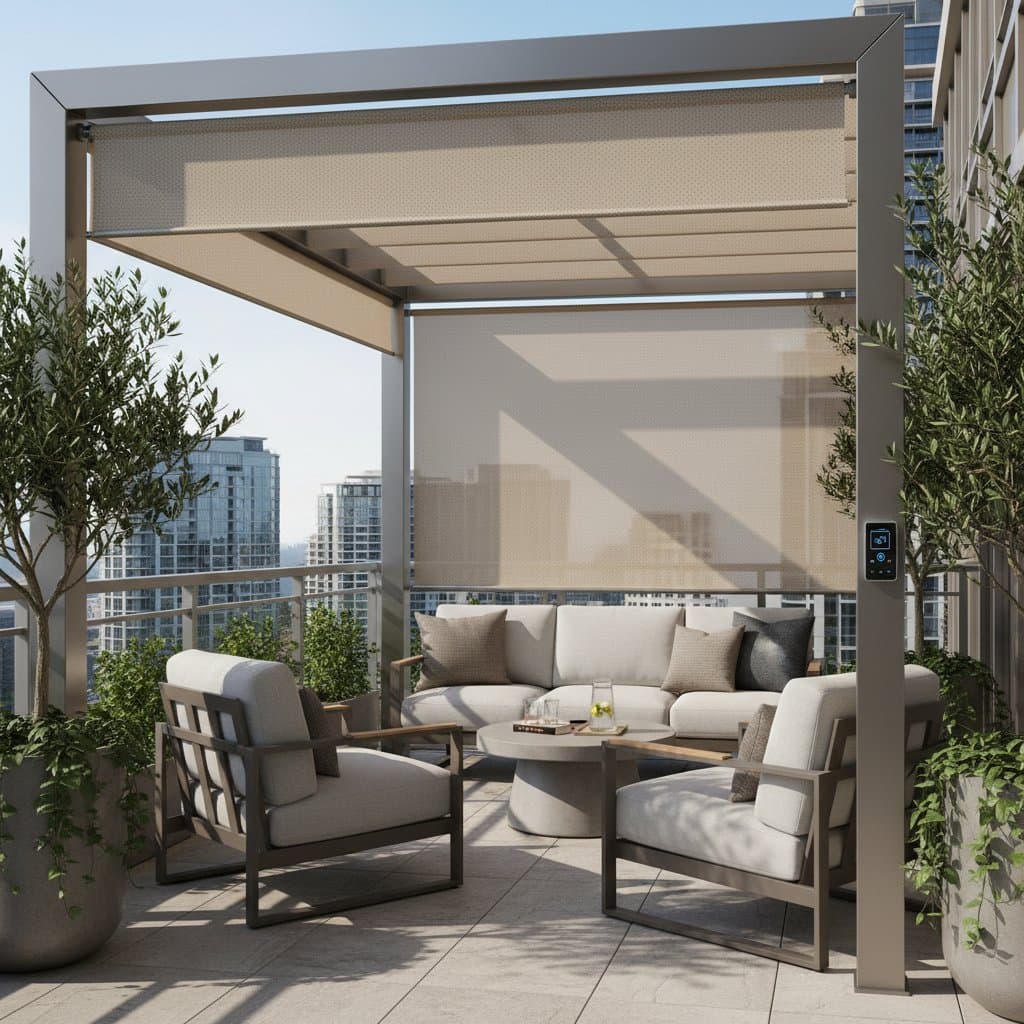
5. Connect Controls
For manual shades, secure the crank handle or pull chain firmly to the roller assembly. Motorized shades necessitate plugging the power cord into a weatherproof outdoor electrical outlet. Consult the included pairing instructions to connect a remote control or smart home hub, if applicable.
Select models integrate with home automation applications. These features allow users to program schedules or activate responses based on sunlight sensors for automated operation.
6. Test and Adjust
Extend the shade gradually to evaluate its performance. Verify that it remains level and halts at the desired position. For motorized units, modify the limit settings to prevent overextension beyond the intended endpoints.
Should the fabric exhibit sagging, adjust the tension mechanism at the roller end until the surface appears taut and even.
7. Seal and Finish
With the shade functioning properly, clear the installation area of debris. Apply silicone sealant to any visible drill holes for weatherproofing. Clean surfaces to remove dust and organize tools for storage.
Safety Tips
Position ladders on stable, level ground prior to ascending. Disconnect power sources before attaching motorized components. Avoid operating the shade during strong winds or heavy rain; fully retract it to minimize stress on mounting brackets.
Store cords and remote controls out of reach of young children to prevent accidents.
Troubleshooting
Quality retractable solar shades occasionally require minor adjustments. The following solutions address frequent challenges.
Problem: The shade extends unevenly or one side sags.
Fix: Ensure both mounting brackets align perfectly level. Adjust the bracket elevation by approximately 1/8 inch (3 millimeters) as necessary.
Problem: The motor produces a humming sound without movement.
Fix: Verify that power supplies connect securely and remote batteries hold sufficient charge. Reset the motor by disconnecting power for 30 seconds before reconnecting.
Problem: The fabric flutters excessively in breezy conditions.
Fix: Install side channel guides or incorporate bottom weights. Options include small stainless steel chains or rods integrated into the fabric hem.
Problem: The shade halts during extension or retraction.
Fix: Recalibrate the limit switch according to the manufacturer's manual to reset upper and lower boundaries.
Problem: Mold growth or discoloration appears on the fabric.
Fix: Clean affected areas using mild soap solution and a soft-bristled brush. Rinse thoroughly with water and allow complete drying before retracting the shade.
Smart Storage Practices
Retractable solar shades available in manual or motorized configurations benefit from proper storage and usage habits.
Prevent moisture accumulation: After exposure to rain, permit the fabric to air dry fully prior to retraction. Trapped dampness within the rolled fabric promotes mildew development.
Remove debris promptly: Clear leaves, pollen, or other particles from the fabric before retraction. Such accumulations can obstruct the roller mechanism over time.
Seasonal removal: During extended periods of severe weather, detach the shade cassette from its brackets and store it in a protected indoor location. Most units disengage easily for this purpose.
Organize components: Place screws and brackets into labeled bags corresponding to their positions. This organization simplifies reinstallation at the start of the next season.
Budget and Time Considerations
A standard manual solar shade measures 8 feet (2.4 meters) in width and costs between 120 and 250 dollars. Motorized versions equipped with remote controls or integrated sensors range from 350 to 600 dollars. Adding a compatible smart home hub incurs an additional expense of 100 to 150 dollars.
Professional installation services typically charge around 200 dollars per shade. Many homeowners complete the process independently within 2 to 4 hours.
Areas for cost savings:
- Select mid-range fabrics that block 85 percent of incoming light, providing an optimal balance of affordability and effectiveness.
- Opt for manual operation when frequent adjustments prove unnecessary.
Recommended investments:
- Prioritize hardware with corrosion-resistant properties, particularly in coastal environments.
- Choose motorized shades for convenience and durability in high-use scenarios.
Maintenance Routines
Regular upkeep ensures the shade maintains its appearance and functionality over time.
- Monthly cleaning: Gently wipe the fabric using warm water mixed with mild soap. Refrain from abrasive chemicals that may degrade UV-protective coatings.
- Bracket inspections: Examine screws biannually and tighten any that have loosened.
- Mechanism lubrication: Apply silicone-based spray to roller and motor components annually to eliminate friction and noise.
- Remote and battery management: Maintain a backup remote in an accessible location to prevent operational interruptions.
- Wiring checks: For motorized models, routinely inspect cords and outlets for signs of damage. Replace worn elements immediately.
In cases of noticeable fading or tears, replace the fabric while retaining the existing roller assembly for cost efficiency.
When to Engage Professionals
Certain installations warrant expert assistance for safety and precision. Seek professional services if:
- New electrical wiring becomes necessary for motorized operation.
- The mounting surface presents irregularities or structural weaknesses.
- The shade exceeds 10 feet (3 meters) in width, posing handling challenges.
- Motor responsiveness fails despite reset procedures.
When selecting an installer, inquire about:
- Fabric specifications: Prioritize UV-resistant materials such as acrylic or PVC-coated polyester.
- Warranty details: Verify protection for motor components and fabric longevity.
- Integration compatibility: Request testing with existing home automation systems prior to permanent installation.
Seasonal Maintenance Reminders
Routine seasonal evaluations prolong the lifespan of retractable solar shades.
Spring:
- Remove accumulated winter dust through gentle cleaning.
- Verify the security of bracket screws.
- Conduct a full test of the motor or manual crank mechanism before regular use.
Summer:
- Extend the shade during midday hours to mitigate indoor heat buildup from sunlight.
- Retract fully in gusty conditions to avoid bracket stress.
- Clean pollen residues from the fabric on a monthly basis.
Autumn:
- Brush away falling leaves prior to retraction.
- Examine the fabric for wear, fading, or damage.
- Reapply sealant to screw heads if existing applications show cracks.
Winter:
- Remove and store the shade indoors if storms pose a frequent risk.
- Protect exposed brackets with a fitted tarp to inhibit corrosion.
Benefits of Retractable Solar Shades
These shades extend beyond basic glare reduction to transform balcony usability.
- Energy efficiency: Sunlight filtration reduces indoor temperature rises, decreasing reliance on air conditioning and associated costs.
- Enhanced privacy: Open-weave designs permit outward views while obscuring sightlines from external observers.
- Interior safeguarding: Protection against up to 90 percent of UV radiation prevents rapid fading of outdoor furnishings.
- Adaptable comfort: Precise control allows enjoyment of gentle morning light while shielding against intense afternoon sun.
- Aesthetic appeal: Neutral tones create serene atmospheres, while vibrant options accentuate seating arrangements.
Expert Recommendations
- Align color with performance needs: Darker fabrics excel at glare blockage but retain warmth; lighter options reflect heat for cooler shaded zones.
- Incorporate structural supports: Install shades within a pergola framework to form an inviting, semi-enclosed retreat.
- Explore solar-powered options: Certain motorized units draw energy from attached solar panels, eliminating the need for additional cabling.
- Optimize mounting angles: Fine-tune bracket inclinations to regulate light penetration throughout the day.
- Integrate greenery: Position potted ferns or climbing vines along shade edges to enhance visual softness and provide supplementary cooling.
Implementing Your Shade Solution
Begin with a targeted approach by shading a specific balcony area, such as a lounge corner or adjacent to sliding doors. Install a manual retractable solar shade initially and observe its impact over several weeks. Assess changes in comfort and usability, then consider upgrades to motorized or automated systems for greater convenience.