
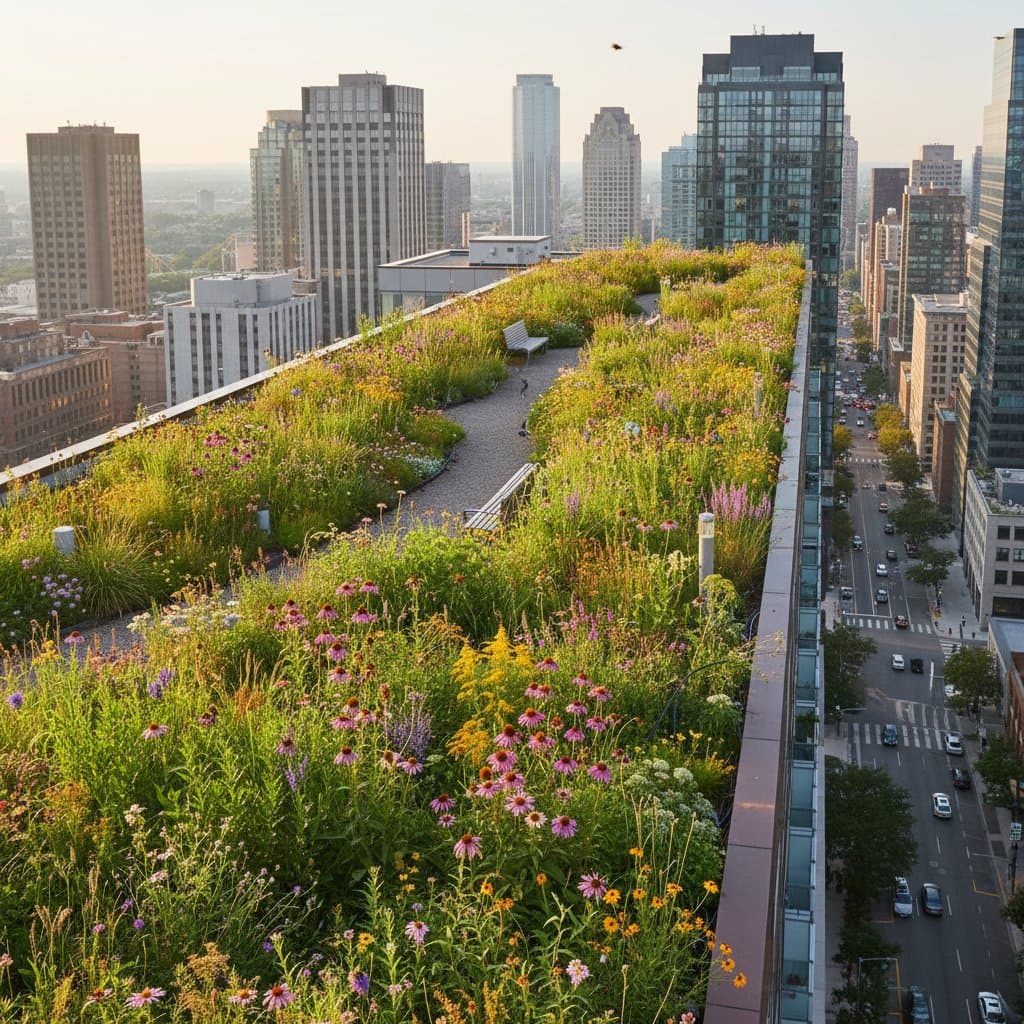
Safety Tips
- Always confirm weight limits before adding soil or planters.
- Avoid standing on wet or icy roof surfaces.
- Wear gloves to protect from sharp gravel and metal edges.
- Keep a sealed container for tools so nothing blows off the roof.
- Water early in the day to prevent slippery conditions later.
Troubleshooting
Problem: Water pools after rain.
Solution: Check if the drainage layer is blocked. Lift a section of soil and clear debris. Add a small wedge of gravel to guide runoff.
Why it works: Bees and roots both prefer dry, aerated soil. Standing water can rot roots and reduce bloom count.
Next step: Recheck slope and drainage after the next rainfall.
Problem: Sparse blooms after planting.
Solution: Add more seed mix in thin areas. Mix seeds with sand before spreading to improve evenness.
Why it works: Sand helps show where you have already sown and prevents clumping.
Next step: Lightly water and avoid walking on new growth.
Problem: Wind damage to tall flowers.
Solution: Cut stems back by one-third or install low bamboo supports.
Why it works: Shorter plants resist wind stress and regrow quickly.
Next step: Choose compact species next season.
Maintenance
Once established, a rooftop meadow needs less care than a vegetable bed. The main tasks are watering during dry spells, removing invasive weeds, and trimming once a year.
- Watering: Once weekly in summer, every two weeks in cooler months.
- Weeding: Pull fast-growing intruders like crabgrass before they seed.
- Trimming: In late fall, cut stems to about 4 inches high. Leave clippings for a week so any insects can move out before you clear them.
- Soil check: Every two years, add 1 inch of compost to refresh nutrients.
Bees benefit when some seed heads remain over winter. These provide both food and shelter.
Storage
Keep extra soil and seed in sealed bins away from rain. Store tools in a plastic tote with a snap lid. If you use watering cans or hoses, empty them after each use to prevent algae. Replace root barrier fabric if you move planters or add new sections.
Budget and Time
A small rooftop wildflower garden of 100 square feet usually costs between $250 and $600, depending on materials and access. Most of that covers the soil mix and seeds. Tools are reusable for future projects.
Time estimate:
- Structural check and layout: 1 hour.
- Layer installation: 2 hours.
- Soil spreading and seeding: 1 hour.
- Watering and setup finish: 30 minutes.
That means you can complete the first setup in half a day. The garden then grows on its own schedule.
Seasonal Reminders
Each season brings a simple task that keeps your rooftop meadow healthy.
Spring: Rake gently to remove dead stems. Add new seeds to bare patches.
Summer: Watch for heat stress. Water early in the day.
Fall: Trim stems and top-dress with compost.
Winter: Check that drainage paths stay open. Brush off snow only if it piles high enough to block vents.
These small actions protect the soil structure and keep pollinators returning each year.
When to Call a Pro
Call a professional when:
- You are unsure of the roof load capacity.
- You find leaks or soft spots in the membrane.
- You plan to install irrigation lines or electrical lighting.
Ask the pro about weight per square foot, waterproofing inspection, and structural reinforcement options. Many roofing companies now offer green roof consultations that include soil and drainage recommendations. Spending a little on expert advice prevents costly water damage later.
Key Takeaways
Your Next Steps
You can start today with three simple actions.
- Measure your roof section and note any shade or slope.
- Order a native seed mix matched to your region. Look for blends labeled for rooftops or meadows.
- Gather your layers: root barrier, drainage mat, and soil mix.
Once you do these, you are halfway toward a living rooftop that hums with bees and color. Each bloom you plant adds to the city’s network of pollinator habitats.