
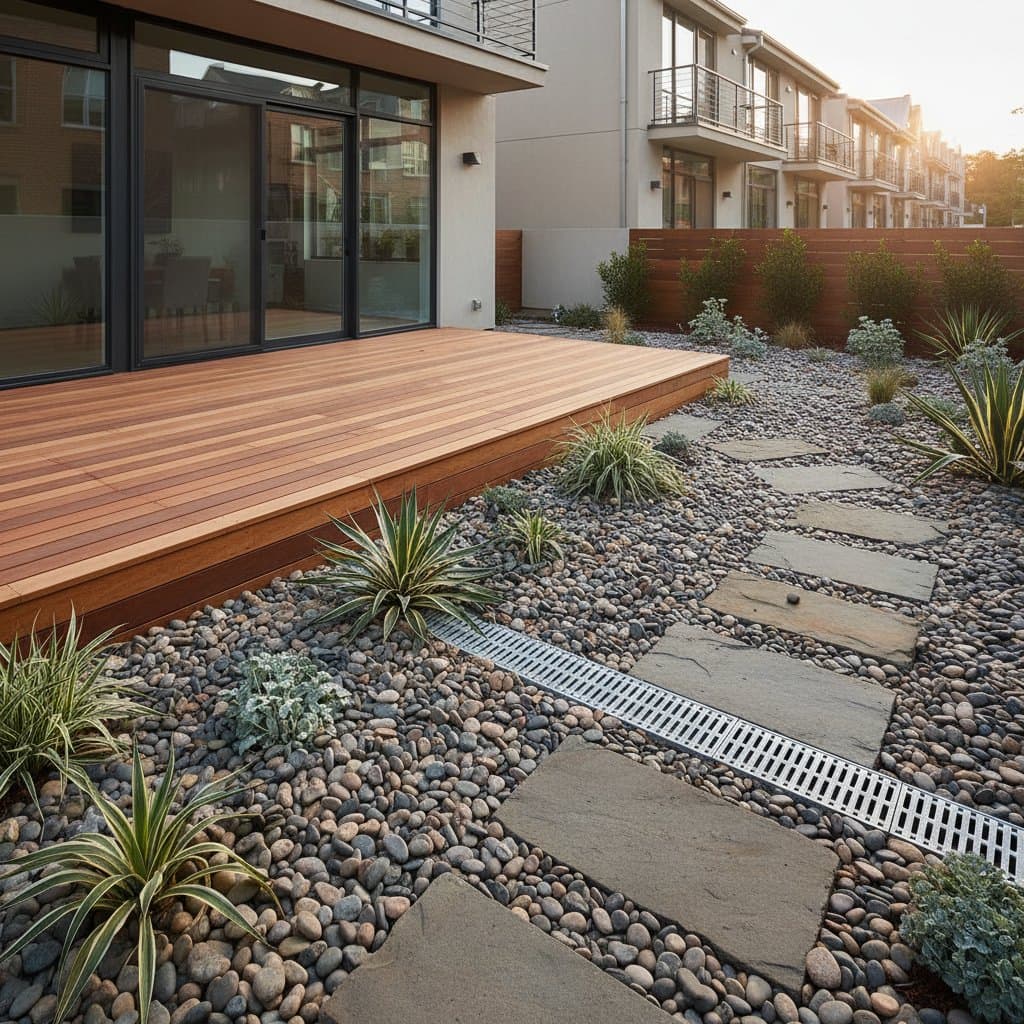
Why Gravel Gardens Are Gaining Popularity Around Decks
Homeowners increasingly seek ways to simplify outdoor maintenance without sacrificing style. Traditional lawns demand frequent mowing, watering, and fertilizing, which can overwhelm busy urban dwellers. Gravel gardens address these challenges by using crushed stone and hardy plants to form a durable, attractive surround that enhances deck functionality.
This approach suits decks in compact city yards where space limits grass growth. Gravel surfaces prevent mud buildup after rain and create a clean transition from wooden decking to the ground. As sustainability becomes a priority, these gardens reduce water usage and eliminate chemical treatments, aligning with eco-conscious living trends for 2026.
Benefits of Switching to Gravel
Gravel gardens provide multiple advantages over lawns, particularly in deck-adjacent areas. They require little ongoing care, allowing more time for enjoyment rather than labor. Stones retain heat during the day and release it slowly at night, creating a comfortable microclimate near seating areas.
Drainage improves significantly with gravel, as water percolates through the layers instead of pooling on grass. This feature prevents erosion under decks and keeps the area dry for gatherings. Additionally, gravel resists weeds when installed correctly, minimizing the need for herbicides that harm local ecosystems.
From an aesthetic perspective, gravel offers versatility. Neutral tones complement various deck materials, from cedar to composite. Incorporating drought-tolerant plants adds color and texture, turning a simple surround into a cohesive landscape element.
Planning Your Gravel Garden
Assess the space around your deck before starting. Measure the area, noting slopes, sun exposure, and proximity to structures. A level surface ensures even gravel distribution and stability; address any grading issues early to avoid future settling.
Select gravel types based on desired look and function. Pea gravel provides a smooth, walkable surface ideal for light foot traffic. Larger crushed stone offers better stability for heavier use and enhances drainage in wet climates.
Consider plant integration for visual interest. Choose natives like sedum or lavender that thrive in poor soil and require minimal watering. Space plants to allow gravel to dominate, maintaining the low-maintenance ethos.
Budget for materials and tools. Expect costs for gravel, landscape fabric, edging, and plants to range from moderate to affordable, depending on size. Factor in professional help if the project involves heavy lifting or complex layouts.
Materials Needed for Installation
Gather essential items to streamline the process. Landscape fabric prevents weeds from emerging through the gravel. Edging stones or metal strips define boundaries and contain the stones.
Purchase gravel in bulk from local suppliers for cost savings. Aim for 2 to 4 inches of depth to suppress growth and allow drainage. Include a shovel, rake, and tamper for site preparation.
For plantings, select pots or root balls of perennials suited to gravel conditions. Mulch alternatives like larger rocks can fill gaps around plants, reducing evaporation.
Step-by-Step Installation Guide
Step 1: Prepare the Site
Clear existing grass or vegetation from the area. Use a sod cutter for lawns or manually remove weeds with a hoe. Dig down 4 to 6 inches to create space for the gravel layer.
Level the soil and remove debris. Compact the base with a tamper to prevent shifting over time. Install edging along the deck and borders to secure the design.
Step 2: Lay the Foundation
Spread landscape fabric over the prepared soil, overlapping seams by 6 inches. Secure it with staples every few feet. Cut holes where plants will go.
Add a thin layer of sand or soil if needed for plant roots. This step ensures stability without compromising drainage.
Step 3: Install the Gravel
Pour gravel evenly across the fabric, starting from the farthest point and working toward the deck. Rake it smooth to the desired depth.
Tamp the gravel firmly to lock it in place. For larger areas, work in sections to maintain uniformity.
Step 4: Add Plants and Finishing Touches
Position plants in pre-cut holes, backfilling with soil around roots. Water thoroughly to establish them.
Sweep additional gravel to fill any voids. Step back to check for even coverage and adjust as necessary.
Maintenance for Long-Term Success
Gravel gardens demand far less attention than lawns. Rake the surface periodically to redistribute stones and remove leaves. Replenish gravel every two to three years to maintain depth.
Water plants sparingly, focusing on the first season for root development. Prune overgrown foliage to keep the look tidy without daily effort.
Monitor for weeds in fabric seams; pull them promptly to prevent spread. Avoid heavy equipment on the surface to preserve the base layer.
In winter, clear snow gently with a plastic shovel to avoid scratching stones. These simple routines ensure the garden remains vibrant through seasons.
Enhancing Your Outdoor Experience
A well-designed gravel garden elevates deck usability for relaxation and entertaining. It creates a seamless extension of indoor spaces, inviting barefoot lounging or al fresco dining. Urban residents appreciate how this setup maximizes limited yards while minimizing environmental impact.
Pair the garden with deck features like built-in benches or lighting for added appeal. Over time, the space evolves into a personal oasis that reflects individual style. Embrace this trend to enjoy sustainable beauty with ease.