
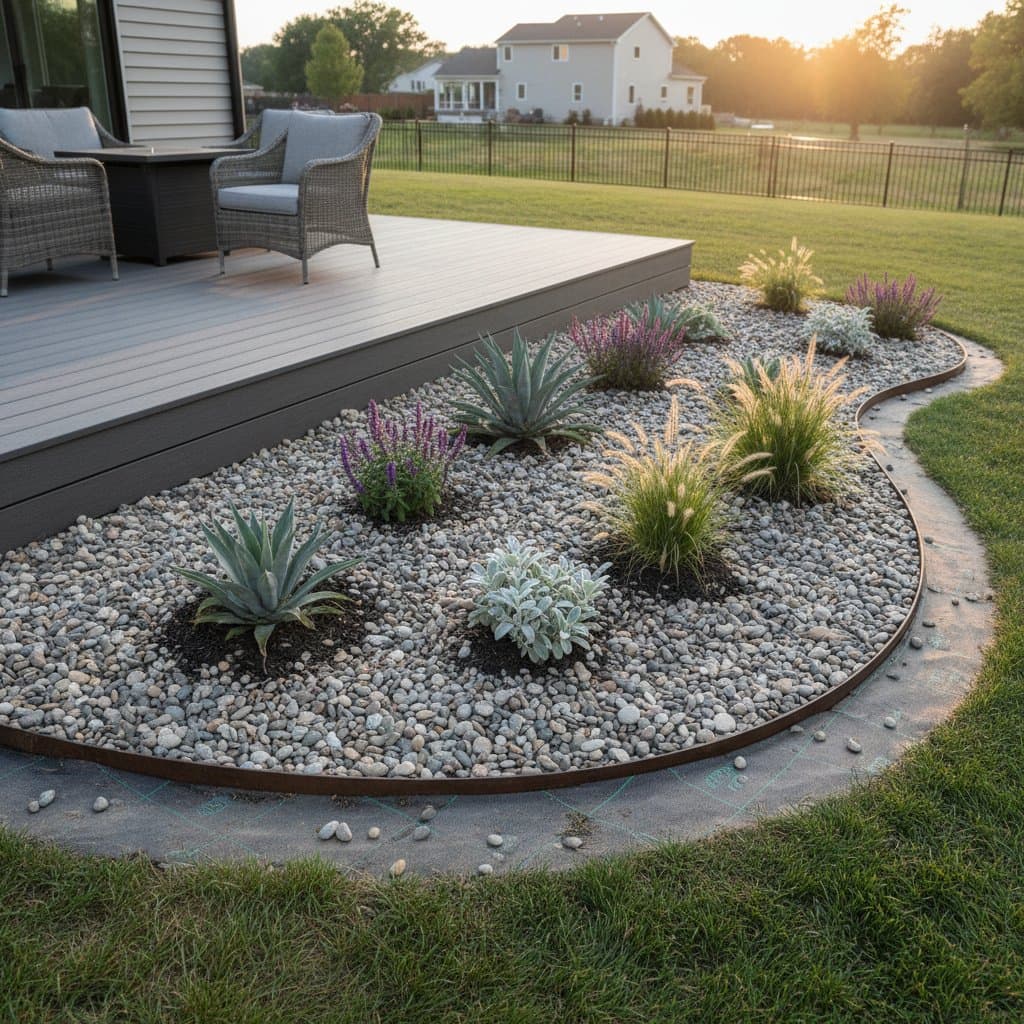
7. Water and Settle the Gravel
After placing the gravel, water the entire area using a garden hose with a gentle spray nozzle. This step helps the stones settle into place evenly and washes away any lingering dust from the surface. As you water, inspect the bases of your plants closely; ensure no gravel accumulates against the stems, as this can lead to rot or hinder growth. Allow the area to dry naturally before walking on it to avoid displacing the stones prematurely.
Safety Tips
Prioritize safety throughout the project to protect yourself and your deck. Store all tools and materials away from the deck surface to avoid scratches from sharp edges or heavy items. Opt for sturdy, closed-toe shoes when transporting gravel bags, which can be cumbersome and unevenly weighted. Work only in dry conditions to minimize slipping risks on damp soil or loose stones. Carefully verify that your gravel installation does not block any existing drainage outlets or ventilation gaps under the deck, as this could cause water damage or airflow issues. For any surplus gravel, transfer it to a covered storage bin immediately to keep it clean and accessible for future maintenance.
Troubleshooting Common Issues
Even with careful planning, minor problems can arise in a new gravel garden. Address them promptly to maintain the area's appearance and functionality.
Weeds Emerging Through the Gravel:
Weeds can sometimes push through if the landscape fabric shifts. Pull them by hand soon after a rain, when the soil beneath is softer and roots release more easily. Should the issue persist, carefully lift a small section of gravel, reinforce the fabric layer if needed, and redistribute the stones smoothly.
Water Pooling Near the Deck:
Pooling often indicates the ground is level or slopes toward the structure. Excavate the affected gravel, regrade the underlying soil to direct water away from the deck, and then replace the fabric and gravel in layers. Test with a hose to confirm proper drainage before finalizing.
Plant Roots Drying Out:
Exposed roots may dry faster in gravel settings. Apply a thin layer of crushed bark mulch directly around each plant base before covering with gravel; this retains soil moisture without smothering the plants. Monitor during the first season and water deeply as required.
Gravel Shifting into the Yard:
Wind or foot traffic can displace loose gravel over time. Reinforce the border with taller edging materials, such as metal or plastic strips buried deeper, or create a secondary row of larger stones to act as a barrier. This setup provides lasting containment without frequent adjustments.
Budget and Time Considerations
Planning your expenses and schedule ensures the project stays manageable. For a typical 100-square-foot deck surround, calculate materials based on local availability and quality.
- Gravel: One cubic yard covers the area adequately; costs range from $50 to $100, varying by stone type, color, and source.
- Edging: Expect $1 to $5 per linear foot for durable options like composite or recycled plastic.
- Landscape Fabric: A standard roll sufficient for the space runs $20 to $40, providing effective weed suppression.
- Plants: Budget $4 to $10 per drought-tolerant specimen, selecting varieties suited to your climate.
Overall, a small-scale installation totals $200 to $400, including basic tools if you lack them. Dedicate one full weekend to site preparation, edging, and gravel spreading. Allow an additional half day for planting, mulching, and thorough cleanup to leave the space pristine.
To optimize costs, source gravel from nearby quarries rather than specialty suppliers, reducing transportation fees. Propagate perennials from existing garden areas by dividing established clumps, yielding free plants that adapt well to the new setting.
Ongoing Maintenance
One of the primary advantages of gravel gardens lies in their minimal demands. Perform routine checks once or twice each season to keep the border thriving with little effort.
- Weed Control: Remove any sprouts manually or apply a natural vinegar-based solution to spots, avoiding harsh chemicals that might affect nearby plants.
- Topping Up Gravel: Refresh the surface with a one-inch layer every two to three years; this restores depth, prevents erosion, and revives the color.
- Plant Trimming: In early spring, prune back perennials to six inches above ground, promoting vigorous new growth and fuller coverage.
- Drainage Check: Following heavy rains, inspect for puddles and adjust grading if water collects, ensuring long-term deck protection.
- Cleaning Debris: Employ a leaf blower on its lowest speed to clear fallen leaves and twigs, preserving the gravel's neat arrangement without scattering stones.
Smart Storage Solutions
Preserve your materials for longevity and convenience. Reserve a modest amount of gravel in a sealed bucket or heavy-duty bag, positioned close to the deck yet elevated on a pallet to avoid ground moisture. Clearly label any remaining landscape fabric rolls and spare edging segments, storing them in a dry shed or garage for quick access during expansions or repairs.
If utilizing outdoor storage like bins or benches, protect the interior by lining the base with a sheet of plywood. This simple measure prevents stakes or sharp gravel edges from damaging the container over time.
When to Consult a Professional
Most homeowners complete gravel garden projects independently with satisfying results. However, certain conditions warrant expert input to avoid complications.
Seek professional assistance if the site features steep slopes or persistent drainage challenges that could undermine the deck's stability. Similarly, if deck posts or support beams sit near the soil line, a specialist can recommend protective barriers against moisture and pests. For advanced features such as integrated lighting or subsurface irrigation systems, hire someone experienced in these installations.
During consultations, inquire about optimal grading techniques, the most reliable weed barriers for your region, and the ideal gravel depth based on local soil composition. Even a brief site visit can identify potential issues, saving time and expense on revisions later.
Extending Your Gravel Garden
Begin with a manageable section to build confidence in the process. Select one side of the deck or a single corner for your initial installation, observing how the gravel enhances stability and aesthetics. With positive outcomes, gradually encircle the full perimeter, creating a cohesive, low-maintenance landscape that elevates your outdoor space year after year.