
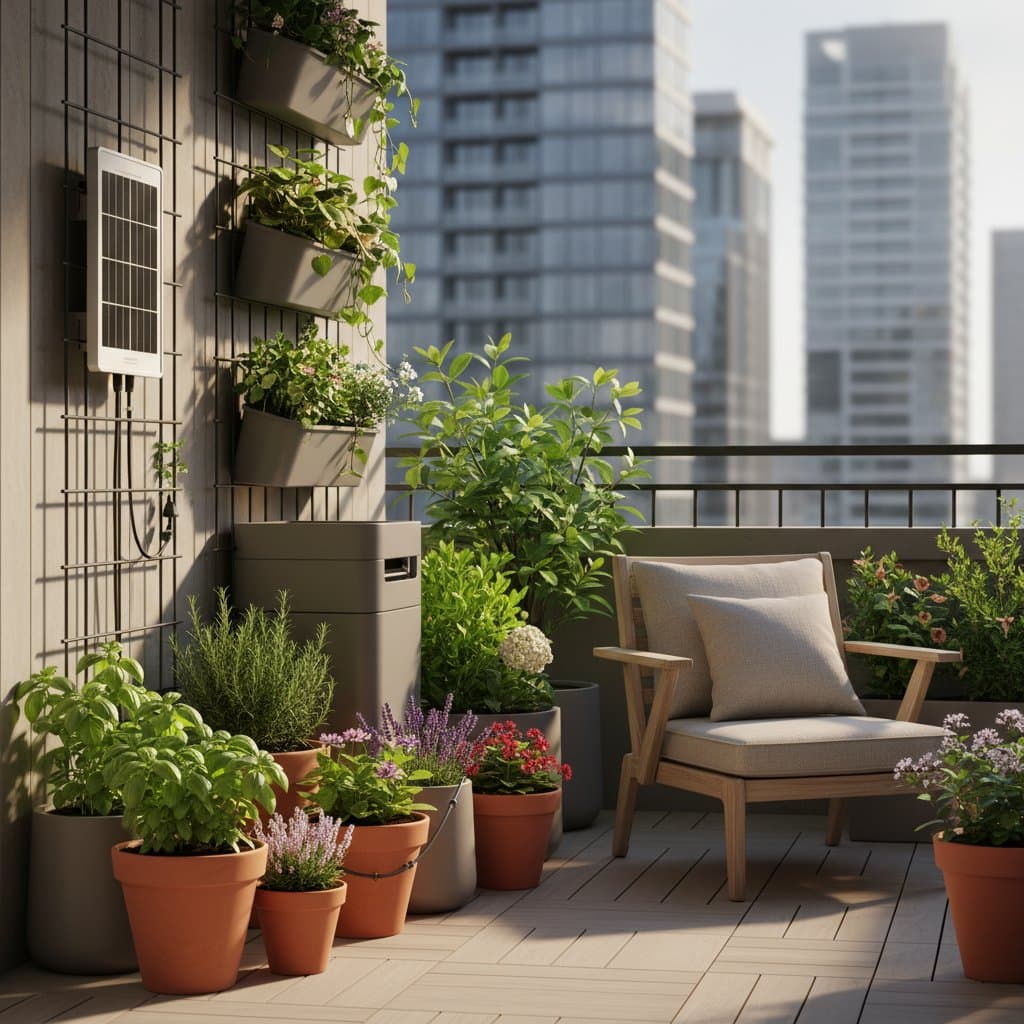
Introduction to Solar-Powered Balcony Gardening
Urban living often limits access to traditional gardens, yet balconies offer untapped potential for greenery. Solar-powered irrigation systems address common challenges such as inconsistent watering and limited sunlight exposure. These setups enable residents to cultivate herbs, vegetables, and flowers with minimal daily intervention, promoting sustainability in compact spaces.
By integrating solar technology, individuals reduce reliance on grid electricity and municipal water supplies. The result is a self-sustaining ecosystem that enhances air quality and provides fresh produce. This article outlines the steps to establish such a garden, from component selection to ongoing care.
Benefits of Automation in Balcony Gardening
Automation streamlines plant care, allowing focus on enjoyment rather than routine tasks. Solar irrigation ensures precise water delivery based on soil moisture levels, preventing overwatering or drought stress. This precision supports healthier growth and higher yields in confined areas.
Environmentally, these systems conserve resources by using rainwater collection or recycled water alongside solar energy. Financially, the initial investment pays off through reduced utility bills and extended plant longevity. For city dwellers, the psychological benefits include stress reduction from nurturing a personal green space.
Selecting Components for Your Solar Irrigation System
Begin with a solar-powered pump, which draws energy from panels to circulate water. Choose panels rated at least 10 watts for small balconies, ensuring they capture sufficient sunlight even on partially shaded surfaces. Pair this with a timer or sensor-based controller that activates based on environmental data.
Drip emitters deliver water directly to roots, minimizing evaporation in windy urban conditions. Opt for adjustable flow rates to accommodate various pot sizes. Include a reservoir, such as a 5-gallon container, to store water overnight for consistent supply.
For smart integration, select controllers compatible with basic apps that monitor weather forecasts and adjust schedules. Ensure all components resist corrosion from outdoor exposure, prioritizing UV-protected tubing and weatherproof housings.
Step-by-Step Setup Guide
Assessing Your Balcony Space
Measure the available area, noting sunlight patterns throughout the day. South-facing balconies receive optimal exposure, ideal for solar panels. Identify wind patterns and structural limits to secure installations safely.
Evaluate water sources; if none exist nearby, plan for a gravity-fed system from a rooftop barrel. Test soil drainage in existing pots to inform irrigation needs.
Installing the Solar Panels and Pump
Mount panels on railings or walls using non-permanent brackets to avoid lease violations. Connect the pump to the panel output with waterproof wiring. Position the pump near the water reservoir, submerging its intake to draw liquid efficiently.
Secure tubing along balcony edges, using clips to prevent tangling. Test the system in daylight to confirm water flow reaches all emitters.
Configuring Sensors and Timers
Install soil moisture sensors in key pots, linking them to the controller. Set thresholds for activation, such as watering when moisture drops below 30 percent. Program timers for early morning or evening cycles to reduce evaporation.
Calibrate the system over a week, observing plant responses and adjusting as necessary. Document settings for future reference.
Choosing Plants for Automated Balcony Gardens
Select compact varieties suited to container life. Herbs like basil, mint, and parsley thrive with consistent moisture from drip systems. For flowers, consider petunias or marigolds, which tolerate partial shade and bloom vibrantly.
Vegetables such as cherry tomatoes or lettuce adapt well to vertical setups. Prioritize drought-resistant options like succulents for low-water zones. Group plants by needs: sun-lovers near panels, shade-tolerant ones in corners.
Start with seedlings to establish roots quickly. Rotate pots seasonally to ensure even growth and prevent pest buildup.
Designing an Efficient Layout
Maximize vertical space with tiered shelves or hanging planters. Position taller plants at the back to avoid shading shorter ones. Incorporate reflective surfaces, like white pots, to amplify light distribution.
Create zones: a herb corner for cooking, a flower border for aesthetics, and a vegetable strip for harvest. Ensure pathways remain clear for access and maintenance.
Incorporate pollinator-friendly elements, such as bee-attracting blooms, to support local biodiversity. Use modular furniture that doubles as plant stands for multifunctional design.
Maintenance and Troubleshooting
Monitor solar panels for dust accumulation, cleaning them monthly with a soft cloth. Check emitters for clogs, flushing with vinegar solutions as needed. Inspect wiring for wear, especially after storms.
In winter, insulate reservoirs to prevent freezing and reduce watering frequency for dormant plants. Track system performance through logs to identify patterns, such as battery drain in cloudy periods.
If issues arise, like uneven watering, recalibrate sensors or extend tubing lengths. Annual component reviews ensure longevity, typically five to seven years for quality setups.
Achieving Year-Round Success
With proper automation, your balcony garden flourishes across seasons. Summer yields abundant produce, while winter focuses on hardy greens under protective covers. The solar system adapts seamlessly, maintaining efficiency without added costs.
Residents report increased satisfaction from harvesting homegrown items, fostering a deeper connection to nature. Expand gradually, adding features like automated lighting for extended growth periods. This approach yields not only beauty but also practical rewards in urban settings.