
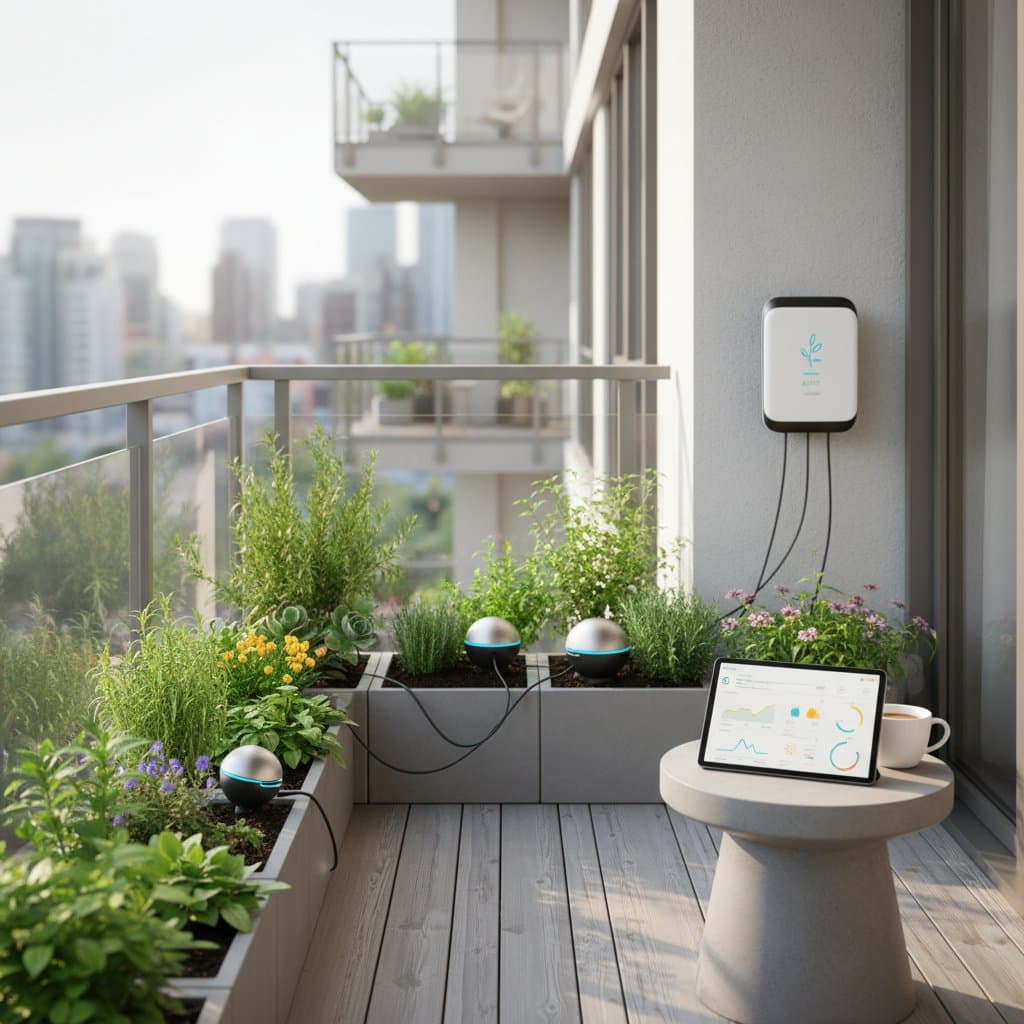
Step 5: Connect Sensors to the Central Hub or Mobile Application
Locate the pairing instructions in your device's manual or app interface. Begin by activating Bluetooth on both the sensors and your smartphone or hub. Press the pairing button on each sensor until the indicator light flashes, then select it within the app to establish the initial connection. Once paired, enable Wi-Fi synchronization to upload data to the cloud for real-time monitoring. Assign a unique label to every sensor, such as the plant species or pot location, to facilitate easy data tracking and personalized alerts in the future.
This process typically takes 10 to 15 minutes per sensor. Test the connection by observing live readings in the app before proceeding. Secure connections prevent data gaps that could affect the system's learning accuracy.
Step 6: Calibrate Soil Moisture Thresholds
Thoroughly water each plant until water drains from the bottom of the pot, ensuring uniform soil saturation. Launch the mobile application and navigate to the calibration menu. Insert the sensor probes fully into the soil at a depth of two to three inches, then input the current moisture reading as the optimal target level for that specific plant type.
The AI algorithm will reference these baseline values to refine its predictions over subsequent cycles. Repeat this for all pots to account for variations in soil composition or plant maturity. Calibration establishes a reliable foundation, allowing the system to detect deviations accurately within days.
Allow 24 hours for initial data collection post-calibration. Review the app dashboard to confirm stable readings before enabling automated modes.
Step 7: Conduct Initial Tests and Monitor Performance
Initiate a manual watering sequence through the app to evaluate the entire setup. Observe the drip emitters closely to verify consistent water distribution across all pots without leaks or uneven flow. After 24 hours, access the app to analyze moisture trends and compare them against your calibrated targets.
If any pot retains excess moisture, adjust the emitter flow rate downward by 10 to 20 percent or relocate the emitter tip for better positioning. Document these observations in the app notes for the AI to incorporate into future adjustments. Early testing identifies minor issues before they impact plant health.
Repeat the test cycle over two to three days to build a robust dataset. This phase ensures the system operates reliably from the outset.
Essential Safety Guidelines
Position all electrical cords elevated and distant from potential rain exposure to avoid hazards. Select pumps rated for low-voltage operation specifically designed for outdoor environments to minimize risks. Always cover the water reservoir securely, as exposed standing water invites insect breeding and contamination.
Prior to activating the system, inspect every tubing joint for tightness to prevent drips or bursts. Store spare parts in a weatherproof container nearby for quick access during operation. Adhering to these practices safeguards both your plants and balcony setup.
Common Issues and Resolutions
Issue: Soil sensors report dry conditions despite recent watering.
Examine the sensor batteries for sufficient charge, as low power can skew readings. Reinsert the probes deeper into the soil, aiming for the root zone, to capture accurate moisture levels. Clear any blockages in the emitters by gently flushing with clean water.
Issue: Certain pots experience overflow during cycles.
Install emitters with reduced output sizes, such as 0.5 gallons per hour, to control volume. Introduce a brief pause, around 30 seconds, between pulses in the app configuration to allow soil absorption.
Issue: The application indicates a disconnected sensor.
Relocate the central hub nearer to the balcony area or install a Wi-Fi extender inside your home to strengthen the signal. Restart both the app and router if interference persists.
Issue: The pump activates without delivering water.
Fill the pump's inlet tube with water manually to prime it, removing air pockets that hinder flow. Verify the reservoir level exceeds the pump intake line.
Many problems stem from simple oversights like loose fittings or signal weaknesses, resolvable in under five minutes with basic tools.
Ongoing Maintenance Practices
Extend the lifespan of your AI watering system through routine upkeep. Wipe soil sensors monthly using a soft, damp cloth to remove debris that could interfere with readings. Flush drip lines biweekly by running a vinegar-water solution through them to dissolve mineral deposits.
Refill the reservoir weekly or rinse it to maintain water quality and prevent stagnation. Swap out sensor batteries every three to four months, depending on usage intensity. If solar panels power components, clean them gently with a microfiber cloth to maximize efficiency.
In regions with cold winters, disassemble and store the pump and sensors indoors before temperatures drop below freezing to avoid material damage. These habits ensure consistent performance across seasons.
Proper Storage Procedures
Disconnect and carefully coil all tubing to prevent kinks, labeling each bundle according to plant groupings for easy retrieval. Drain the reservoir completely and allow it to air dry in a shaded area. Package electronic elements, including the hub and sensors, in a sealed, moisture-resistant container such as a plastic storage bin with desiccant packets.
Store the entire kit in a cool, dry location away from direct sunlight. Inspect components annually during storage for wear, replacing any degraded parts. Organized storage simplifies seasonal reactivation.
Estimated Costs and Timeline
Assemble a basic system within one afternoon using everyday tools like scissors and a drill. Allocate time as follows:
- 1 hour for planning layout and positioning sensors
- 1 hour for assembling tubing and integrating the pump
- 30 minutes for configuring the app and performing tests
Initial expenses range from $60 for a two-pot setup to $150 for expanded configurations with multiple sensors. Savings in time and water conservation recoup the investment within three to six months through reduced manual intervention and efficient resource use.
Seasonal Adjustment Guide
Spring Preparation: Reattach all tubing components, conduct a leak test under low pressure, and sanitize sensors prior to new plantings.
Summer Management: Monitor reservoir levels daily amid high temperatures; position the tank in partial shade to inhibit algae growth.
Fall Adjustments: Extend intervals between watering cycles as daylight and warmth diminish, preventing over-saturation.
Winter Protection: Fully drain lines and relocate equipment indoors if frost threatens, insulating any exposed outdoor elements.
These adaptations align the system with environmental shifts for optimal plant vitality.
Professional Assistance Recommendations
For balconies equipped with existing water outlets, engage a licensed plumber to integrate the system safely. Request installation of a backflow preventer to protect municipal water supplies and a pressure regulator for steady flow. If extending beyond plug-in power sources, consult a certified electrician for compliant wiring.
Professionals can also link your setup to broader smart home ecosystems, enabling voice commands or integration with weather forecasts for predictive watering. Such expertise ensures long-term reliability and code compliance.
Core Benefits Summary
AI-driven watering systems employ precise sensors and compact pumps to sustain ideal soil moisture levels with minimal oversight. Designed for tight urban balconies, they reduce water consumption by up to 50 percent compared to manual methods. Installation requires less than three hours and basic household items.
Consistent maintenance and proper storage preserve functionality through multiple growing seasons, yielding healthier plants and less waste.
Implementation Roadmap
- Select one or two pots for your initial trial to familiarize yourself with the components.
- Establish moisture baselines following a complete watering session to train the AI effectively.
- Review system data weekly during the startup phase until confidence builds, then transition to full automation.
With successful operation, incorporate additional sensors to accommodate more plants. Expect enhanced growth rates and diminished stress indicators like drooping foliage as the system fine-tunes its responses.