
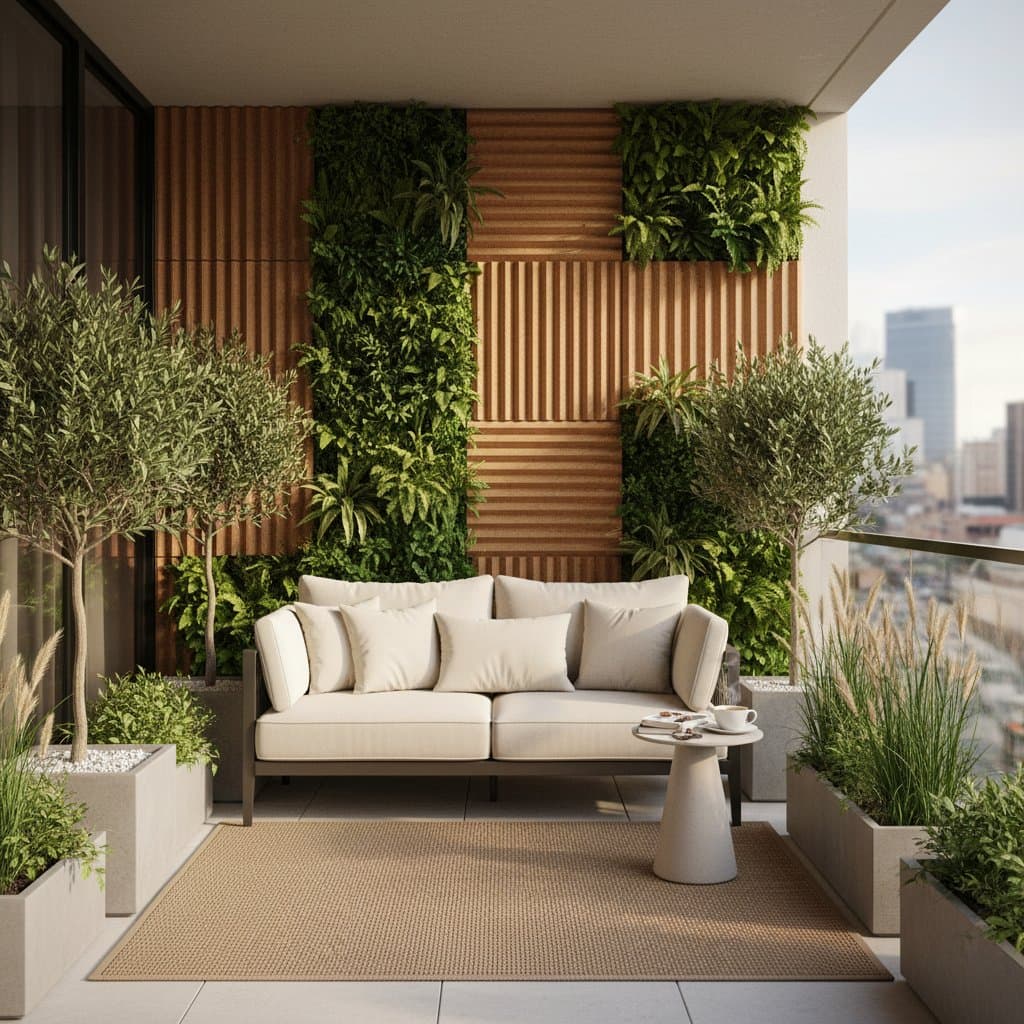
Step 5: Install the Base Layer
Secure coconut fiber or durable outdoor fabric along the back of the frame. This foundational layer retains soil while providing initial texture for sound absorption. Position it to allow small gaps at the bottom, ensuring proper drainage to prevent water accumulation.
Step 6: Add Planters or Pockets
Mount planters at intervals of 12 inches along the vertical frame. For hanging pocket systems, arrange them in a staggered formation where plants slightly overlap. This design disrupts sound waves more efficiently than a uniform flat panel, enhancing overall noise reduction.
Step 7: Plant and Fill
Select plants with dense, flexible foliage that develops thick coverage over time. Recommended choices include:
- Clumping bamboo, which provides rapid vertical growth and sturdy screening.
- English ivy, ideal for cascading coverage along the structure.
- Boxwood or juniper shrubs, offering a neat, hedge-like barrier.
- Ferns, suitable for balconies with partial shade.
After planting, water the arrangement generously to establish roots. Full root development in the pockets typically occurs within six to eight weeks, at which point the plants begin to contribute significantly to sound dampening.
Step 8: Add Acoustic Panels Where Needed
For areas of the balcony exposed to reflective surfaces such as blank walls or metal railings, install outdoor-rated acoustic panels. Opt for panels with a minimum thickness of one inch to effectively capture higher-frequency noises that vegetation alone may not fully address. Attach them using waterproof adhesive or corrosion-resistant screws for long-term stability.
Step 9: Finish with Texture
Incorporate a woven reed screen or sturdy trellis positioned behind the plants. This additional layer diffuses midrange sound frequencies while providing support for climbing vines. Maintain a one-inch air gap between the screen and any adjacent wall to optimize acoustic performance through better wave scattering.
Step 10: Test and Adjust
Once installation is complete, spend time on the balcony to evaluate noise levels from different angles. If sound persists from a particular direction, extend the wall height by 12 inches or introduce an additional tier of planters. Such targeted modifications often yield substantial improvements in tranquility.
Troubleshooting Common Issues
Address potential challenges promptly to maintain the wall's effectiveness.
Plants drying out too quickly: Incorporate a layer of mulch around the base of each planter, or set up a drip irrigation system equipped with a timer. Consistent moisture not only sustains plant health but also enhances the material's ability to absorb sound.
Structure vibrating in windy conditions: Check and tighten all screws, adding rubber washers for cushioning. Secure the frame to sturdy railing posts if necessary to eliminate movement.
Noise echoing from the balcony ceiling: Suspend outdoor fabric panels or bamboo matting from above. Even a single layer reduces reverberation and creates a more enclosed acoustic environment.
Mold appearing on panels or in soil: Increase airflow around the structure and adjust watering to avoid excess dampness. Clean affected panels monthly using a solution of diluted vinegar to prevent recurrence.
Ongoing Maintenance
Sustain the wall's performance through routine care that supports both plant vitality and noise control.
- Water the plants deeply once or twice weekly, adjusting based on weather conditions.
- Prune foliage when it extends 6 to 8 inches beyond the frame boundaries to promote density.
- Examine panels and fabric for looseness or discoloration every two months, making repairs as needed.
- Apply slow-release fertilizer quarterly to encourage robust growth.
- Gently brush acoustic panels to remove accumulated dust, preserving their absorptive qualities.
Dense foliage plays a key role in sound absorption, and consistent trimming fosters bushier development, which benefits aesthetics and functionality alike.
Seasonal Care Guidelines
Adapt your routine to the changing seasons for year-round reliability.
Spring preparation: Replace any plants damaged during winter and refresh the soil in upper planters. Secure all brackets firmly in anticipation of vigorous spring growth.
Summer management: Irrigate early in the day to minimize evaporation losses. Install shade cloth over sun-exposed sections if leaf scorching becomes evident.
Fall maintenance: Trim aggressive growers by one-third to ensure adequate air circulation. Remove debris from drainage areas to prevent clogs.
Winter protection: Encase frost-sensitive plants in breathable burlap coverings. Verify that drainage paths remain clear to avoid ice formation and structural stress.
Posting a compact seasonal checklist near the balcony access point promotes adherence to these practices. Diligent seasonal attention distinguishes a thriving acoustic barrier from one that underperforms.
Implementing and Refining Your Design
Begin implementation on one balcony side, measuring precisely and constructing a pilot section before full expansion. This approach allows for testing and refinement without overwhelming initial efforts.
Adopt these essential practices for lasting success:
- Monitor sound levels periodically, as variations in wind and vegetation density influence performance.
- Dedicate weekly time to plant care, ensuring optimal health for superior noise mitigation.
- Integrate layers thoughtfully, blending plant material, fabrics, and rigid panels to achieve comprehensive sound control.
Creating a serene balcony environment requires no extravagant resources. Through methodical construction, basic tools, and persistent upkeep, you establish a natural shield that tempers urban clamor and elevates outdoor enjoyment. Progressive layering of greenery and textures cultivates an enduring sense of peace.