
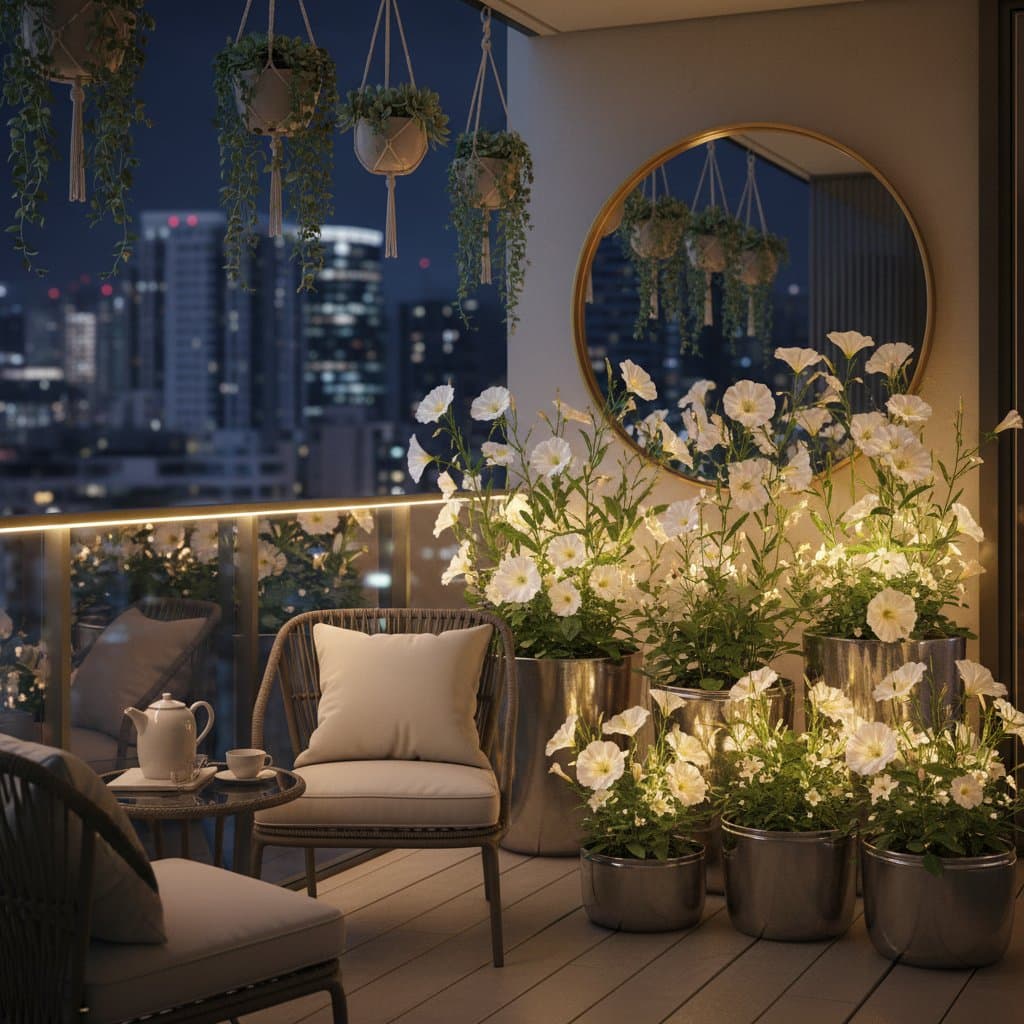
1. Select Night-Blooming Varieties
Night-blooming flowers bring fragrance and subtle glow to urban balconies after sunset. Consider moonflower vines for their large, white trumpets that unfurl in the evening. Evening primrose offers delicate yellow blooms with a sweet scent, while four o'clocks provide bursts of color in pink, yellow, or white. Opt for three to five species that thrive in containers and partial shade during the day. These plants suit city conditions, tolerating heat and limited space while attracting pollinators like moths.
Evaluate your balcony's sunlight exposure before purchasing. Most night bloomers prefer full sun by day and darkness at night. Source healthy seedlings from local nurseries to ensure adaptability to urban air quality.
2. Prepare the Balcony Layout
Assess available space and safety first. Secure pots against wind by anchoring them to railings or using weighted bases. Arrange taller vines along the back to create a natural screen, placing lower growers in front for layered visibility.
Incorporate reflective elements early. Position mirrors or light-colored pots to amplify moonlight across the area. Ensure pathways remain clear to avoid tripping in low light. This setup enhances the serene atmosphere without overwhelming the small footprint.
3. Plant and Water
Position each plant at the same depth it occupied in the nursery pot. Firm the soil around roots to eliminate air pockets, then water thoroughly until excess drains from the bottom. Maintain consistent moisture in the soil, allowing the top inch to dry slightly between waterings. Overwatering leads to root rot, particularly on humid summer nights.
Select well-draining potting mix amended with perlite for better aeration. Test drainage by filling pots and observing runoff speed. Adjust watering frequency based on weather; reduce during cooler evenings.
4. Add Light and Reflection
Install small solar-powered lanterns or low-wattage LED lights at pot bases to accentuate blooms. Select soft, diffused options that imitate natural moonlight rather than bright artificial glare. Position lights to cast gentle shadows, enhancing the ethereal quality of the garden.
For balconies shielded from direct moonlight, place a single reflective tile or mirror behind the primary planter. This technique scatters light onto leaves and flowers, creating depth. Test placements during dusk to confirm even illumination without hotspots.
5. Encourage Growth
Apply a balanced liquid fertilizer every two weeks throughout the growing season. Focus on formulas low in nitrogen to promote flowers over foliage. Observe plant response and adjust feeding if growth stalls.
Prune vines and remove dead leaves weekly to improve air circulation. This practice prevents mildew buildup and keeps evening displays vibrant. Use clean shears for precise cuts, targeting spent stems just above a leaf node.
6. Establish Evening Care Routine
Dedicate a few minutes each night to inspect soil moisture and deadhead faded blooms. This habit fosters a deeper connection with the garden while promoting continuous flowering. Track changes in a simple journal to refine care over time.
Combine checks with gentle misting if air feels dry. Such routines fit easily into urban lifestyles, turning maintenance into a relaxing transition to evening relaxation.
Address Common Challenges
Blooms fail to open: Verify that full darkness has arrived, as certain varieties wait for complete nightfall. Diminish artificial light sources on the balcony and cut back on evening watering to encourage bud response.
Yellowing leaves appear: Excess water or inadequate drainage often causes this issue. Clear standing water from saucers after rainfall and aerate compacted soil with a fork.
Fragrance seems faint: Stagnant air hinders scent dispersion. Introduce a low-speed oscillating fan set to run for one hour post-sunset, directing airflow gently over the plants.
Pests target buds: Moth larvae frequently visit night-blooming species. Examine leaf undersides each week, hand-picking intruders or applying a solution of mild soap and water.
Soil dries rapidly: Cluster pots together to form a microclimate that holds humidity. Layer organic mulch or sphagnum moss over the surface to slow evaporation.
Sustain Long-Term Health
Night-blooming gardens demand consistent yet minimal attention to flourish. Adopt these practices for enduring vitality:
- Water in the early evening hours, allowing absorption before blooms emerge.
- Deadhead spent flowers each week to stimulate fresh production.
- Trim overgrown stems monthly to maintain compact shapes.
- Fertilize sparingly, selecting bloom-boosting nutrients over heavy feeds.
- Rotate container positions every few weeks for uniform sunlight access.
Monitor for pests or fungal signs during routine watering. Treat white spots on leaves with a wipe of diluted vinegar solution. Refresh potting soil annually to eliminate nutrient salt accumulation.
Organize Supplies Efficiently
Effective storage supports seamless garden upkeep. Store tools and essentials in a single waterproof container positioned near the entry point. Label compartments for fertilizers, gloves, and insect spray to streamline access.
A 12-inch-deep clear bin slides under typical balcony benches, shielding contents from moisture. Mount a hook rail on the wall for hanging the watering can and pruners, reducing floor clutter. Install a motion-activated light overhead to illuminate the area during nighttime retrievals.
Seek Professional Assistance When Needed
Balcony gardens typically require straightforward management, yet specific situations warrant expert input.
- Consult a contractor if railings exhibit rust or floors display cracks, prior to increasing load.
- Engage an electrician for any lighting-related electrical issues.
- Request a soil analysis from a nearby nursery if plants decline despite proper care.
Experts assess structural capacities, especially for older buildings. Inquire about maximum weight tolerances per square foot to guide selections in pots and fixtures.
Essential Steps for Success
- Select three to five sunset-opening species suited to containers.
- Integrate reflective elements and subtle lighting to showcase nocturnal beauty.
- Maintain soil at moist levels without saturation.
- Anchor all pots, wires, and installations securely.
- Renew soil and nutrients seasonally for sustained performance.
Build Your Moonlit Oasis
Transforming a city balcony into a nighttime haven begins with thoughtful plant choices and simple setups. These elements create a fragrant, glowing retreat that enhances urban living. Regular care ensures the garden evolves, offering seasonal rewards and peaceful evenings under the stars.