
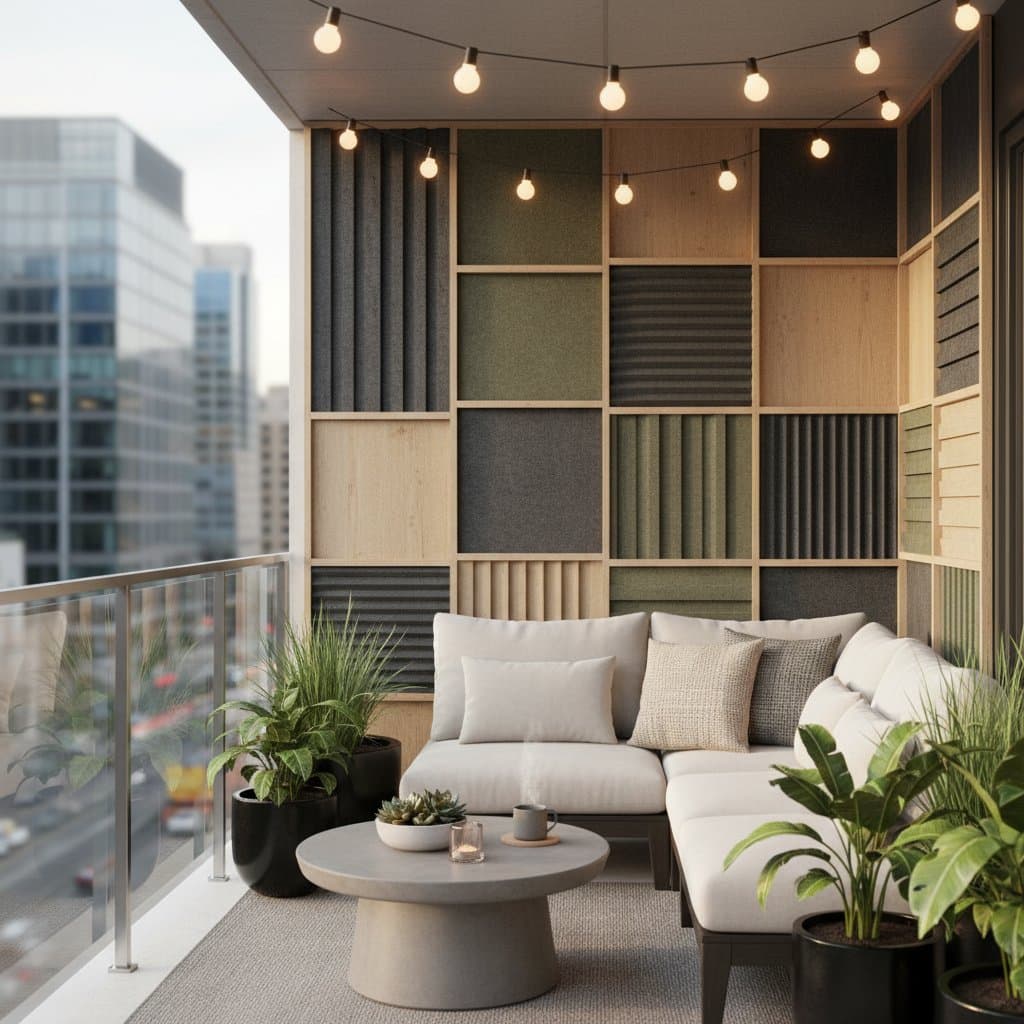
Acoustic Panels: Creating Quiet Balcony Retreats Amid City Noise
Urban environments generate relentless noise from traffic, sirens, and neighboring activities that infiltrate even the most private outdoor spaces. Balconies, intended as sanctuaries, often become extensions of the chaotic street below. Acoustic panels offer a practical solution by absorbing sound waves, preventing reflection and amplification within the enclosed area.
These panels function without the need for comprehensive soundproofing measures typically reserved for professional studios. The primary objective involves diminishing echo effects and attenuating external noise to levels that support comfortable conversation or focused relaxation. Through thoughtful selection and installation of a modest number of panels, individuals can establish a serene balcony suitable for reading, remote work, or quiet contemplation.
Understanding Acoustic Panels
Acoustic panels consist of specialized materials designed to capture and dissipate sound energy. Common compositions include open-cell foam, dense felt, breathable fabric wraps, or sustainable options derived from recycled fibers. In balcony applications, these panels mitigate the intrusion of vehicular hums, pedestrian voices, and construction disturbances while also containing internal sounds from escaping into adjacent areas.
The significance of acoustic panels arises from the reflective properties of typical urban structures, such as concrete barriers and glass facades, which exacerbate noise propagation. By introducing absorptive surfaces, panels disrupt this cycle of reflection, fostering a more acoustically balanced environment. Available in prefabricated forms from specialty retailers or as customizable DIY assemblies, they adapt easily to various balcony configurations.
Essential Tools and Materials
Preparation ensures a smooth installation process. Assemble the following items prior to commencement:
- Four to six acoustic panels, each measuring approximately 24 by 48 inches to cover key exposure areas adequately
- Durable, outdoor-rated fabric or vinyl covers to protect against weather exposure
- Industrial-strength hook-and-loop fasteners or corrosion-resistant mounting hardware
- Precision measuring tape and a bubble level for accurate alignment
- Power drill equipped with a masonry bit for secure attachment to brick or concrete surfaces
- Safety gloves and protective eyewear to guard against debris and sharp edges
Consider supplementary elements such as trailing plants for natural diffusion, weatherproof rugs to soften floor reflections, or modular privacy screens that contribute additional sound layering without obstructing views.
Installation Steps
1. Assess and Measure the Space
Begin by evaluating the balcony's dimensions, noting the length and height of primary walls. Identify predominant noise sources, such as direct street views or echoing from opposite buildings, to prioritize coverage. Position panels with a minimum separation of two inches between edges, which optimizes sound scattering and absorption across frequencies.
2. Strategize Panel Placement
Prioritize the facade or railing oriented toward the noisiest direction, typically the street-facing side. For multifaceted noise, incorporate panels on lateral walls to encircle the space. Covering three walls to a height of four feet can reduce perceived echo by up to 50 percent, creating a noticeable improvement in auditory comfort.
3. Secure the Panels in Place
Affix hook-and-loop strips or mounting clips to the rear of each panel, ensuring even distribution for stability. Align and press panels against the surface, applying firm pressure to engage the adhesive. When drilling into masonry, proceed methodically: mark positions, pre-drill pilot holes, and insert appropriate anchors. Elevate panels at least four inches from the floor to promote air circulation and prevent water accumulation.
4. Address Potential Gaps and Vibrations
Inspect for any spaces where wind might cause movement; apply flexible weather stripping or foam seals along edges to minimize rattling. These measures not only enhance acoustic performance by blocking sound leakage but also extend the durability of the installation against elemental wear.
5. Incorporate Complementary Absorbers
Enhance the setup with layered soft furnishings that target residual frequencies. Install lightweight outdoor curtains along open edges, place cushioned seating with fabric upholstery, or deploy area rugs over hard floors. Select materials with higher thread counts or densities to maximize mid-frequency absorption while preserving ventilation.
Key Safety Considerations
Prioritize personal protection by donning eyewear whenever operating power tools on hard surfaces. Ensure all equipment, including ladders and extension cords, rests on stable, level footing to prevent accidents. Position panels away from drainage points and ventilation outlets to maintain structural integrity and airflow. Verify that any adhesive products support a minimum load of five pounds per panel to withstand gusts and seasonal shifts.
Common Issues and Solutions
Persistent sharpness in sound may indicate uncovered reflective elements, such as polished metal railings or glossy tabletops; drape these with absorbent fabrics or relocate them to less central positions. Sagging panels signal inadequate fastening—reinforce with additional clips or replace worn strips. Moisture retention poses a risk in humid climates; opt for permeable coverings or introduce a slim air gap using spacers to facilitate drying.
Cost Estimates and Timeline
Budget allocation typically ranges from $80 to $200, influenced by panel composition and coverage extent. Basic foam variants provide economical entry points but excel primarily in higher frequencies, whereas premium mineral wool or fiberglass alternatives deliver superior bass attenuation at a higher price. Allocate two to three hours for the core installation, allowing extra time for any protective coatings to cure fully.
Ongoing Maintenance Practices
Routine care involves gentle cleaning with a moistened cloth every two to four weeks to remove dust and urban grime. Following inclement weather, inspect and retighten all attachments to counteract loosening from vibrations. Promptly replace any panels showing signs of saturation to avert mold growth. For optimal longevity, detach and store removable units indoors during extreme conditions like prolonged storms.
Space-Efficient Storage Options
In compact balconies, employ collapsible or pivot-mounted panels that fold neatly against walls during off-hours. Tuck surplus units behind built-in storage or beneath elevated benches to preserve usable area. Mark each panel's orientation during disassembly to simplify reassembly and maintain consistent acoustic benefits.
Professional Assistance Indicators
Engage a qualified installer if dealing with reinforced concrete or metallic frameworks where drilling expertise is required. Consult on load-bearing capacities and humidity management to ensure compliance with safety standards. Professionals can also advise on obtaining necessary permissions for semi-permanent modifications in regulated buildings.
Implementing Your Balcony Transformation
Achieve acoustic harmony without resorting to costly renovations by initiating with a foundational set of four panels. Evaluate the immediate impact on ambient noise, then incrementally expand coverage as desired. Integrate ambient enhancements like subtle illumination and verdant foliage to engage multiple senses, culminating in a holistic retreat. Dedicate a brief session to initial measurements, procure your first batch of materials, and sketch a preliminary design—progress toward a peaceful urban oasis begins with these deliberate actions.