
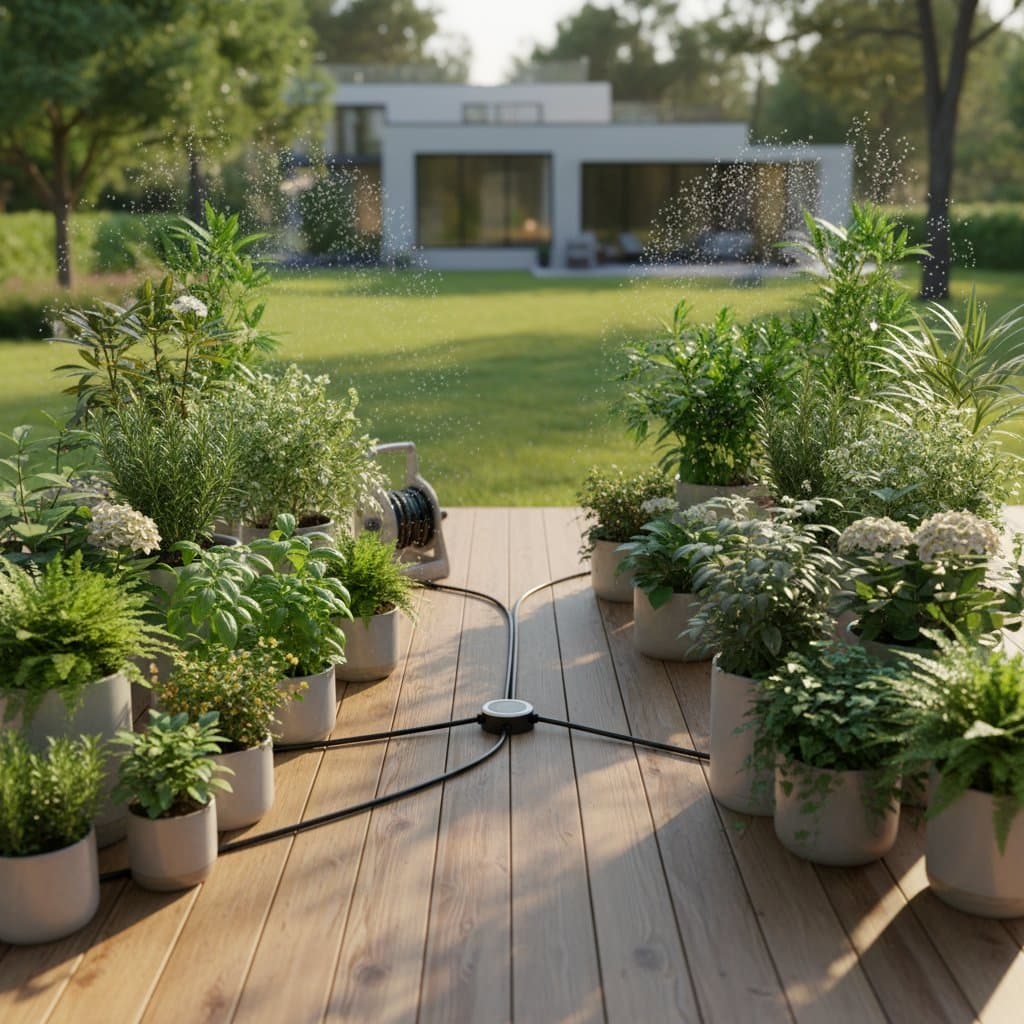
Effortlessly Automate Watering for 50+ Deck Plants
A thriving deck garden enhances outdoor living, but manual watering often disrupts that enjoyment. Imagine returning from a long day to find your plants perfectly hydrated without lifting a finger. A micro drip irrigation system achieves this by delivering precise water amounts directly to roots, supporting over 50 containers, railing planters, and hanging baskets with reliable automation.
This setup uses gravity or low-pressure flow to mimic natural rainfall, preventing overwatering and waste. You invest a single afternoon in installation, then enjoy consistent moisture that promotes healthy growth. The following sections detail planning, assembly, and care to ensure long-term performance.
Essential Tools and Materials
Select components suited for micro irrigation to handle multiple pots efficiently. Source items from garden centers or online suppliers, opting for kits if you prefer simplicity. For a system covering 50 or more plants, assemble these core elements:
- One faucet timer with digital or mechanical settings for scheduled operation
- One pressure regulator set to 25 PSI to safeguard delicate emitters
- One backflow preventer to maintain water quality and comply with local codes
- 50 to 70 feet of 1/2-inch mainline tubing for the primary distribution line
- 100 to 150 feet of 1/4-inch distribution tubing to branch into individual pots
- 50 to 60 adjustable drippers or emitters, each calibrated to 0.5 to 2 gallons per hour
- One roll of drip tape for extended planters or railing boxes
- One tubing punch tool and a pack of barbed connectors for secure junctions
- One pack of stakes, clips, and end caps to anchor and seal the lines
- A pair of sharp garden snips for clean cuts
Consider these optional additions for enhanced functionality:
- Multi-zone splitters to manage varying plant needs across the deck
- Hose clamps to reinforce connections in high-exposure areas
- An inline filter to trap debris from municipal or well water sources
Verify emitter flow rates match your plants; for instance, assign higher outputs to moisture-loving species like ferns or herbs, while succulents require lower settings.
Safety Considerations for Installation
Prioritize precautions to protect your setup, water supply, and users. Install the backflow preventer directly after the faucet to prevent any reverse flow into your home's plumbing. Position electrical timers in sheltered spots, such as under deck eaves, to avoid moisture damage.
Route tubing along edges or behind planters to eliminate tripping hazards over walkways. Secure lines with clips or stakes, ensuring they remain unobtrusive. For gravity-fed systems using rain barrels, raise the barrel at least 24 inches above the highest pot to sustain adequate pressure without pumps.
Planning Your System Layout
Map your deck before purchasing materials to optimize tubing runs and minimize waste. Identify the water source, typically an outdoor faucet, and sketch paths to group plants by hydration needs, such as sun-exposed versus shaded areas. Aim for zones if your deck exceeds 50 plants; for example, divide into two sections for herbs and flowers.
Calculate tubing lengths by measuring distances between pots, adding 20 percent extra for adjustments. Factor in elevation changes, as drops over 10 feet may require additional regulators. This planning phase takes 30 minutes but prevents costly rework during installation.
Step-by-Step Installation Guide
Allocate three to four hours for assembly on a mild afternoon. Begin by attaching the faucet timer to your outdoor spigot, followed by the backflow preventer and pressure regulator in sequence. Connect the 1/2-inch mainline tubing to the regulator, running it along the deck's perimeter to reach all plant areas.
Use the punch tool to create holes in the mainline at each branch point, inserting barbed connectors for 1/4-inch tubing leads. Extend these leads to individual pots, punching small holes near emitters and securing drippers at soil level with stakes. For hanging baskets, loop tubing upward and anchor emitters inside the container.
Install drip tape in linear planters by unfolding it along the base and sealing ends with caps. Test the system by running water for five minutes, observing for leaks at junctions and even distribution. Adjust emitter rates as needed, then program the timer for daily cycles, starting with 10 to 20 minutes based on local climate and pot sizes.
Cost Breakdown and Time Investment
Expect to spend $85 to $160 on a durable system for 50 to 60 plants, with basic mechanical timers at the lower end and digital models offering app integration at the higher. Factor in $20 to $30 for optional filters or splitters if your setup demands them. Quality components justify the investment by reducing repairs over time.
Installation requires three to four hours, spread across layout, assembly, and testing. Monthly maintenance involves just 10 minutes to inspect for clogs and flush lines with a vinegar solution. Skip essential items like regulators to avoid pressure buildup that damages emitters or contaminates water.
Maintenance and Seasonal Adjustments
Regular care ensures the system operates efficiently through changing weather. In spring, examine all tubing for winter damage, replace any cracked sections, and run a full test cycle before adding new plants. Monitor soil moisture weekly to fine-tune timer durations.
During summer, increase watering intervals by two to five minutes every few weeks as evaporation rises. Inspect emitters biweekly for blockages, clearing them with a soft brush or pin. In fall, shorten cycles to match cooling temperatures and flush lines with clean water before partial disassembly.
For winter, drain all components by opening ends and tilting lines downward, then store timers and regulators indoors to prevent freezing. These seasonal tasks require only 15 minutes each and extend the system's lifespan to five years or more.
Integrating Advanced Features
Most homeowners handle basic setups independently, but enhancements may warrant professional input. Consult an expert for multi-source integrations, such as combining faucet and barrel feeds, or significant elevation variations exceeding 20 feet. Smart home connections, like Wi-Fi timers synced to weather apps, add precision but involve wiring that pros manage safely.
Address issues like persistent leaks near built-in fixtures promptly to avoid water damage. Local irrigation specialists can customize zones for diverse plant types, ensuring optimal performance without overwhelming complexity.
Achieve a Lush Deck Garden Year-Round
With this micro drip system in place, your deck transforms into a self-sustaining haven of greenery. Plants receive tailored hydration that fosters vigorous blooms and foliage, freeing you to savor outdoor moments. Implement these steps to eliminate watering chores and cultivate a resilient urban oasis that thrives effortlessly.