
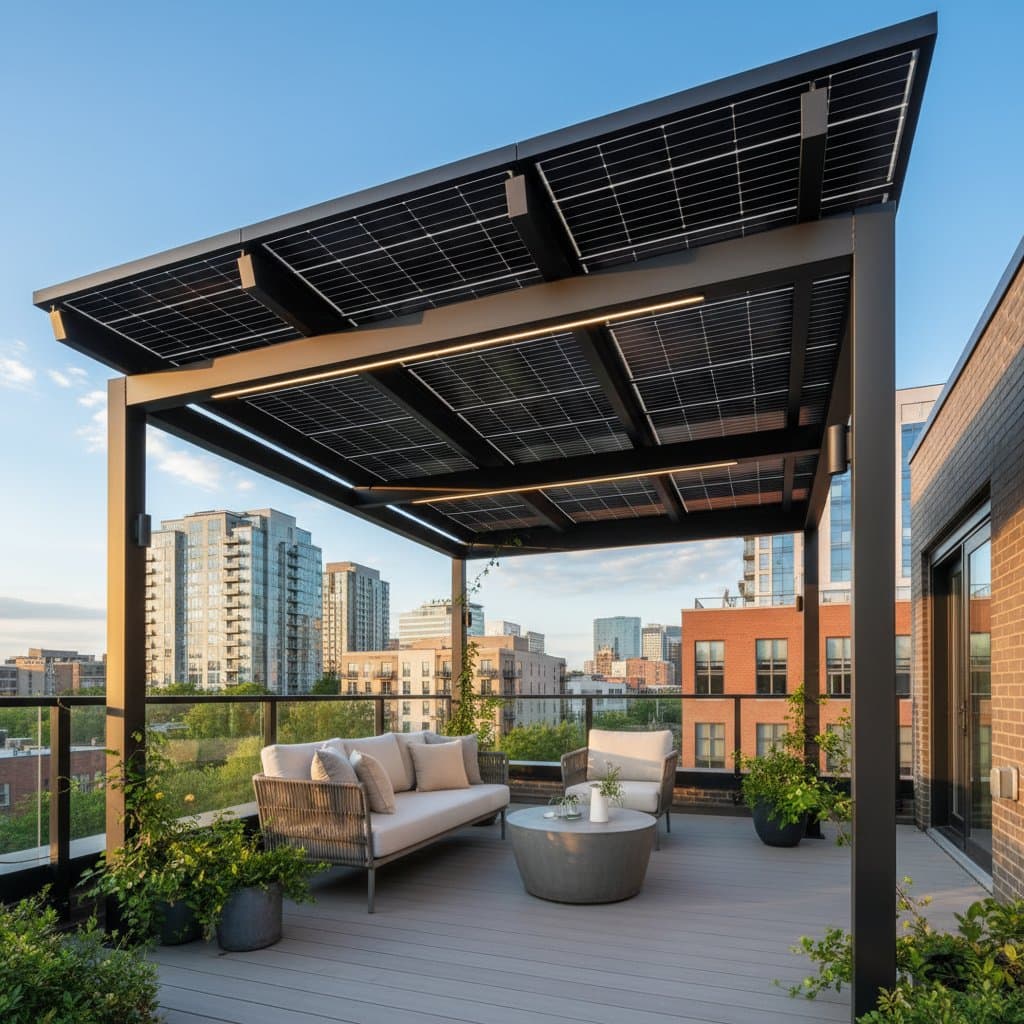
Solar Pergolas: Shade and Power for Urban Small Decks
City dwellers often face challenges when enjoying outdoor spaces. Intense urban heat and limited deck areas can discourage relaxation. A solar pergola addresses these issues by providing shade and generating electricity from sunlight. This structure creates a cooler environment while reducing energy costs. The following guide details the essentials of solar pergolas, their advantages for compact urban decks, and practical steps for installation within a reasonable budget.
Overview
A solar pergola consists of an outdoor framework topped with solar panels that serve as both a roof and an energy source. These panels block direct sunlight to offer shade and convert absorbed rays into usable electricity. Homeowners can power devices such as outdoor lighting, a compact refrigerator, or portable electronics. For properties connected to the grid, a licensed electrician can integrate the system to feed excess energy back into the home.
In urban settings with restricted roof access, a solar pergola maximizes solar potential without sacrificing usable outdoor space. It enhances comfort through shaded areas and delivers practical benefits via renewable power generation. Key advantages encompass temperature reduction, energy savings, improved privacy, and elevated property aesthetics.
Primary benefits:
- Shade that decreases ambient temperatures by 10 to 15 degrees Fahrenheit on deck surfaces.
- Production of renewable electricity to offset a portion of household grid consumption.
- Enhanced privacy and visual enhancement for the deck area.
- Long-term investment that boosts property value and energy independence.
Tools and Materials
Assembling a solar pergola requires basic tools and readily available materials. Focus on durability and weather resistance for urban conditions. The list below outlines essential components, including typical specifications for a small deck installation.
- Pergola frame: Pressure-treated lumber or powder-coated aluminum, sized at 8 by 10 feet to suit compact decks.
- Solar panels: Four to six units, each rated at 100 to 200 watts for balanced output.
- Mounting rails and brackets: Compatible with selected panel dimensions for secure attachment.
- Inverter or microinverters: One unit per panel to enable independent performance monitoring.
- Wiring kit and junction box: Outdoor-rated with waterproof seals to withstand moisture.
- Fasteners and anchors: Galvanized screws and bolts designed for deck integration.
- Protective gear: Gloves, safety goggles, and shoes with non-slip soles.
Professional electrical integration demands a licensed specialist. Solar systems involve active current, requiring expertise to ensure safe operation.
Steps
Step 1: Measure and Plan the Layout
Begin by assessing the deck's dimensions and observing the daily sun trajectory. Optimal placement orients the pergola roof toward the south or southwest in northern hemispheres. Use chalk lines or painter's tape to outline post positions. Maintain a minimum clearance of 7 feet beneath the lowest beam for comfortable access.
Step 2: Select Materials
Aluminum frames prove ideal for small decks due to their lightweight nature and corrosion resistance. Wood frames provide a more traditional appearance but require sealing against moisture. Choose load-bearing materials capable of supporting at least 20 pounds per square foot once panels are added.
Step 3: Install the Posts
Drill pilot holes into the deck joists for secure anchoring, avoiding reliance on surface boards alone. Employ a level to ensure posts remain vertical. Secure bolts with appropriate torque to prevent material damage from over-tightening.
Step 4: Attach Beams and Rafters
Position horizontal beams to outline the structure's perimeter. Install cross rafters at intervals of 12 to 16 inches for even support. Verify alignment throughout to create a level platform essential for panel stability.
Step 5: Secure the Solar Panels
Affix mounting rails to the rafters following manufacturer guidelines. Position each panel and fasten with specified torque values. Angle panels at 15 to 25 degrees to optimize sunlight capture and facilitate water runoff.
Step 6: Wire the System
Route cables through protective conduit along the frame, securing them to avoid hazards. Label connections clearly before linking to the inverter. Disconnect power sources prior to any handling, and consult a professional if electrical knowledge is limited.
Step 7: Test and Complete the Installation
Use a multimeter to measure voltage output under direct sunlight. Confirm consistent readings before full activation. Incorporate accessories such as LED lighting, a ceiling fan, or lattice panels for added shade and style.
Safety Considerations
Deactivate circuit breakers before any grid connections. Select components certified for outdoor electrical use. Refrain from scaling the structure post-installation to prevent falls. Obtain necessary building permits and comply with community regulations prior to construction.
Common Issues and Solutions
Reduced Power Generation: Remove debris from panels using a solution of mild soap and water. Contaminants like dust or droppings can diminish efficiency by as much as 20 percent.
Inconsistent Shading: Prune overhanging foliage or recalibrate panel angles to align with solar movement.
Structural Instability: Inspect and retighten all fasteners. Incorporate cross-bracing for enhanced rigidity if movement persists.
Electrical Irregularities: Engage an electrician to evaluate grounding and inverter configurations for issues like humming or intermittent power.
Upkeep and Longevity
Solar pergolas demand minimal routine care. Clean panels seasonally with a soft cloth and non-abrasive cleaner. Inspect hardware for signs of wear, such as rust on metal parts. Apply fresh sealant to wooden elements every two to three years.
In snowy regions, clear accumulations promptly using a soft-bristled tool to safeguard panels. Keep spare parts like fuses and connectors in a protected storage area for efficient repairs.
Cost and Timeline Estimates
A compact solar pergola typically ranges from $2,500 to $6,000, influenced by frame type and panel capacity. DIY efforts can reduce expenses by up to 30 percent, though electrical services may incur an additional $500 to $1,000.
Completion requires two to three weekends for part-time builders. Prefabricated aluminum options accelerate the process, whereas wooden constructions involve extra time for treatments and curing.
Seasonal Maintenance Guide
Spring Preparation: Examine wiring integrity and secure fittings ahead of rainy periods.
Summer Monitoring: Perform monthly cleanings to counter pollen and heat buildup.
Fall Clearance: Remove fallen leaves to maintain proper drainage.
Winter Protection: Brush away snow after storms to alleviate structural stress.
Professional Assistance Indicators
Seek expert help for erratic voltage levels, visible damage to wiring, post displacement following weather events, or grid integration plans. Electricians ensure proper polarity and safety compliance. For aging decks, a structural assessment may confirm load capacity.
Practical Next Steps
A solar pergola elevates urban decks into efficient, shaded havens that align with sustainable living.
Immediate actions:
-
Evaluate your deck space and draft a basic design sketch.
-
Research solar panel options, focusing on output ratings and structural fits.
-
Schedule a consultation with a certified electrician to review site feasibility.