
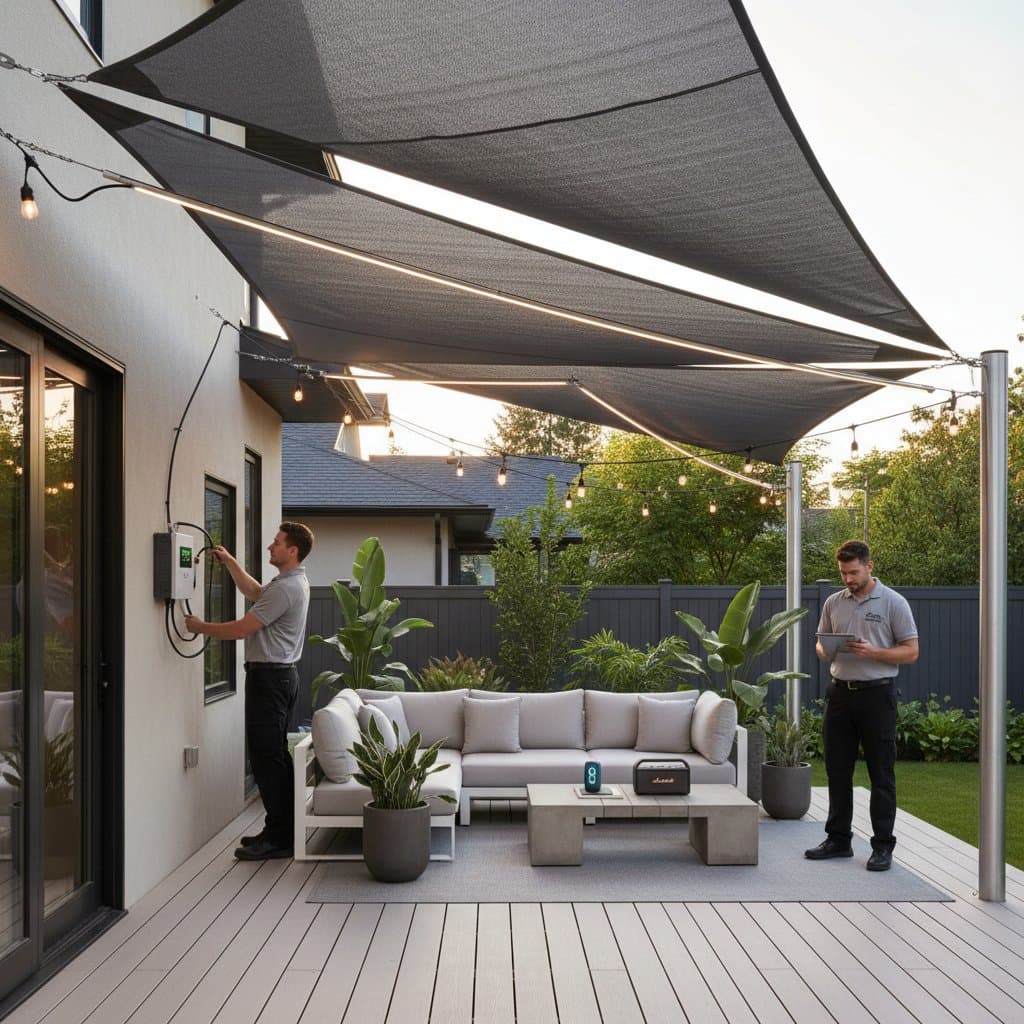
6. Install the Charge Controller and Battery
Select a weatherproof enclosure for the charge controller and mount it securely on a nearby deck post or garage wall. Begin connections by linking the solar panel output to the controller's input terminals, ensuring polarity matches positive to positive and negative to negative. Follow with the battery connection to the controller's output, using 10-gauge wire for distances under 20 feet to minimize voltage drop.
Place the battery in a cool, shaded area with good ventilation to prevent overheating. Secure all wiring with strain relief clamps to protect against movement and weather exposure. Test initial connections with a multimeter before full activation to verify continuity and avoid short circuits.
7. Test and Fine-Tune the System
Power up the system and monitor the charge controller's display for charging indicators, such as a green light or rising voltage readings. Attach a low-draw device, like an LED string light or a USB charger, to confirm stable power delivery. Adjust panel angles if output seems low, aiming for optimal sun exposure between 10 a.m. and 4 p.m.
Observe the system over a full day to note peak performance times. If voltage fluctuates, inspect connections for looseness. Document initial readings in a log to track efficiency over time and identify patterns in energy production.
Common Troubleshooting Scenarios
Low or No Power Generation
Inspect solar panels for accumulated dirt, leaves, or bird droppings that block sunlight. Gently clean with lukewarm water and a non-abrasive cloth, avoiding harsh chemicals that could damage the surface. Verify the charge controller registers incoming solar voltage; if not, check for faulty wiring or a tripped fuse and replace as needed.
Sagging Fabric or Uneven Tension
Release tension from one attachment point and systematically retighten all turnbuckles in quarter-turn increments, working around the perimeter. Over time, fabric may stretch due to wind or UV exposure; in such cases, reposition anchors or introduce a slight slope to one side for better drainage and tautness.
Intermittent Power or Flickering Devices
Examine all electrical terminals for loose screws or oxidation, which disrupt current flow. Clean contacts with a wire brush and retighten firmly. Ensure battery voltage remains above 12 volts; recharge or replace if it drops consistently, as low charge can cause instability.
Water Infiltration at Cable Penetrations
Apply a bead of clear silicone sealant around entry points and form drip loops in cables to direct water away from connections. Install reinforced grommets in the fabric where cables pass through to reinforce the material and prevent tears.
Ongoing Maintenance Practices
Schedule panel cleaning every two months using a garden hose and soft-bristle brush to remove surface grime without scratching. After severe weather events, such as storms or high winds, examine all hardware for signs of stress, including frayed ropes or bent brackets, and reinforce as required.
Monitor battery health monthly by checking charge levels with a voltmeter; maintain above 50 percent to extend lifespan, which typically spans 5 to 7 years under moderate use. For deep-cycle models, avoid full discharges by incorporating a low-voltage cutoff in the controller settings.
During off-season storage, disconnect all components and loosely roll the fabric to prevent creases. Store in a dry, elevated location protected from pests and moisture, using breathable covers to allow air circulation.
Efficient Storage Strategies
When disassembling for winter, organize wires by coiling them without kinks and securing with zip ties, labeling each end for quick reassembly. Pack hardware, including turnbuckles and anchors, into a dedicated, transparent container for easy access next season.
Opt for adjustable wall brackets on smaller decks, allowing complete detachment and flat storage indoors to save space. Include padded separators for poles and frames to avoid scratches during transport.
Choose a portable battery enclosure with integrated ventilation and carrying handles. Wrap terminals in non-conductive foam to safeguard against accidental shorts while in transit or storage.
Situations Requiring Professional Assistance
Engage a certified electrician for integrating the system with your home's electrical grid, ensuring compliance with local building codes and installation of safety disconnects. This prevents hazards like overloads or fire risks from improper fusing.
Consult a structural engineer or contractor if your deck shows age-related wear or if anchors require load-bearing verification. They might suggest supplemental supports, such as additional posts, to distribute tension evenly across the framework.
For setups involving multiple interconnected sails, professionals can optimize wiring configurations and panel orientations to maximize collective output while balancing electrical loads.
Essential Insights
Solar shade sails merge shade provision with renewable energy capture, reducing deck temperatures by up to 15 degrees Fahrenheit while powering outdoor essentials like pathway lights or misting fans. This dual functionality enhances usability without compromising aesthetics.
Installation demands straightforward tools and a few hours of focused effort, with emphasis on robust anchoring, insulated wiring, and grounded electrical setups. Routine upkeep ensures reliability, often yielding over a decade of service with minimal intervention.
Steps to Get Started
Assess your deck's dimensions and identify high-sun areas for maximum shade and energy yield. Select a sail sized to cover 70 to 80 percent of the space, paired with panels rated at 100 to 200 watts based on daily power requirements.
Account for site-specific sunlight, targeting at least four hours of unobstructed exposure. Sketch a layout incorporating anchors and wiring paths to streamline the process and avoid surprises during setup.