
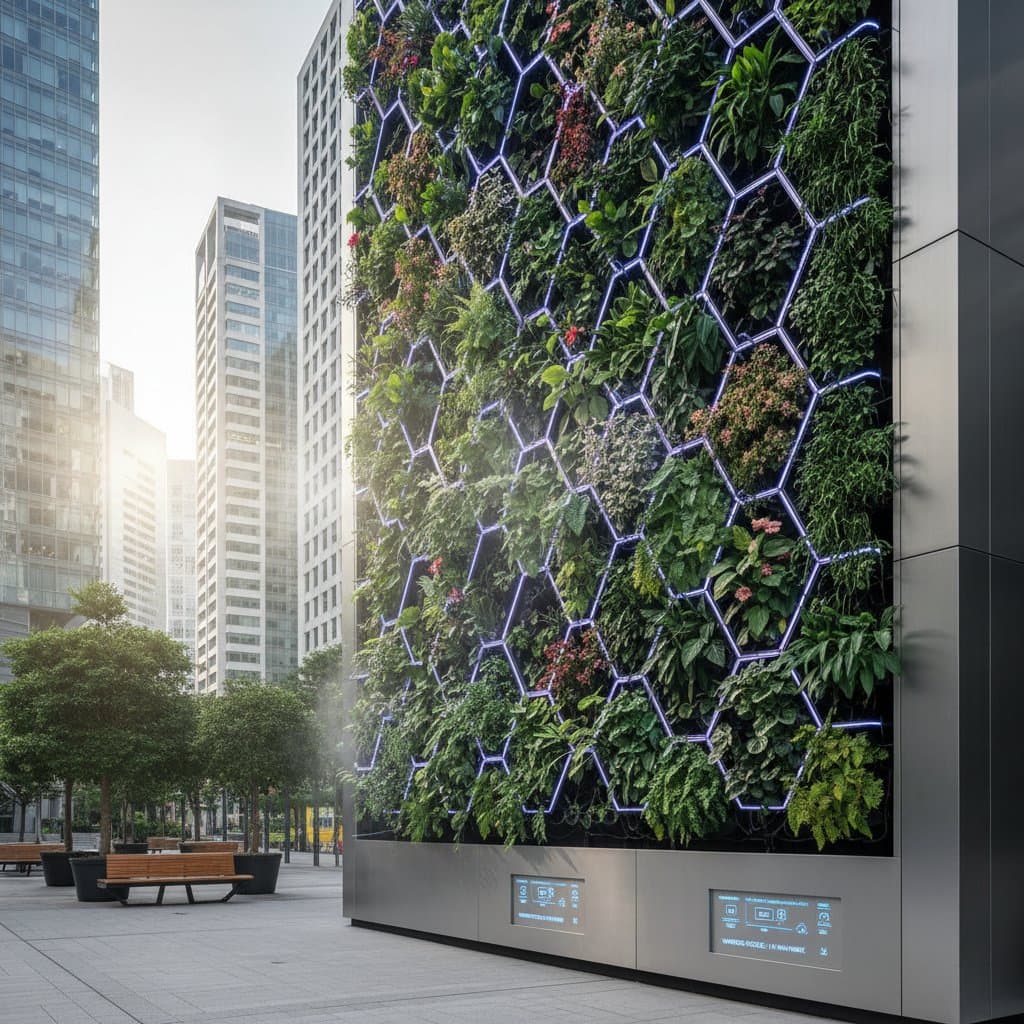
Understanding AI Plant Walls for Urban Environments
City dwellers often face challenges with limited space and natural light, yet desire the benefits of indoor greenery. AI plant walls address these issues by integrating advanced technology with living plants. These vertical gardens feature sensors that monitor soil moisture, light levels, and nutrient needs, automating care to ensure plant health with minimal human intervention.
The result is a vibrant, low-maintenance feature that enhances air quality by filtering pollutants and adding humidity. Suitable for apartments, offices, or balconies, AI plant walls transform blank surfaces into dynamic elements of biophilic design. This guide covers the fundamentals, installation process, maintenance routines, and enhancements to create a thriving vertical oasis.
How AI Plant Walls Function
At the core of an AI plant wall lies a smart controller connected to an array of sensors embedded in the planters. These sensors detect real-time conditions such as soil dryness or pH imbalances, triggering precise actions like dispensing water or adjusting LED grow lights. Irrigation systems use drip technology to deliver water directly to roots, minimizing waste and preventing overwatering.
Nutrient delivery occurs through automated dispensers that release fertilizers based on plant growth cycles. Many systems include mobile apps for remote monitoring, sending alerts for low reservoir levels or environmental changes. This automation reduces daily tasks to occasional checks, allowing plants like trailing ivy or succulents to flourish year-round.
Integration with smart home devices further elevates functionality. For instance, the wall can sync with humidity sensors in the room to optimize misting. Overall, these systems promote sustainability by using up to 90 percent less water than traditional gardening methods.
Selecting the Right Location and Plants
Choose a wall that receives indirect light for at least four hours daily, as most indoor plants thrive under such conditions. South- or east-facing walls work best in urban settings with limited sunlight. Ensure the surface is sturdy; drywall alone may require reinforcement for heavier setups.
Plant selection depends on the environment. Opt for low-light tolerant species such as pothos, snake plants, or peace lilies for shaded areas. For brighter spots, consider ferns, philodendrons, or herbs like basil and mint. Start with a mix of trailing and upright varieties to create visual depth and coverage.
Assess the wall's dimensions to determine scale. A 2-by-3-foot panel suits small apartments, while larger 4-by-6-foot versions fit open lofts. Factor in accessibility for refilling the reservoir, ideally placing it at waist height.
Essential Tools and Materials for Installation
Preparation ensures a smooth setup. Most AI plant wall kits provide core components, but verify inclusions to avoid delays.
Required Tools:
- Power drill equipped with a 1/4-inch (6 mm) bit for securing anchors
- Spirit level and measuring tape for precise alignment
- Assorted screwdriver set for assembly
- Small bucket or container for initial system testing
- Step ladder for installations above standard reach
Necessary Materials:
- Complete AI plant wall kit including controller, sensors, and frame
- 10 to 30 modular planters scaled to wall dimensions
- Heavy-duty mounting brackets and corrosion-resistant screws
- Water reservoir capacity of 1 to 3 gallons (4 to 12 liters)
- Flexible, food-grade tubing for irrigation lines
- Well-draining potting mix formulated for indoor foliage
- Selection of compatible plants in various sizes
Before proceeding, calculate the loaded weight. A saturated 2-by-3-foot assembly can reach 40 pounds (18 kilograms). Locate wall studs using a finder or employ toggle bolts for plaster surfaces to distribute load evenly.
Step-by-Step Installation Guide
Begin by marking the wall outline with painter's tape, using the level to ensure straight lines. Drill pilot holes at marked points for brackets, spacing them 16 inches apart to align with studs.
Assemble the frame according to kit instructions, attaching planters to the grid. Connect irrigation tubing from the reservoir to each planter's drip emitters, securing joints with clamps. Install sensors into soil pockets and wire the controller to a nearby outlet, routing cables neatly with clips.
Fill the reservoir with water mixed to the recommended mineral level, then test the system. Activate the controller to run a cycle, observing for leaks or uneven distribution. Plant insertion follows: Gently remove plants from pots, tease roots, and nestle them into the mix, ensuring even coverage.
Mount the completed wall by screwing brackets into place, lifting and securing the frame. Power on the system and calibrate via the app, setting parameters for your plant types. Allow 24 hours for settling before full operation.
Safety Considerations During Setup and Use
Water and electricity demand caution in any automated system. Unplug the controller prior to any maintenance or adjustments to prevent shocks. Position cords elevated and away from potential spills, using waterproof covers where possible.
Avoid overfilling the reservoir; maintain a 1-inch (2.5 cm) air gap to accommodate expansion. Secure the entire structure firmly, especially in households with children or active pets, to prevent tipping.
Incorporate a surge protector rated for damp environments to safeguard electronics. Regularly inspect tubing for wear, as cracks can lead to drips near wiring. These precautions minimize risks while maximizing reliability.
Cost Breakdown and Time Investment
Initial costs range from $300 to $900, influenced by size and advanced features. Basic indoor models start at the lower threshold, while outdoor variants with UV-resistant materials and robust pumps command higher prices.
Installation requires approximately two hours for novices, including assembly and testing. Ongoing maintenance involves 10 minutes weekly: Refill the reservoir, trim overgrown foliage, and review app diagnostics.
Budget for occasional replacements, such as sensors at $15 apiece. Economies arise from purchasing modular frames and retrofitting with third-party controllers. Prioritize quality in seals and pumps to avoid premature failures and added expenses.
Efficient Storage and Organization Strategies
Proximity to supplies streamlines upkeep. Designate a dedicated space, such as a nearby shelf or cabinet, for essentials.
Organize in a labeled container:
- Spare irrigation tubing and fittings
- Backup sensors and batteries
- Concentrated nutrient solutions
- Microfiber cloths and nitrile gloves for handling
- Original documentation including manuals and warranties
Implement a coding system with colored tags on lines: Blue for main water feed, green for nutrient paths. This approach accelerates issue resolution during alerts, keeping the system operational.
Troubleshooting and Professional Assistance
Monitor for common issues like inconsistent watering, indicated by wilting leaves. Check reservoir levels and clean emitters with a soft brush to remove mineral buildup.
Electrical glitches, such as dim indicators or app disconnections, warrant immediate unplugging. Test outlets and fuses before reconnecting. Persistent sensor inaccuracies may require recalibration through the controller menu.
Seek professional help for complex problems. Electricians charge $75 to $150 for diagnostics involving circuits or pump repairs. Horticultural experts, at similar rates, analyze plant stress, adjust algorithms, and recommend varietal swaps.
Refrain from DIY electrical modifications without certification to prevent hazards.
Key Benefits and Long-Term Success
AI plant walls deliver multifaceted advantages beyond aesthetics. They contribute to healthier indoor air by absorbing carbon dioxide and releasing oxygen, while also regulating temperature through transpiration.
Time savings prove substantial, condensing care to brief weekly interactions. Water efficiency aligns with eco-conscious living, reducing usage through targeted delivery.
For optimal results:
- Select locations with stable conditions and adequate support.
- Adhere meticulously to assembly protocols, verifying connections.
- Engage regularly with monitoring tools to preempt issues.
Integrating AI Plant Walls into Daily Life
These systems extend beyond utility to foster well-being. The gentle hum of pumps and sight of flourishing greenery create serene focal points in bustling urban routines.
Customize further by incorporating seasonal plants or integrating with room lighting for mood enhancement. Over time, the wall evolves, filling in and adapting, much like a living artwork. Embrace this technology to infuse nature into concrete surroundings effortlessly.