
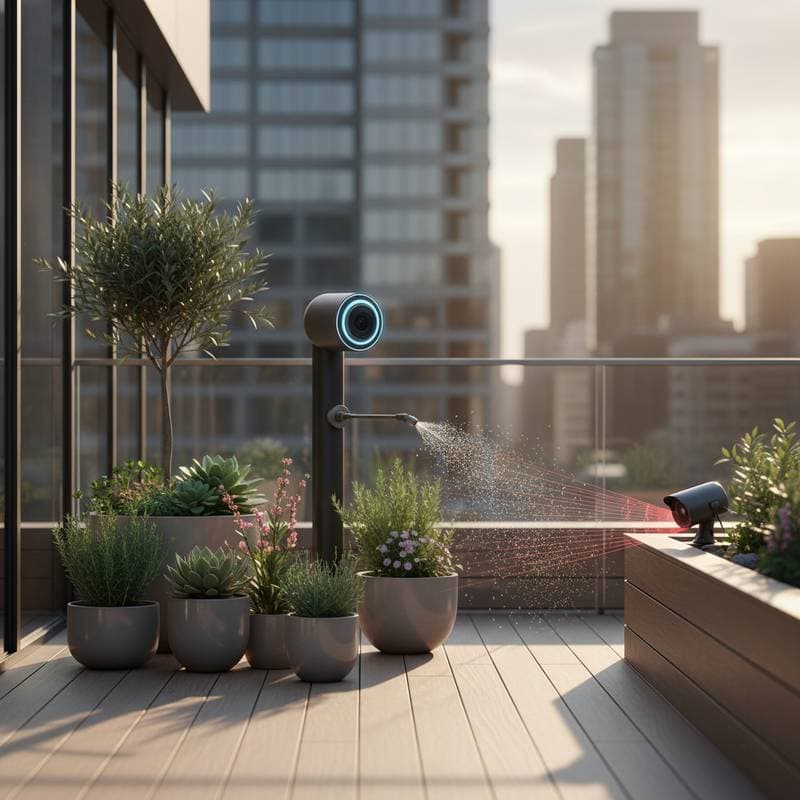
Smart AI Cameras for Automated Plant Watering and Pest Control on Urban Decks
Urban decks serve as vital retreats amid city life, yet they often face challenges from pests and inconsistent plant care. Advanced AI cameras address these issues by extending beyond basic surveillance. These devices employ computer vision to detect intruders, activate non-toxic deterrents, and regulate watering for container gardens or built-in planters. The result includes reduced manual intervention, healthier greenery, and enhanced relaxation time.
This guide details the functionality of AI garden cameras, their operational principles, essential setup components, and strategies for safe, cost-effective use.
Overview
An AI garden camera represents a durable, outdoor-rated device equipped with computer vision technology to recognize wildlife, insects, and moisture levels. Integrated with smart valves or misting systems, it delivers precise irrigation based on real-time soil data or disperses deterrents upon pest detection. This approach surpasses traditional timers by responding dynamically to environmental cues.
Onboard processors, combined with infrared and humidity sensors, enable differentiation between threats like rodents and benign visitors such as neighbors. Users access notifications via dedicated applications, issue voice commands through embedded speakers, or configure autonomous responses. Such capabilities ensure proactive management without constant oversight.
Key advantages include:
- Reduced manual checks for pest activity or plant hydration
- Optimized water consumption through condition-based activation
- Minimized reliance on pesticides via precise, non-chemical interventions
- Enhanced security and convenience during absences
Required Tools and Materials
A basic installation demands few items, focusing on reliability in outdoor conditions. Essential elements comprise:
- Weather-resistant AI camera with IP65 or superior rating to withstand rain and debris
- Automated irrigation valve compatible with standard hoses or drip systems
- Reliable Wi-Fi network extending to the installation area
- Power supply options such as nearby outlets or rechargeable solar panels
- Secure mounting hardware featuring rust-proof screws and flexible brackets
- Companion mobile application for configuration and remote oversight
These cameras typically weigh less than 2 pounds and provide a detection radius of approximately 30 feet. Advanced models incorporate dual lenses to capture both broad landscapes and detailed close-ups, accommodating varied deck sizes.
Installation Steps
Step 1: Select Optimal Placement
Identify positions offering unobstructed views of planters and potential pest pathways, such as fences or access points. Position away from intense artificial lighting that might interfere with sensors. Ensure the setup encompasses high-traffic zones for comprehensive coverage.
Step 2: Secure the Mounting
Install the bracket at a height of 5 to 6 feet to align with typical sightlines. Fasten with provided hardware to endure wind and weather. Angle the unit slightly downward to facilitate natural drainage and prevent water pooling.
Step 3: Establish Connectivity
Connect the power source, whether wired or solar-based. Launch the application and proceed through Wi-Fi pairing instructions. Verify the live stream functions clearly prior to routing any cables permanently.
Step 4: Integrate Irrigation Components
Position the smart valve inline between the water source and delivery line, employing watertight seals. Sync the valve with the camera via the app interface. Define activation parameters, for instance, initiating watering when soil moisture falls below 35 percent.
Step 5: Fine-Tune Detection Settings
Within the app, categorize local fauna: designate squirrels or aphids as targets while excluding beneficial elements like pollinators. Modify sensitivity thresholds to filter out environmental noise, such as swaying foliage in breezes.
Step 6: Validate System Performance
Execute a complete operational test by simulating movements across the deck. Monitor irrigation output using a collection container to measure volume accurately. Adjust detection fields iteratively for optimal precision.
Essential Safety Practices
Prioritize electrical safety by disconnecting power sources before any maintenance or adjustments. Route water outputs away from powered elements to mitigate short-circuit risks. Anchor all cables firmly to eliminate tripping hazards in active areas. Regularly assess the unit's temperature; provide shading if overheating occurs and lower computational demands through app controls.
Common Troubleshooting Solutions
Failure to detect pests: Gently clean the lens using a microfiber cloth to remove obstructions like pollen or webs.
Excessive watering: Raise the humidity trigger level or limit cycle durations to under 60 seconds.
Erroneous notifications: Refine motion detection sliders or exclude dynamic areas like tree branches from the monitored frame.
Intermittent app connectivity: Bolster signal strength with Wi-Fi extenders or relocate the router for improved outdoor reception.
Routine Maintenance Procedures
Conduct weekly visual inspections for lens contaminants or valve clogs, addressing issues with appropriate cleaners. Remove debris from irrigation paths to maintain flow efficiency. Quarterly, verify mounting integrity and seal conditions to prevent ingress. Respond promptly to low-battery alerts by swapping or recharging units.
In colder climates, detach and empty water lines to guard against freeze damage. Relocate non-hardy valves indoors during winter. Weatherproof cameras can remain in place, provided seals remain intact.
Off-Season Storage Guidelines
When dismantling, organize cables without tight bends and tag them for easy reassembly. Package accessories in moisture-proof containers. Position the camera in a cool, shaded storage area. Prior to reuse, inspect rubber components for wear and replace as necessary.
Cost and Time Estimates
A complete starter kit, encompassing one camera and valve, ranges from $150 to $400. Setup requires 45 to 90 minutes, influenced by site complexity. Annual expenses stay low, primarily involving utility bills and potential subscriptions for archived footage.
Existing smart home ecosystems often enable seamless integration at no extra cost, shortening configuration by up to 30 percent.
Professional Assistance Indicators
Engage a certified electrician for new outdoor power installations, specifying GFCI-protected outlets to handle damp environments. Consult a plumber for integrating with fixed irrigation networks beyond basic hose connections.
Seasonal Adjustment Strategies
Suspend automated watering ahead of prolonged rainy seasons to avoid soil saturation. During high-infestation periods, analyze recorded clips weekly to refine detection algorithms. Recalibrate angles with shifting sunlight patterns to sustain visibility through evenings.
Implementing and Expanding Your System
Begin with a single-unit trial to familiarize yourself with behaviors and adjustments. Document outcomes, such as decreased pest encounters or improved plant vitality. Scale up to additional areas once confidence in the setup solidifies, ensuring each expansion builds on proven configurations.