
Step 4: Match Crops to Each Zone
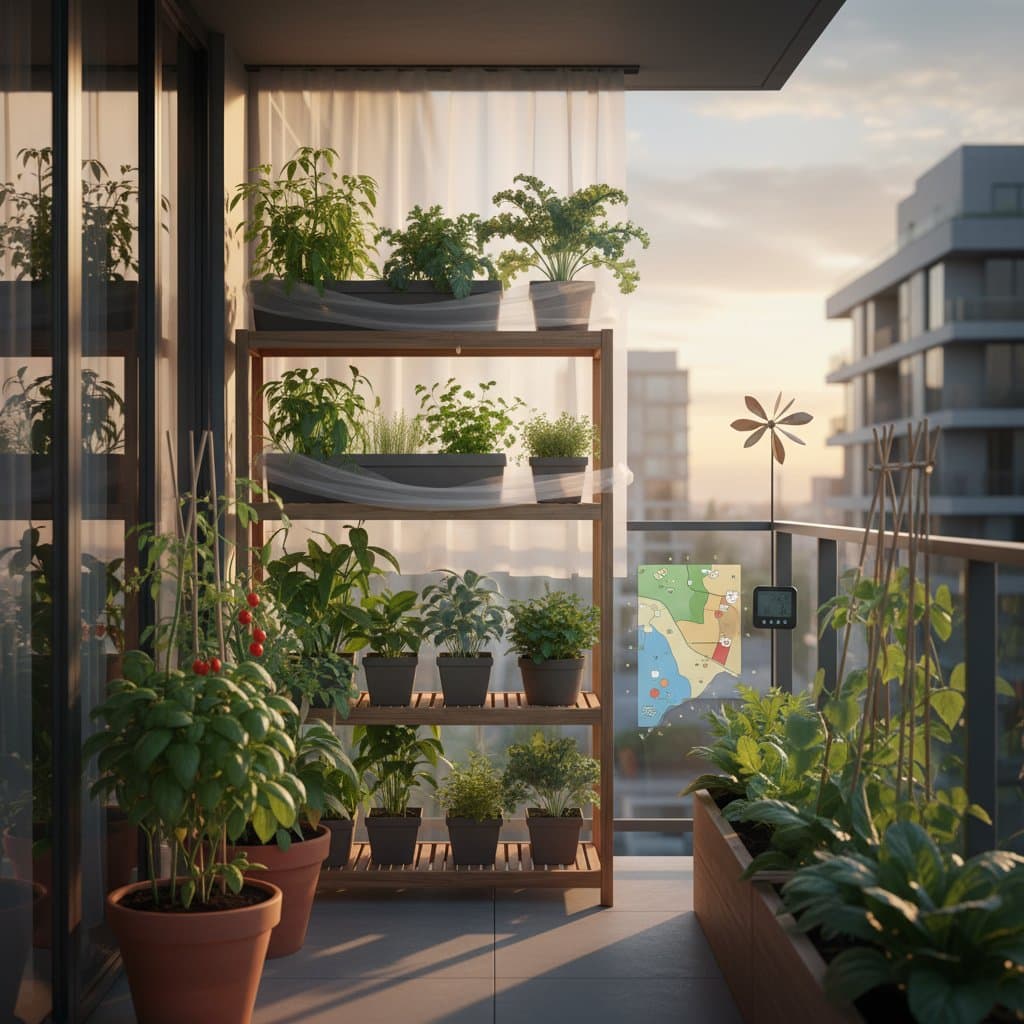
Microclimates on your balcony create distinct environments that favor specific plants. Select crops based on their tolerance for heat, wind, or shade to maximize growth and yield.
- Heat Pocket: Position sun-loving plants such as tomatoes, peppers, eggplant, basil, and strawberries here. These thrive in warm, sheltered spots with at least six hours of direct sunlight daily.
- Breezy Edge: Place wind-tolerant herbs and greens like mint, thyme, oregano, chives, and leafy greens along exposed railings. The airflow helps prevent fungal issues while providing gentle circulation.
- Cool Corner: Reserve shaded areas for delicate varieties including lettuce, spinach, radishes, cilantro, and microgreens. These prefer indirect light and protection from intense afternoon sun.
Choose durable containers made of terracotta or plastic with multiple drainage holes to prevent root rot. Fill them with a high-quality potting mix formulated for vegetables, which includes nutrients and retains moisture without compacting. Maintain at least one inch of space below the rim to allow for thorough watering without overflow.
Step 5: Adjust and Monitor
Balcony conditions evolve with weather patterns and seasonal changes, so regular adjustments keep plants productive. Relocate pots incrementally, shifting them a few inches at a time to optimize exposure without shocking the roots.
If leaves show signs of scorching, such as brown edges, introduce temporary shade using lightweight fabric or a movable screen. For plants that appear leggy or stalled, reposition them nearer to brighter areas to capture more light.
Record observations weekly in a simple journal, noting plant performance, weather impacts, and zone effectiveness. This practice builds intuition over multiple seasons, allowing you to anticipate shifts without constant measurements. Tools like a basic thermometer or light meter can provide precise data during the learning phase.
Troubleshooting and Quick Fixes
Balcony gardens face unique challenges from urban elements like sudden gusts or building shadows. Address issues promptly to minimize setbacks and sustain yields.
Problem: Leaves curling or browning.
- Cause: Excessive heat stress combined with dry winds that accelerate evaporation.
- Fix: Relocate the affected plant to the Cool Corner immediately. Install a shade cloth during peak hours and water deeply in the early morning to replenish moisture before the day heats up.
Problem: Yellow leaves and slow growth.
- Cause: Insufficient light exposure or excess water leading to soggy roots.
- Fix: Move the container toward the Heat Pocket for better illumination. Inspect and clear drainage holes if clogged, and allow the top inch of soil to dry out between waterings.
Problem: Powdery mildew on herbs.
- Cause: Poor air circulation in humid conditions, allowing fungal spores to spread.
- Fix: Transfer to the Breezy Edge to promote drying airflow. Prune overcrowded foliage to improve ventilation and apply a diluted baking soda spray as a natural deterrent.
Problem: Soil dries out daily.
- Cause: High exposure to sun and wind in undersized pots that lose moisture rapidly.
- Fix: Upgrade to larger containers with greater soil volume, or cluster pots together to create a humid micro-environment. Apply a two-inch layer of organic mulch on the surface to slow evaporation.
Assemble a compact maintenance kit including pruning shears, garden twine, spare potting soil, and adjustable plant clips. These essentials enable swift interventions that protect your harvest from escalating problems.
Maintenance and Seasonal Shifts
Your balcony's microclimates respond to the sun's path and temperature fluctuations, requiring periodic recalibration. Update your zone map at the start of spring and fall to reflect these changes.
Spring:
Initiate planting with cool-season crops in the shaded corner to avoid early heat waves. Employ transparent plastic sheeting as row covers to conserve nighttime warmth while permitting light penetration. Position low-profile windbreaks, such as bamboo screens, to shield seedlings without blocking beneficial breezes.
Summer:
Relocate heat-tolerant plants to full-sun positions as days lengthen. Spread a layer of mulch, like shredded bark or straw, around bases to conserve soil moisture amid rising temperatures. Deploy adjustable shade cloths elevated on stakes to filter intense midday rays without darkening the entire space.
Fall:
Draw containers closer to building walls to capture lingering daytime heat. Plant a final succession of quick-growing greens or herbs in the Cool Corner for late-season harvests. Thoroughly clean pots and verify drainage systems in preparation for increased rainfall.
Winter:
Remove spent plants and cover empty containers to shield against frost. Store unused potting mix in airtight containers to maintain quality. Secure the railing with insulating fabric or burlap panels to reduce wind penetration and protect dormant roots.
This seasonal routine ensures your garden remains resilient, transitioning smoothly between cycles for consistent productivity.
When to Call a Pro
While most balcony setups handle routine care, certain structural or installation concerns warrant expert input to ensure safety and compliance.
Consult a structural engineer or your building manager if you notice:
- Signs of water damage, such as cracking or discoloration on surfaces.
- Plans to mount planters exceeding one hundred pounds, including soil and water weight.
- Intentions to integrate permanent features like automated irrigation lines or fixed lighting fixtures.
Request documentation approving any modifications. This step safeguards your setup, the building's integrity, and your personal liability.
Key Takeaways
Microclimates on a balcony expand growing opportunities by creating specialized zones for diverse crops. Dedicate time to observing sunlight patterns and wind flows, as this insight outperforms random placements. Opt for mobile containers that allow easy repositioning in response to changing light. Integrate both warm and ventilated areas to support a balanced ecosystem. Maintain detailed records to refine your approach each year, fostering reliable results in limited spaces.
Making It Happen
Launch your microclimate strategy this week using existing resources. Spend an afternoon on the balcony with a notebook: trace the sun's arc across surfaces, assess wall temperatures by hand, evaluate soil dryness variations, and observe foliage movement in breezes.
Rearrange a couple of pots as a test—position sun-dependent plants against warmer walls and tuck shade-preferring ones into corners. Incorporate basic aids like a neutral-colored shade panel or a foil reflector to fine-tune conditions.
Continue tweaking throughout the months ahead. Each adjustment reveals nuances of your balcony's environment, gradually developing three productive zones that extend your fresh produce supply. Through this process, you cultivate a harmonious garden that aligns with urban living and delivers ongoing nourishment.