
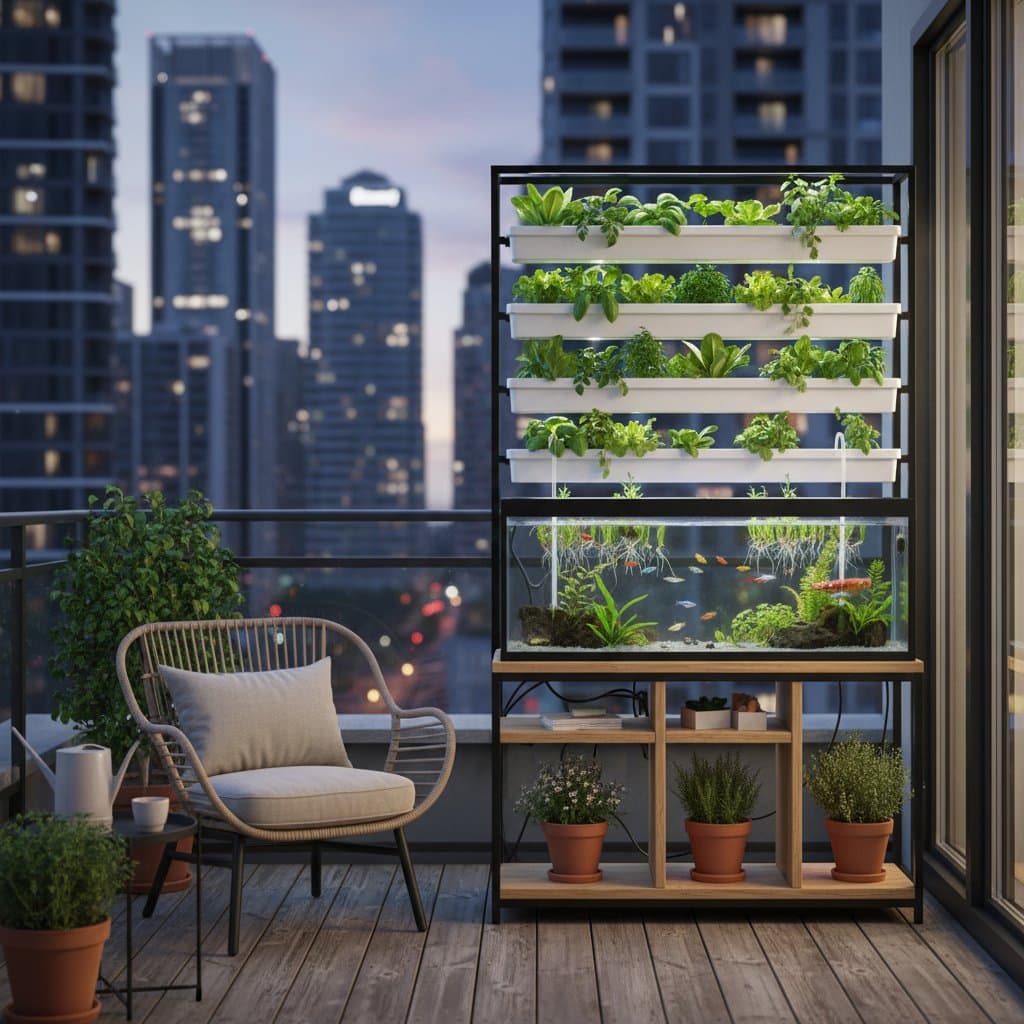
Balcony Aquaponics: Cultivate Fresh Greens in Urban Spaces
A balcony offers limited room, yet it holds potential for more than storage or seating. Introduce a compact fish tank paired with a grow tray to establish an efficient food production system. This approach, known as balcony aquaponics, relies on fish waste to fertilize plants, while the plants filter water returned to the tank. The result forms a closed-loop system that conserves space, water, and labor while delivering fresh produce.
The primary aim involves producing accessible, nutrient-rich greens with minimal footprint. Crisp lettuce and aromatic herbs become attainable without expansive soil beds. The following guide details assembly, equilibrium, and upkeep for a balcony aquaponic garden suited to urban constraints and modest budgets.
System Fundamentals
Aquaponics integrates aquaculture, the cultivation of fish, with hydroponics, the soilless growth of plants in nutrient solutions. Fish excrete ammonia through waste, which beneficial bacteria transform into nitrates. Plants uptake these nitrates for growth, simultaneously purifying the water that cycles back to the fish.
For balcony applications, select fast-maturing leafy greens such as lettuce, spinach, basil, or cilantro. These varieties require shallow roots and flourish in oxygenated water. The entire apparatus occupies approximately 6 square feet, equivalent to a 2-foot by 3-foot area, making it ideal for tight urban spaces.
Essential Components
Assemble the system with readily available, durable items to ensure longevity and ease of use. The core list includes:
- Fish tank, capacity of 20 to 30 gallons (75 to 115 liters)
- Shallow grow tray or planter, dimensioned to mount above the tank
- Submersible water pump, circulation rate of at least 100 gallons per hour
- Flexible tubing, length of about 4 feet (1.2 meters)
- Neutral media such as gravel or expanded clay pebbles, quantity of 10 pounds (4.5 kilograms)
- Net pots for securing plants
- Species-appropriate fish food
- Testing kit for pH, ammonia, and nitrate levels
- Supplemental LED grow light, required if direct sunlight falls short of five hours daily
- Surge-protected power strip
Choose resilient fish species like goldfish, guppies, or tilapia, which adapt to confined volumes. Begin with 4 to 6 specimens, expanding the population only after water parameters stabilize.
Assembly Process
1. Position the Tank
Locate the tank adjacent to a reliable power outlet, shielded from prevailing winds. Ensure the supporting surface remains perfectly level and bears a minimum load of 200 pounds. Introduce dechlorinated water to fill the tank. For municipal tap water, allow it to aerate uncovered for 24 hours prior to introducing fish.
2. Install Pump and Tubing
Submerge the pump within the tank base. Route the tubing vertically to the elevated grow tray. This configuration elevates water to nourish plant roots, where filtration occurs before gravity returns the cleansed flow to the tank.
3. Configure the Grow Tray
Layer the tray with gravel or clay pebbles to anchor roots and foster bacterial colonies. Space net pots at 4-inch intervals across the surface. Each pot accommodates a single seedling for optimal spacing and airflow.
4. Initiate Cycling
Operate the pump continuously for a minimum of one week without fish or plants. Introduce small quantities of fish food daily to stimulate bacterial development. Monitor ammonia and pH every other day using the test kit. The system reaches readiness when ammonia levels fall below 0.5 parts per million and nitrates become detectable.
5. Introduce Livestock and Crops
Acclimate fish gradually by floating their transport bag in the tank for 15 to 20 minutes. Transfer 4 to 6 individuals into the water. Plant seedlings of lettuce or basil into the prepared net pots. Maintain uninterrupted pump operation to sustain nutrient circulation.
6. Establish Routine Monitoring
Dispense fish food in amounts consumed within two minutes to prevent excess waste. Observe water transparency and temperature daily. Initial cloudiness signals bacterial establishment and typically resolves in several days.
Essential Safety Measures
Elevate all electrical cords to avoid water contact, employing only outdoor-rated extension leads. Refrain from connecting the pump or lights to unsecured outlets. Affix a secure lid to the tank in households with children or pets. Handle the tank solely when drained, noting that a full 20-gallon unit exceeds 160 pounds in weight.
Common Issues and Solutions
Yellowing leaves indicate nitrate deficiency; introduce one or two additional fish or increase feeding incrementally. Foul odors suggest overfeeding or pump obstruction; halve rations and inspect the intake. Algal growth on exposed surfaces warrants reduced light exposure or temporary shading with opaque fabric. Fish surfacing for air points to low dissolved oxygen; verify pump function and clear any debris from the filter.
Investment and Timeline
Initial outlay ranges from $120 to $180, dominated by the tank and pump expenses. Ongoing monthly expenditures approximate $10 for feed and testing supplies. Assembly requires about three hours with materials at hand. Expect the first lettuce harvest in four to six weeks, allowing immediate replanting for perpetual yield.
Prioritize quality in the pump and testing kit to sustain balance. Cost savings arise from repurposed containers as grow beds or sourcing native fish varieties from local suppliers.
Ongoing Upkeep
Assess water volume every two days, replenishing evaporation losses with fresh, dechlorinated water. Service the pump filter monthly by rinsing under cool water. Prune encroaching roots from drain outlets to prevent blockages. Monthly pH verification targets a range of 6.5 to 7.5; correct downward shifts with a teaspoon of crushed coral or baking soda dissolved in water.
Harvest selectively by detaching outer leaves, preserving the central growth point for continued production. Refresh tank water incrementally if discoloration appears or plant vigor declines. Avoid complete water replacement to prevent stressing the fish population.
Efficient Organization
Store fish food in an airtight, moisture-proof container to maintain freshness. Organize test kits and maintenance tools in a portable caddy positioned near the access point. Mount the power strip beneath the assembly shelf for cord management. Apply labels to tubing segments and fittings with adhesive tape to facilitate reassembly post-cleaning.
In available space, position a utility bin below the stand to contain reserve media and a backup pump. Such preparedness minimizes disruptions during equipment malfunctions.
Professional Assistance Indicators
Seek expertise from a nearby aquarium specialist or hydroponics retailer under these conditions:
- Persistent ammonia elevation beyond two weeks
- Unexplained fish mortality
- Evidence of leaks at connections or tubing
Harvesting Urban Bounty
Balcony aquaponics transforms overlooked spaces into productive assets, yielding fresh, homegrown greens with reduced resource demands. This method not only cuts grocery expenses but also fosters a deeper connection to sustainable living. With consistent attention, your setup delivers reliable harvests, enhancing meals and well-being throughout the seasons.