
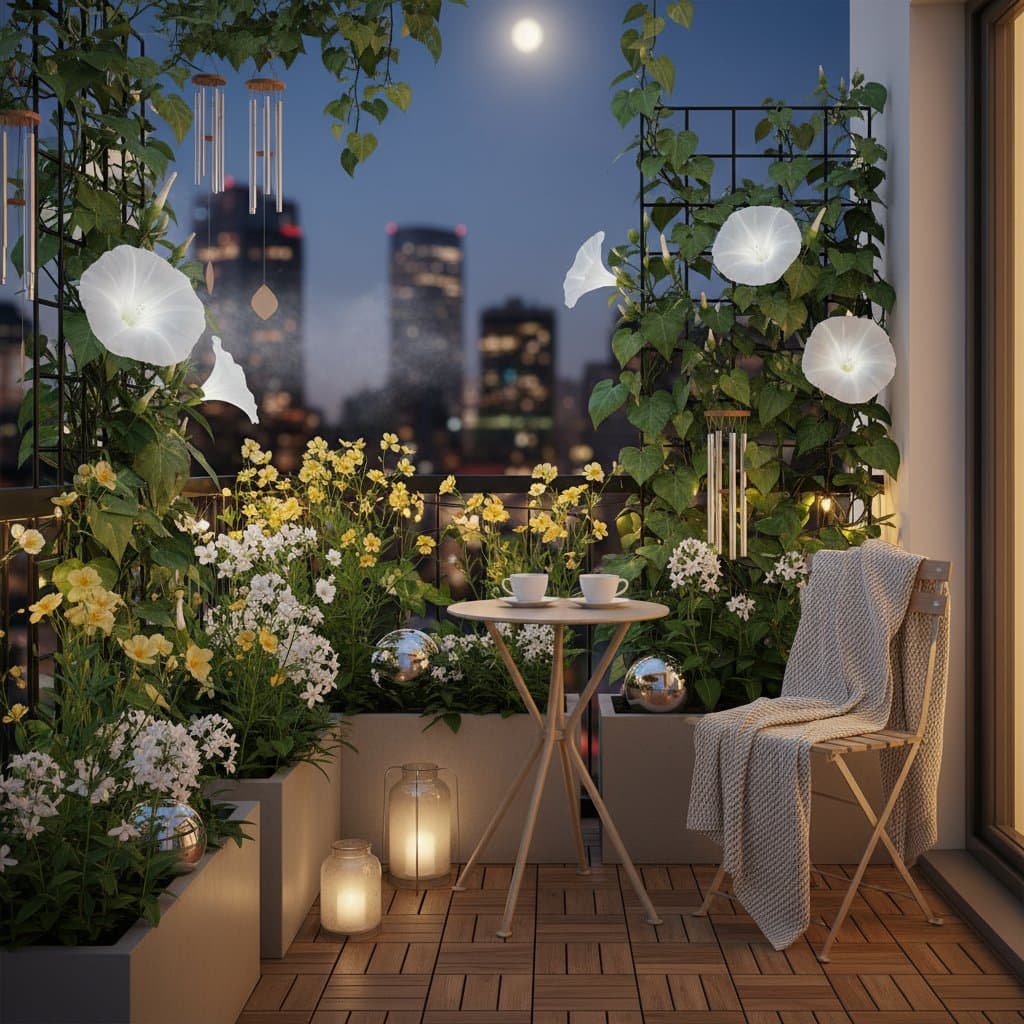
Introduction to Night-Blooming Balcony Gardens
Urban living often limits access to expansive green spaces, yet balconies offer untapped potential for serene evening escapes. A night-blooming garden harnesses plants that unfurl flowers after dusk, releasing subtle fragrances under soft illumination. These setups enhance relaxation, attract nocturnal pollinators, and create a private oasis that contrasts the bustle below.
This guide walks through every phase, from selecting suitable plants to implementing safe features. Readers gain practical steps to adapt ideas to small areas, ensuring the garden thrives year-round. Focus on low-maintenance varieties that suit container life and partial shade common in city environments.
Selecting Night-Blooming Plants
Choose plants that open blooms in the evening and tolerate balcony conditions like variable light and wind. Prioritize species with compact growth to maximize space. Consider fragrance intensity and bloom duration for sustained appeal.
Recommended options include:
- Moonflower (Ipomoea alba): A fast-climbing vine with large, white trumpets that emit a sweet scent. Ideal for trellises; grows 10 to 15 feet in one season.
- Evening primrose (Oenothera biennis): Produces yellow flowers along stems, blooming profusely from late afternoon. Suits borders or hanging baskets; self-seeds mildly.
- Night-blooming cereus (Selenicereus grandiflorus): A cactus with dramatic, short-lived white blooms up to 12 inches across. Place in a sturdy pot; requires minimal water.
- Four o'clocks (Mirabilis jalapa): Bushy plants with tubular flowers in pink, yellow, or white that open around dusk. Fragrant and deer-resistant; thrives in pots.
- Brugmansia (Angel's trumpet): Hanging clusters of pendulous blooms with citrusy aroma. Select dwarf varieties for balconies; protect from frost.
Assess your balcony's sun exposure: east-facing spots suit primroses, while south-facing areas handle brugmansia better. Start with three to five plants to avoid overcrowding.
Planning Your Garden Layout
Effective design balances aesthetics, functionality, and safety in confined spaces. Sketch a simple diagram to visualize placement, accounting for foot traffic and views. Group plants by height: vines on rails, shrubs in corners, and low growers along edges.
Key layout principles:
- Create zones: Dedicate one area for seating with a small table, another for plant displays to frame the space.
- Use vertical elements: Install hooks for hanging baskets or wall-mounted shelves to lift greenery off the floor.
- Incorporate reflective surfaces: Position mirrors or metallic accents to amplify moonlight and make the area feel larger.
- Ensure accessibility: Leave paths at least 18 inches wide for easy movement and maintenance.
For a 6-by-8-foot balcony, allocate 40 percent to plants, 30 percent to seating, and 30 percent to open space. Test arrangements with empty pots before committing.
Installing Lighting and Accessories
Gentle illumination enhances night-blooming displays without overwhelming natural darkness. Opt for warm-toned LEDs that mimic moonlight, around 2700K color temperature. Solar-powered options suit plug-free balconies, while low-voltage plugs work for extended use.
Setup steps:
- Measure power needs: Limit to 20 watts total to stay within typical balcony circuits.
- Position lights: String lights along railings, stake solar lanterns among plants, or use clip-on spots for blooms.
- Add timers: Set for dusk-to-midnight activation to conserve energy and protect wildlife.
- Integrate accessories: Scatter white gravel for ground cover or wind chimes for subtle sound.
Secure all wiring with clips and avoid dangling cords. Test setups during daylight to confirm stability.
Safety Considerations
Prioritize precautions to protect residents, structures, and plants. Balconies face unique risks from weather and urban density.
Essential tips:
- Avoid obstructing exits or fire escapes with any containers or furniture.
- Place saucers beneath pots to capture drainage and shield surfaces from stains.
- Anchor hanging planters and lights firmly against gusts using brackets or ties.
- Route electrical cords away from potential puddles or wet areas.
- Select shatter-resistant decorations, such as plastic or resin, to withstand temperature swings.
Consult building guidelines for load capacities, typically 50 to 100 pounds per square foot. Distribute weight evenly across the floor.
Budget and Timeline
A modest night-blooming balcony garden costs between 100 and 150 dollars, depending on scale and sourcing. Allocate funds wisely to quality essentials that last multiple seasons.
Breakdown for a basic setup:
- 60 dollars: Five starter plants plus potting soil enriched with compost.
- 40 dollars: Three durable pots in neutral tones for cohesion.
- 20 dollars: Solar string lights or lanterns for ambient glow.
- 30 dollars: Fertilizer, ties, and small tools like pruners.
Assembly requires about three hours: one for planting, one for layout, and one for lighting. Routine care involves 15 minutes every few days for watering, deadheading, and inspections. Track expenses in a notebook to refine future projects.
Ongoing Maintenance and Seasonal Adjustments
Consistent care sustains vibrancy and prevents issues. Monitor plants weekly, adjusting based on weather patterns.
Seasonal strategies:
Spring: Introduce seedlings or transplants after the last frost. Replenish soil nutrients and repair any container damage from winter.
Summer: Increase watering during heatwaves, aiming for moist but not soggy soil. Shift sensitive plants indoors during storms and program lights for efficiency.
Autumn: Prune faded growth to encourage rest. Relocate frost-tender species inside and safeguard solar components from debris.
Winter: Insulate hardy roots with lightweight mulch. Invert and store unused pots in a dry spot to avoid cracking.
Use rainwater when possible to reduce chemical buildup. Rotate plants monthly for even light exposure.
Troubleshooting Common Issues
Anticipate challenges with targeted solutions to keep the garden healthy.
Yellowing or dropping leaves: Often results from excess water or inadequate drainage. Improve by mixing perlite into the soil and clearing pot holes of debris.
Lack of flowers: Insufficient sunlight or high-nitrogen feeds may inhibit blooming. Relocate to a sunnier position and reduce fertilizer to half strength.
Foul soil smell: Indicates root rot from waterlogging. Discard compromised plants, sterilize pots with soapy water, and refresh with sterile soil.
Pests on flowers: Aphids or whiteflies cluster on buds. Apply neem oil solution diluted with water in the evening to spare beneficial insects.
Document patterns in a journal to predict and prevent recurrences.
Efficient Storage Solutions
Maximize limited space with organized storage that withstands elements.
Practical approaches:
- Employ stackable plastic crates for seeds, tools, and spare soil.
- Mount a pegboard inside a sealed bin for pruners and gloves.
- Seal fertilizers and sprays in waterproof bins, elevated off the ground.
- Position a drip mat near the entry to trap water and protect interiors.
Purge unused items annually to maintain order. Label containers for quick access.
Professional Assistance When Needed
Complex features like integrated watering systems or outlets demand expert input. Engage a licensed professional to evaluate structural limits, seal connections against moisture, and verify lighting safety.
This consultation, often under 100 dollars, prevents costly errors. Schedule before permanent installations, especially for overnight electrics.
Steps to Launch Your Garden
Begin implementation with focused actions to build momentum.
- Select your plants: Opt for one vine like moonflower, one shrub such as four o'clocks, and one edging plant like evening primrose.
- Outline lighting: Choose solar for simplicity or plugged for brightness, then verify cable lengths match your setup.
- Install and enjoy: Plant during a calm afternoon, then unwind as dusk reveals the first blooms and scents transform the air.
Such a garden delivers tranquility through natural cycles, inviting evenings of quiet reflection amid urban energy.