
Safety Tips
Prioritize safety when installing and operating AI watering systems on balconies. Position electrical cords away from areas prone to water accumulation to prevent hazards. Select outlets equipped with ground fault circuit interrupter (GFCI) protection for all pumps and control hubs.
Avoid submerging any sensors or hubs unless they carry explicit waterproof ratings from the manufacturer. Regularly inspect beneath pots for drips that could lead to surface staining or create slip risks. Ensure tubing does not obstruct balcony drains, which could cause water backup during rain.
Troubleshooting Common Issues
Uneven Water Distribution
If plants receive inconsistent moisture, inspect emitters for clogs caused by mineral deposits or debris. Soak affected emitters in a vinegar solution for 20 minutes, followed by a thorough rinse under running water. Low water pressure often stems from reservoir placement; raise it at least 18 inches (45 centimeters) above the emitters to improve flow.
Sensor Connectivity Problems
When the app indicates a sensor is offline, reposition the central hub nearer to the affected device or install a Wi-Fi extender to boost signal strength. Balcony elements such as concrete walls or metal railings frequently interfere with wireless connections, so test signal quality in various spots during setup.
Persistent Plant Wilting
Drooping leaves despite system activation may indicate mismatched soil conditions. Sandy soils drain quickly, necessitating an increase in watering frequency by one increment in the app settings. Conversely, dense potting mixes retain moisture longer and require reduced intervals. Accelerate the AI's learning process by accurately entering plant species details in the initial configuration menu.
Surface Water Accumulation
Excess pooling on balcony surfaces signals overly long emitter cycles or minor leaks. Adjust run times downward in the app to match plant needs precisely. Dry affected areas promptly and apply sealant to any loose joints to eliminate slippery conditions and potential damage.
Ongoing Maintenance Practices
Conduct monthly inspections of all tubing for signs of cracks, kinks, or internal buildup that could impede flow. Replace sections that appear cloudy, brittle, or discolored to maintain system efficiency. Gently clean sensors using a soft, damp cloth to remove any adhering soil or residue, avoiding harsh chemicals.
Every few months, flush the entire system by circulating clean water through the lines for at least five minutes. This process clears accumulated minerals and prevents emitter blockages over time. Monitor battery levels via app notifications and recharge or swap out sensor batteries promptly; most models provide up to two months of operation per charge.
In environments exposed to strong winds or intense sunlight, secure tubing with clips or ties to avoid displacement. Opt for UV-resistant materials during purchase, as they withstand degradation better and minimize the need for frequent replacements.
Seasonal Storage Guidelines
For systems paused during off-seasons, disconnect all tubing components and drain residual water completely to avoid stagnation. Place sensors in a cool, dry storage container protected from dust. Clean the hub thoroughly, coil cords without tight bends, and organize emitters in a labeled container for straightforward reinstallation.
Invert the reservoir during storage to discourage mold growth. If equipped with an internal pump, operate it briefly without water to expel any lingering moisture. Label all parts clearly to streamline setup when reactivating in the next growing period.
Cost Considerations and Time Investment
Entry-level AI watering kits for balconies typically range from 120 to 250 dollars and support 6 to 10 planters effectively. Advanced configurations incorporating additional sensors, pumps, and expanded coverage may cost up to 400 dollars, offering scalability for larger spaces.
Initial installation requires 2 to 3 hours for those new to the technology, including layout planning and testing. After setup, routine involvement reduces to mere minutes daily, primarily monitoring the app for alerts. These systems deliver long-term value through water conservation and decreased plant loss, often offsetting the upfront expense within one season.
Seasonal Care Adjustments
Spring Activation
Upon spring arrival, reconnect all tubing, calibrate sensors for accuracy, and update watering schedules to align with increasing daylight hours.
Summer Vigilance
During peak summer, inspect the reservoir weekly to ensure adequate supply and clean any inline filters to sustain optimal performance.
Fall Preparation
As autumn progresses and sunlight diminishes, lower watering frequency in the app to prevent over-saturation in cooler conditions.
Winter Protection
In regions prone to freezing, fully drain the system and store components indoors to safeguard against damage.
For year-round outdoor plants, insulate tubing with foam wraps to shield against extreme temperature fluctuations, preserving functionality through winter.
Professional Assistance Scenarios
Engage a qualified professional for integrations involving connection to the building's main water supply or unprotected outdoor electrical sources. A licensed plumber handles plumbing ties securely, while an electrician verifies outlet safety to avert leaks or electrical faults.
Professionals can also evaluate balcony drainage capacity for system runoff. In aging structures, clogged drains pose risks; experts may recommend installing catch trays or auxiliary overflow tubes to manage excess water effectively.
Essential Insights
AI watering systems utilize soil moisture sensors to monitor conditions in real time and modulate water delivery accordingly. This precision fosters robust root development and minimizes resource overuse.
Selecting sensors and emitters compatible with specific plant varieties optimizes outcomes, ensuring tailored hydration. Regular inspections mitigate risks like leaks or connectivity disruptions.
Intelligent scheduling features streamline routines, yielding savings in both time and costs while sustaining plant vitality.
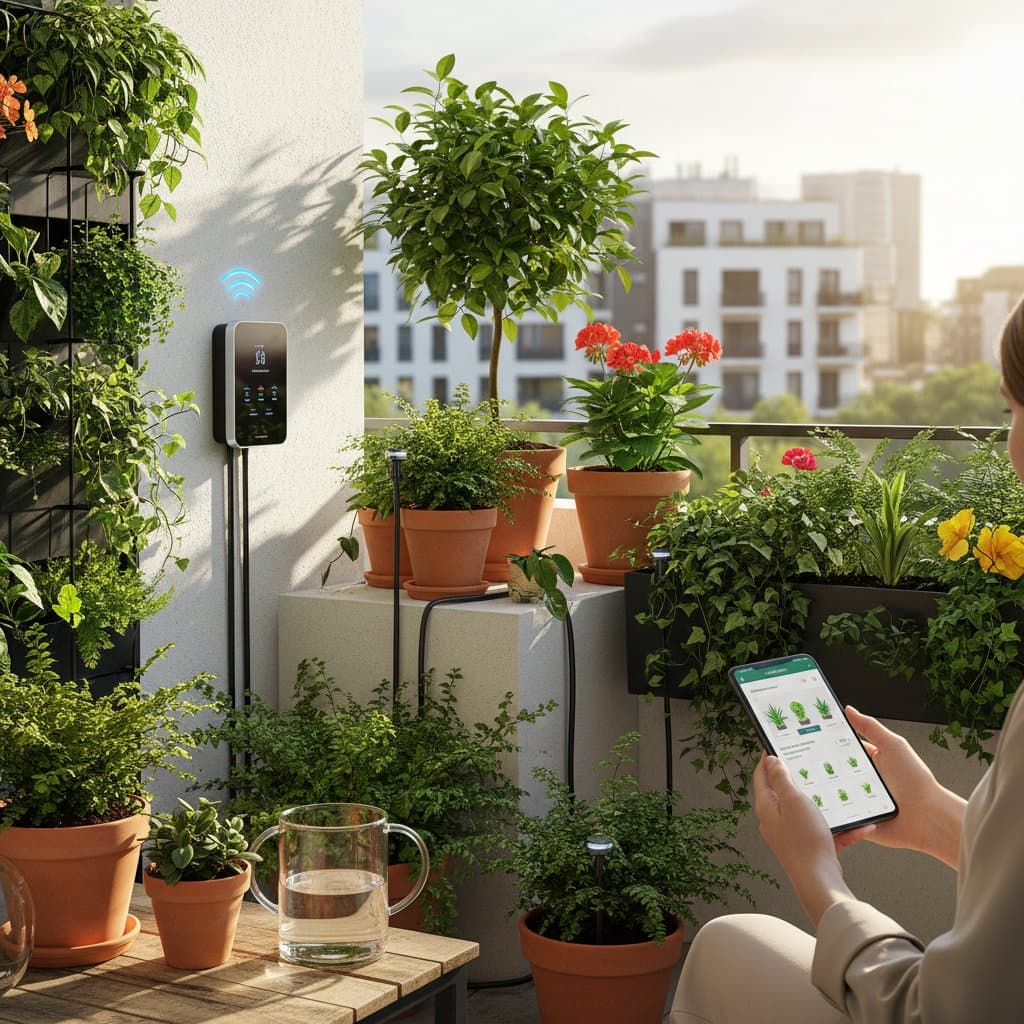
The integrated design—sensors detect needs, the hub processes data, and emitters execute delivery—creates a seamless operation. Fine-tune components for your setup, then focus on refilling the reservoir and appreciating your verdant balcony.
Implementation Guide
-
Evaluate your balcony space by tallying planters and observing daily sunlight exposure patterns to inform system scale.
-
Select an introductory kit featuring integrated moisture sensors and intuitive app-based controls for reliable automation.
-
Sketch a tubing layout that minimizes lengths and organizes components neatly, designating spots for the reservoir and hub.
With these steps, establish an adaptive, self-sustaining balcony garden by day's end. AI watering embodies efficient innovation: reduced uncertainty, enhanced vitality, and a thriving outdoor haven amid a demanding schedule.