
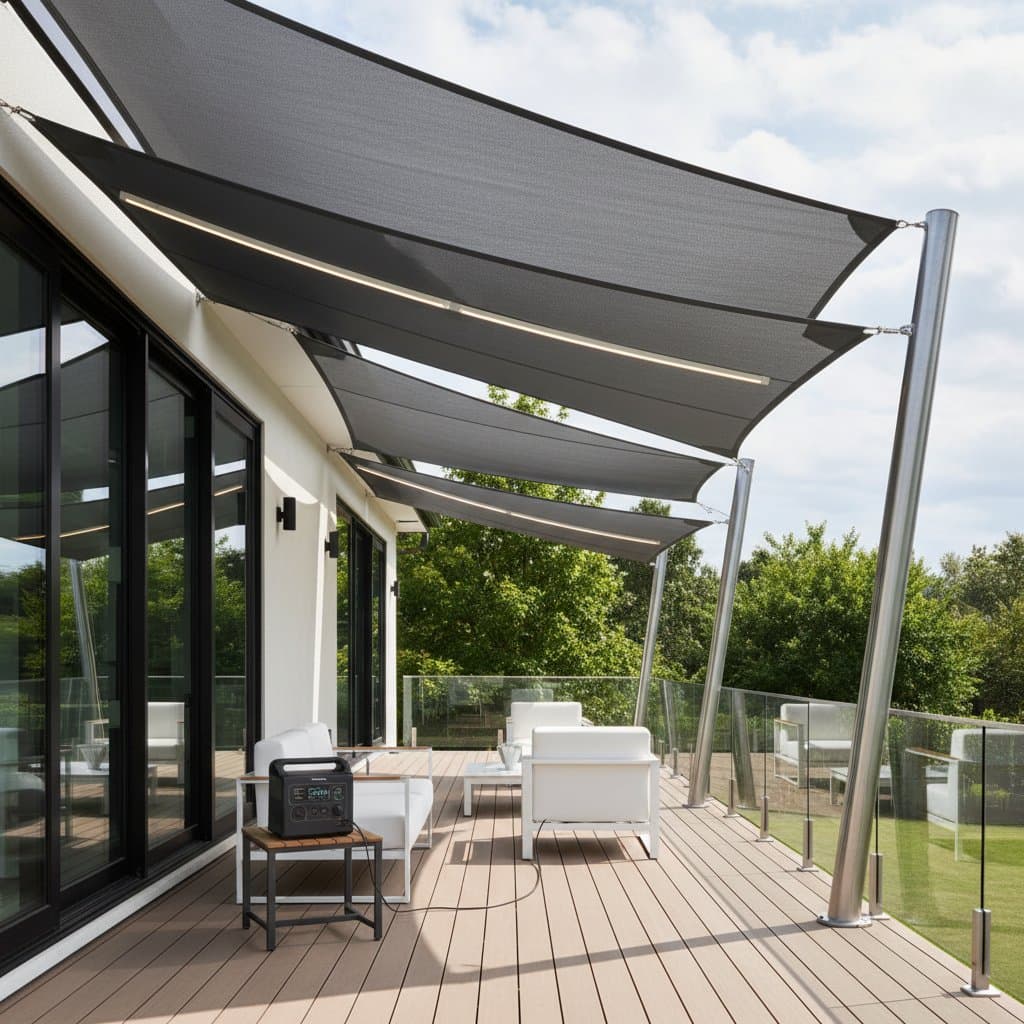
5. Connect the Power System
Secure the battery pack in a shaded area with good airflow, positioned close to the sail structure. Attach the solar panels to the battery using the included cables, ensuring secure and insulated connections. Extend low-voltage wiring to your chosen lights or USB outlets, then verify the setup by monitoring power generation in sunlight.
6. Integrate Lighting and Accessories
Suspend LED string lights from the sail's perimeter or mount low-voltage lamps beneath the fabric for ambient illumination. These options consume little energy and enhance evening usability. If capacity allows, connect compact fans or audio devices to extend functionality without overloading the system.
7. Test and Fine-Tune
Monitor the battery status after a complete day of exposure to sunlight. Should output fall short, reposition the sail for optimal tilt or remove obstructions like tree branches that block light.
Essential Safety Guidelines
Ensure every wiring joint resists moisture by employing outdoor-rated connectors and applying sealant around entry points. Scan for underground utilities before drilling post holes to avoid damage. Restrict the circuit to low-power items, excluding high-draw appliances like tools or heaters. Examine sail tension each month to avert sagging or fabric damage. Position the battery away from direct precipitation and pooled water to prolong its life.
Common Issues and Solutions
Insufficient Power Generation: Wipe solar panels using a gentle cloth and diluted soap solution. Accumulated dirt or residue can reduce performance by as much as 20 percent, so regular cleaning restores full efficiency.
Fabric Sagging Unevenly: Adjust turnbuckles uniformly across all points. As material relaxes with use, incrementally tighten each corner by a half turn to maintain tautness.
Intermittent Light Performance: Inspect connections for signs of rust or wear. Swap out damaged cables or insecure fittings to stabilize output.
Battery Charge Retention Problems: Plan to replace the unit every three to five years, factoring in local weather and frequency of use. Dispose of used batteries through certified recycling programs to minimize environmental impact.
Project Timeline and Expenses
Allocate one weekend for core installation, plus an additional half-day for refinements. Key expenses include:
- Shade fabric and integrated solar panels: $400 to $700
- Anchoring and support hardware: $100 to $150
- Storage battery and cabling: $200 to $300
- Illumination and add-ons: $100
For budget-conscious projects, adapt an existing shade sail by adding flexible solar films, costing around $300 total. This yields modest power suitable for accent lighting, though expansion may require upgrades later.
Invest in robust components and proper post spacing to withstand weather. Opt for marine-grade stainless steel anchors to resist corrosion and ensure long-term stability against strong winds.
Ongoing Care Practices
Brush the canopy fabric twice yearly with a soft tool and neutral detergent, followed by a complete rinse and air-dry in situ. Steer clear of abrasive cleaners that degrade protective layers.
Review electrical links at the start of each season, securing any loose fasteners and updating frayed lines or cords. Clear foliage and particles from panels routinely to sustain consistent energy production.
During cold months, dismantle the sail in regions prone to heavy snow accumulation. Store it rolled in a protected, airy location, organize cables tidily, and shield battery contacts from elements.
Efficient Storage Strategies
Organize minor parts into marked containers for easy access. Safeguard extras like clips, lines, and hooks in airtight vessels to block moisture and corrosion.
For seasonal removal, roll the fabric loosely to prevent creases that invite dampness. Mark attachment points on each edge with permanent ink for swift spring reassembly. Log daily solar yields in a dedicated journal or digital tool to analyze trends and inform future tweaks.
Scenarios Requiring Expert Help
Engage a certified solar technician or licensed electrician for integrations with your home electrical grid. They assess compatibility, add safety breakers, and ensure regulatory adherence.
On elevated decks, seek input from a structural specialist prior to installation. Professionals evaluate load capacities and secure fastening methods suited to your setup.
Complex configurations powering several gadgets or linking to automated home networks demand pro oversight for secure, compliant execution.
Steps to Get Started
Begin modestly by installing a single sail above your seating zone and observe the temperature drop. Monitor usage of generated power for illumination or entertainment to quantify advantages. Scale up coverage as results confirm value.
Take these immediate measures:
-
Assess Your Area: Document dimensions and track sunlight paths from dawn through dusk to determine ideal placement.
-
Evaluate Product Options: Research kits emphasizing durability ratings and solar capacities of 100 to 200 watts, ideal for standard decks.
-
Outline Energy Needs: Inventory intended applications, such as specific lights or chargers, and select components that align with those demands.
Solar shade sails create versatile outdoor spaces merging shade, efficiency, and contemporary appeal. Follow this blueprint with basic implements to energize your deck sustainably while enjoying shaded respite daily.