
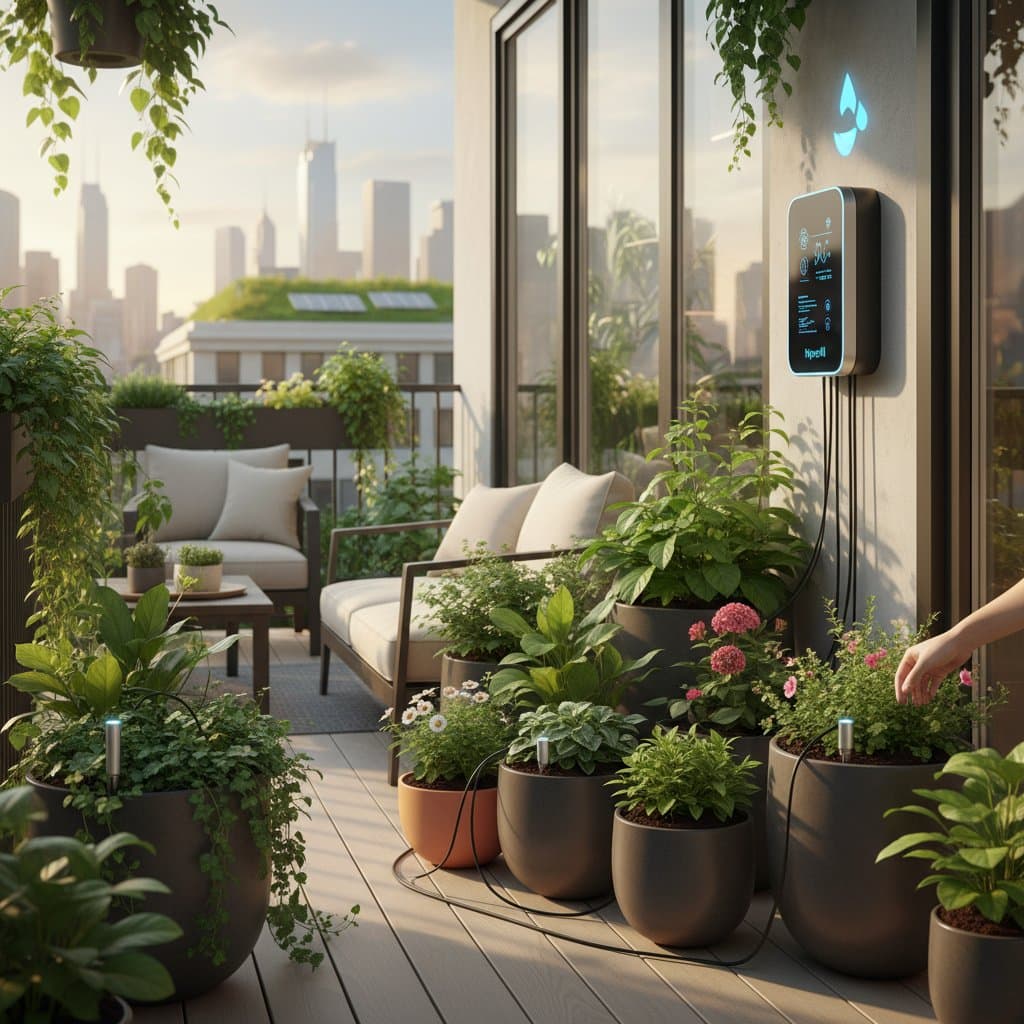
Understanding AI Micro-Drip Systems for Balcony Gardens
Balconies offer limited space for gardening, yet they hold potential for fresh herbs, colorful flowers, and even vegetables. Consistent watering proves essential for plant health in such environments, where exposure to sun and wind accelerates soil drying. AI micro-drip systems address this challenge by integrating sensors that measure soil moisture levels in real time, automatically adjusting water flow to prevent over- or under-watering.
These systems connect to a central controller via Bluetooth or Wi-Fi, allowing remote monitoring through a mobile app. Users receive alerts for low water levels or sensor issues, ensuring proactive management. By delivering water directly to roots via thin tubing and emitters, the technology minimizes evaporation and targets hydration precisely, promoting robust growth with reduced manual intervention.
Essential Tools and Materials
Assemble the following items to install a basic AI micro-drip system on a balcony. Most components come in starter kits designed for 10 to 20 pots, scalable for larger setups.
- AI micro-drip controller with Bluetooth or Wi-Fi connectivity for app integration
- Soil moisture sensors, allocating one per three to four pots for accurate monitoring
- Distribution tubing, 1/4 inch (6 millimeters) in diameter, cut to fit your layout
- Adjustable drip emitters, positioned one per plant to control flow rates
- Tubing connectors, stakes, and end caps for secure assembly
- Inline water filter and pressure reducer, required for spigot connections to prevent clogs
- Utility scissors for precise tubing cuts and a small bucket for water testing
- Cable ties or mounting clips to organize lines along railings or walls
Purchase expansion packs for additional tubing and emitters if your balcony features more than 20 containers. Select components from reputable brands to ensure compatibility and durability.
Step-by-Step Installation Guide
Position the system during mild weather to test functionality before peak seasons. Begin by placing the controller near a power outlet, elevated at least 12 inches (30 centimeters) above the floor to avoid moisture contact.
- Connect the water source: Attach the pressure reducer and filter to an outdoor spigot or indoor faucet using a compatible adapter. Run the main supply line along the balcony edge, securing it with clips every 18 inches (45 centimeters).
- Install sensors: Insert moisture probes into the soil of representative pots, ensuring they sit midway between the surface and root zone. Link sensors to the controller following the manufacturer's wiring diagram.
- Lay distribution tubing: Cut segments to reach each pot, connecting them to the main line with T-junctions or elbows. Insert drip emitters at the base of plants, adjusting output to 0.5 to 2 gallons per hour based on species needs.
- Test the setup: Power on the controller, fill the water reservoir or connect the source, and run a cycle via the app. Check for leaks at all joints and verify even distribution across pots.
Initial setup requires 2 to 3 hours for a medium-sized balcony. Fine-tune sensor thresholds in the app to match your local climate and plant types.
Safety Considerations
Separate electrical components from water paths rigorously to prevent hazards. Mount the controller on a dry, stable surface away from potential spills, and use grounded outlets for power.
When handling tubing, employ sharp utility scissors for clean cuts that seal properly and avoid drips. Route lines along walls or under railings, steering clear of high-traffic areas to eliminate tripping risks. Inspect spigot connections regularly; tighten fittings to curb leaks that could damage surfaces or waste resources.
Always disconnect power before servicing sensors or clearing blockages. Wear gloves during installation to protect against sharp edges on stakes or clips.
Cost and Time Investment
Entry-level AI micro-drip kits range from $80 to $150, varying by sensor quantity and connectivity features. Budget an additional $20 to $40 for expansions like extra emitters or tubing.
Allocate 2 to 3 hours for assembly and testing on a standard balcony. Invest in quality filters and reducers upfront; they safeguard against debris and pressure surges, extending system life.
Group plants by water needs, such as herbs together and succulents apart, to optimize sensor use and lower costs. Opt for plastic clips over metal for affordable, rust-resistant securing.
Organization and Storage Strategies
Maintain system efficiency through orderly storage of spares. Store excess tubing, connectors, and emitters in a divided plastic bin, labeling compartments for swift access during repairs.
Secure the user manual and warranty documents in a waterproof bag affixed to the bin's interior. For compact balconies, coil unused tubing along walls using adhesive hooks spaced 18 inches (45 centimeters) apart.
Create watering zones by linking pots of similar types with short tubing segments. This approach enables independent adjustments via the app, simplifying management for diverse plant collections.
Maintenance and Troubleshooting
Perform weekly visual checks for clogs in emitters, clearing them by soaking in vinegar solution if needed. Calibrate sensors monthly by comparing app readings to manual soil tests with a finger or meter.
Address common issues promptly: If plants show wilting despite alerts, verify tubing integrity and sensor placement. For app connectivity problems, restart the controller and ensure strong Wi-Fi signal.
Seasonal care involves winterizing by draining lines and storing the controller indoors during freezes. In summer, increase flow rates for heat-stressed plants through app settings.
When to Seek Professional Help
Manage most balcony installations independently, but consult a plumber for complex water sourcing, such as extending lines through walls or from distant faucets. Professional fees typically fall between $120 and $250, based on location and modifications.
Engage a technician for persistent error codes on the controller, which may indicate sensor faults or calibration needs. Such visits often resolve in under an hour, restoring full automation.
Achieving Lasting Balcony Garden Success
Launch your system with a pilot group of five to ten pots to observe performance. Monitor app notifications closely in the initial weeks to understand AI adaptations to weather changes.
This setup ensures plants remain vibrant amid vacations, heat waves, or demanding schedules. Reclaim time for relaxation in your green space, confident in the system's reliable hydration and growth support.