
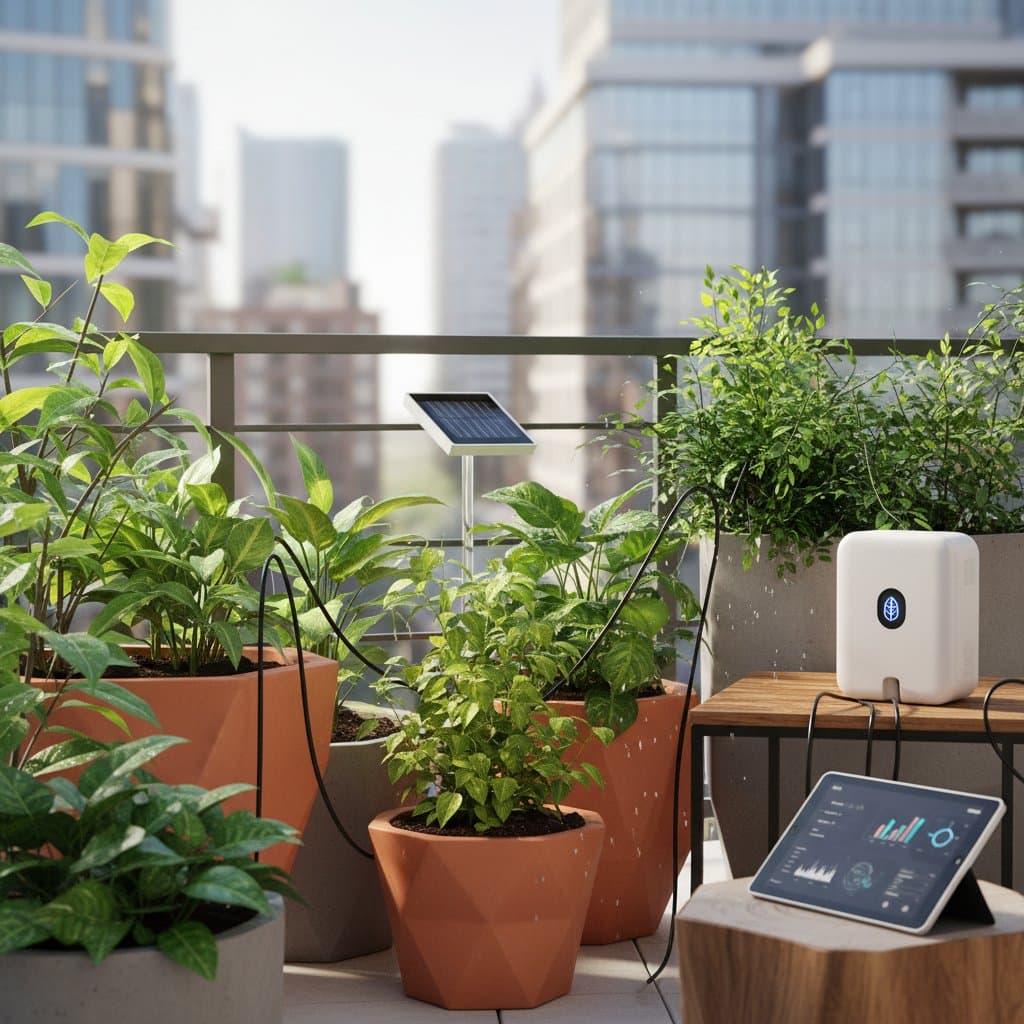
Introduction to Smart AI Drip Irrigation
Urban balcony gardeners often face challenges with inconsistent watering due to busy schedules and varying weather conditions. A smart AI drip irrigation system addresses these issues by delivering precise amounts of water directly to plant roots, guided by sensors that monitor soil moisture, temperature, and sunlight. This technology adapts to your balcony's unique microclimate, reducing waste and promoting vigorous growth.
Such systems typically include a controller, tubing, drippers, and wireless sensors connected via a mobile app. They learn from data over time, creating customized schedules that evolve with seasonal changes. Investing in this setup transforms maintenance from a chore into a seamless routine, allowing you to focus on enjoying your green space.
Benefits of AI-Driven Watering
Precision watering conserves resources by applying only the necessary amount, potentially cutting water usage by up to 50 percent compared to manual methods. Plants receive consistent hydration, which minimizes stress from over- or under-watering and supports better yields for herbs, vegetables, or flowers.
The AI component sets this apart from basic timers; it analyzes patterns from sensors to predict needs, such as increased watering during heatwaves. For small balconies, compact components fit neatly without cluttering limited space. Overall, this approach fosters sustainability while simplifying care for novice and experienced gardeners alike.
Preparation Before Installation
1. Gather Materials and Tools
Assemble the kit, which usually contains a controller unit, main tubing, branch lines, T-fittings, drippers, sensors, clips, stakes, and a hose adapter with backflow preventer. You will also need pruning shears for cutting tubing, a measuring tape, and vinegar for cleaning. Verify compatibility with your water source and ensure the app downloads smoothly on your smartphone.
Select pots with adequate drainage holes to pair with the system. Position them in full or partial sun based on plant requirements, spacing them at least six inches apart for optimal airflow. Sketch a layout on paper to map tubing routes and sensor placements, avoiding direct exposure to harsh afternoon sun for the controller.
2. Choose the Right Location
Identify a central spot for the controller near an electrical outlet or extension cord, protected from rain with a weatherproof cover if necessary. Plan the main line to follow the balcony's perimeter, reaching all pots without excessive length that could reduce pressure.
Test your Wi-Fi signal strength at the installation site; the system requires a stable connection for app control and data syncing. If signal is weak, consider a booster. This preparation ensures smooth operation from the start.
Installation Steps
3. Attach the Main Line
Connect the hose adapter and backflow preventer securely to your outdoor faucet or water source to prevent contamination. Firmly push the main tubing onto the fitting, ensuring a tight seal. Route the tubing along the balcony's railing or edge, securing it with clips spaced every 16 inches to provide stable support.
Maintain gentle curves in the line to avoid kinks that restrict flow. For balconies with irregular shapes, use flexible sections to navigate corners smoothly. This foundational step establishes reliable water distribution across the entire setup.
4. Branch to Each Plant
Measure and cut short pieces of smaller tubing to extend from the main line to individual pots, keeping lengths under two feet for consistent pressure. Insert T-fittings into the main line at strategic points, then connect the branch tubes.
Position a dripper in each pot approximately one inch from the plant stem, embedding it slightly into the soil for targeted delivery. Secure the drippers and tubes with stakes or clips to prevent movement from wind or accidental bumps. This configuration ensures even coverage for multi-plant arrangements.
5. Place Sensors
Insert the primary sensor near the balcony's center, where it captures average conditions, and position a secondary one in a shadier corner to monitor variations. Bury each sensor halfway into the soil of a typical pot, away from direct dripper influence.
These placements allow the AI to assess microclimates, such as sun-exposed versus shaded areas, for more accurate adjustments. Calibrate the sensors through the app before full activation to baseline readings.
6. Test the Flow
Activate the water supply and run the system for three minutes to observe performance. Inspect all connections for leaks, and verify that drips emerge evenly from each emitter.
Tighten any loose fittings with pliers if drips are irregular. Remove excess water from saucers or trays to avoid root rot. This testing phase confirms the system's integrity before relying on automation.
7. Set Initial Rules
Launch the app and designate zones according to plant categories, such as Zone 1 for herbs requiring frequent moisture, Zone 2 for flowering plants, and Zone 3 for drought-tolerant succulents. Input details like soil composition, pot dimensions, and sunlight exposure.
The AI processes this information to generate preliminary schedules, starting conservatively to prevent overwatering. Review and approve the settings to align with your specific garden needs.
8. Observe and Adjust
Monitor plant responses during the initial week, noting any signs of wilting or excess moisture. The system might initiate more frequent cycles as it gathers data on evaporation rates and usage patterns.
After approximately 10 watering cycles, the AI refines its algorithm for optimal balance. Use the app's manual override feature if a particular plant shows stress, such as yellowing leaves, to fine-tune delivery temporarily.
Troubleshooting Common Issues
Problem: Certain pots receive insufficient water.
Cause: Clogged emitters or inadequate pressure.
**Fix: Dislodge debris by soaking drippers in a vinegar-water solution for 15 minutes, followed by thorough rinsing. Reduce tubing length or elevate the water source if pressure remains low.
Problem: Wi-Fi connectivity fails intermittently.
Cause: Interference from building materials or distance.
**Fix: Relocate the router for better coverage or add a compact Wi-Fi extender positioned near the balcony door.
Problem: Water accumulates beneath containers.
Cause: Excessive irrigation or blocked drainage.
**Fix: Elevate pots on perforated trays or blocks to facilitate runoff. Allow the AI to detect and adjust for high moisture levels over the next cycle.
Problem: Sensor data appears inaccurate.
Cause: Proximity to water sources skewing readings.
**Fix: Relocate sensors at least three inches from drippers and recalibrate via the app.
Ongoing Maintenance Practices
Inspect the entire system biweekly for signs of leaks, clogs, or loose components. Clean drippers monthly by immersing them in diluted vinegar to dissolve mineral buildup, then flush with clean water.
Gently wipe sensors with a damp cloth to clear soil residue, avoiding harsh chemicals that could damage electronics. Replace batteries promptly when the app issues a low-power notification to maintain uninterrupted operation.
Ahead of winter, drain all tubing by disconnecting the adapter and inverting lines to remove residual water. Store the controller and accessories indoors in a dry area if temperatures drop below freezing. In summer, check for algae growth on fittings; treat with a brief vinegar soak if residue forms.
Efficient Storage Solutions
Maximize limited balcony real estate by organizing components thoughtfully. Place spare fittings, tools, and tubing in a shallow, labeled bin tucked under furniture for quick access.
Coil the main line and hang it from a sturdy hook to prevent tangling. Mount a small, sealed box adjacent to the power source for the controller adapter and batteries, using zip ties to manage cords neatly and eliminate hazards.
Essential Insights
- AI drip systems optimize water delivery, targeting roots to enhance efficiency.
- Sensors adapt schedules dynamically, responding to environmental shifts and plant varieties.
- Designs suit compact areas when total tubing does not exceed 25 feet.
- Regular inspections ensure secure connections and accurate sensor function.
- Prioritize durable sensors and controllers for long-term reliability.
Automation empowers rather than replaces oversight; manual interventions remain available for unusual conditions like heavy rain. This integration yields reduced effort, consistent plant health, and mindful resource use.
Steps to Sustainable Success
Implementing a smart AI drip system requires initial planning but delivers lasting convenience for balcony cultivation. Select a model with intuitive app features and robust sensors to match your setup.
Map routes meticulously and test connections rigorously before full deployment. Maintain a simple routine: verify drippers, sensors, and connectivity weekly. Your urban oasis will flourish reliably, freeing time for relaxation amid the greenery.