
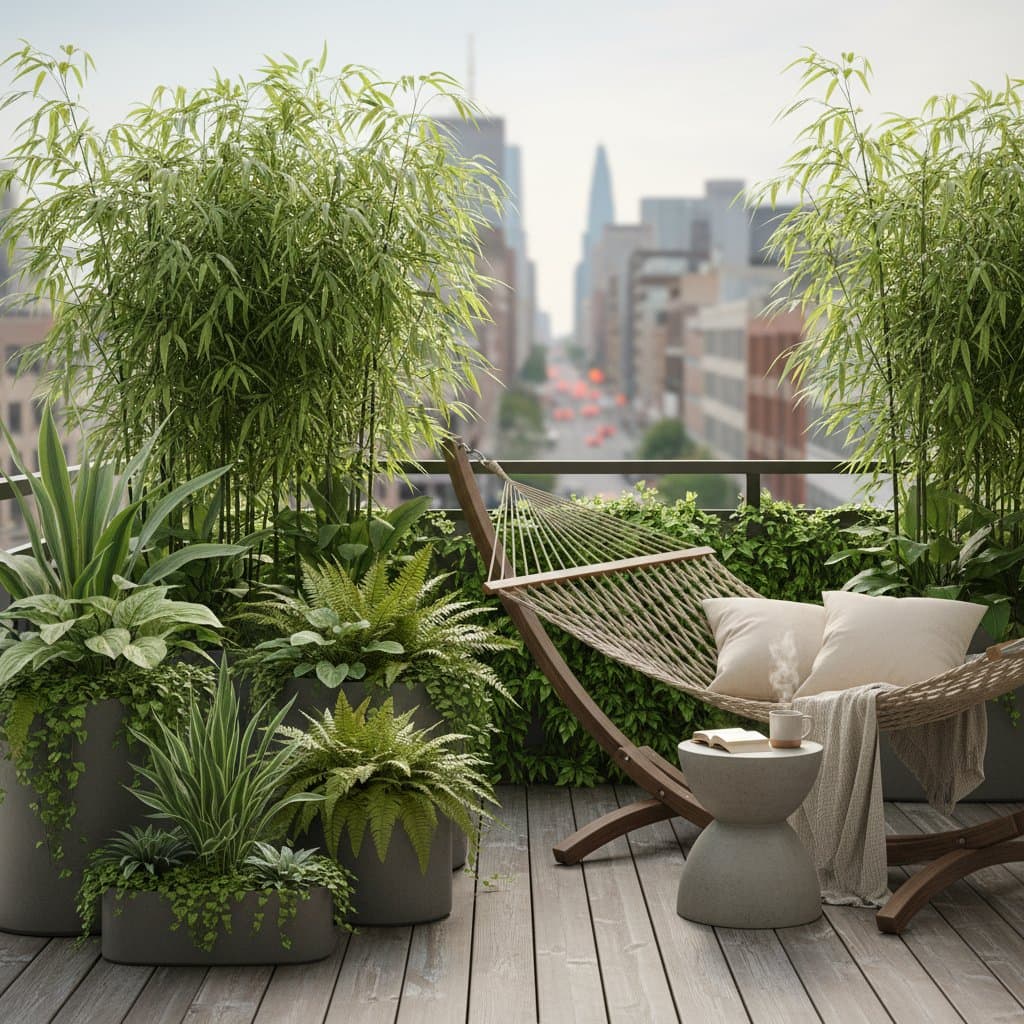
Reduce Balcony Noise by 60 Percent with Sound-Absorbing Plants
Urban living often means constant exposure to traffic horns, neighbor conversations, and mechanical hums that invade balcony spaces. These disturbances disrupt relaxation and focus. Sound-absorbing plants offer a natural solution, reducing noise levels by up to 60 percent through their dense foliage and layered arrangements that trap and dissipate sound waves.
This approach not only quiets the environment but also enhances privacy and introduces soothing greenery. The following guide details effective plant selections, strategic placements, and ongoing care to achieve these benefits with ease.
Essential Tools and Materials
Assemble basic items to support a successful installation. These elements ensure stability, health, and measurable results.
- Planters: Select containers at least 12 inches deep for shrubs or small trees to accommodate root growth.
- Potting mix: Use a loamy blend enriched with perlite to promote drainage and prevent root rot.
- Fertilizer: Choose a balanced, slow-release formula to provide steady nutrients without overwhelming the plants.
- Watering tools: Employ a can or hose equipped with a gentle spray to avoid soil compaction.
- Support structures: Include plant ties and a trellis for securing climbing or tall varieties against wind.
- Protective mat: Place a weatherproof layer beneath planters to safeguard balcony surfaces from moisture.
- Decibel meter app: Download a free application on your smartphone to quantify noise reduction before and after setup.
Initial costs range from 150 to 300 dollars, covering quality planters, soil, and young plants. Invest in durable materials to minimize long-term replacements.
Recommended Plant Species
Select species known for their thick leaves and bushy growth, which excel at absorbing mid-to-high frequency sounds common in urban settings. Consider local climate and light conditions for balcony success.
- Ferns (e.g., Boston fern): These provide soft, feathery fronds that diffuse echoes effectively; ideal for shaded areas.
- Ivy varieties (e.g., English ivy): Climbing types create vertical barriers, perfect for railings and walls.
- Peace lily: Features broad leaves that trap sound while thriving in low light; adds elegant white blooms.
- Rubber plant (Ficus elastica): Dense, glossy foliage offers robust absorption; suits brighter exposures.
- Snake plant: Upright leaves handle neglect well and contribute to air purification alongside noise control.
Combine three to five types for varied textures and comprehensive coverage. Start with mature specimens for quicker impact, or opt for starters to control costs.
Step-by-Step Installation
Follow these steps to build an effective sound barrier. Each phase builds on the previous to maximize acoustic performance.
Step 1: Assess and Plan Layout
Identify the primary noise sources, such as street-level traffic or adjacent buildings. Download a decibel meter app and record peak levels during typical hours. Position planters along the noisiest perimeter, ensuring at least 18 inches of clear path for safe movement and maintenance access.
Sketch a simple diagram to visualize placements. Factor in sunlight patterns to match plant needs, preventing stress that could thin foliage over time.
Step 2: Select and Prepare Containers
Opt for sturdy materials like ceramic, treated wood, or reinforced resin, which dampen vibrations unlike lightweight plastics. Ensure each holds at least five gallons for stability. Add one inch of gravel at the base to enhance drainage and anchor the setup against balcony shifts.
Clean containers thoroughly before use to eliminate contaminants. This preparation supports healthy root establishment from the outset.
Step 3: Arrange for Optimal Coverage
Place taller plants, such as rubber trees, directly against railings or walls facing the noise. Position medium-height options like peace lilies in front, followed by low ground covers near seating areas. Overlap foliage by two to four inches to seal gaps where sound might penetrate.
Employ a staggered layout, alternating heights and types, to interrupt sound paths comprehensively. This configuration mimics natural forest edges, proven to reduce urban noise effectively.
Step 4: Plant and Soil
Fill each container two-thirds with prepared potting mix. Gently spread roots and nestle the plant at its original soil level. Add remaining soil to one inch below the rim, firming it to eliminate air pockets without compacting.
Water deeply until excess drains out, establishing moisture around roots. This initial saturation encourages strong establishment during the first weeks.
Step 5: Secure Installations
Secure climbing plants to trellises with soft ties, allowing room for growth. Anchor freestanding pots with weights or brackets if winds are strong. Inspect all fastenings monthly to address loosening from weather exposure.
These measures prevent disruptions and maintain the barrier's integrity through seasons.
Step 6: Evaluate and Refine
After one week, remeasure decibel levels in your seating area. Expect a drop of eight to 12 decibels, equating to 60 percent less perceived loudness. If reductions fall short, introduce vines for added layering or reposition elements to close remaining paths.
Periodic checks ensure sustained performance, adapting to seasonal changes in plant density.
Common Challenges and Solutions
Anticipate potential issues to keep your setup effective. Address them promptly for lasting results.
Wilted plants with persistent noise: Increase density by adding more specimens or adjust watering to maintain soil dampness, as hydrated foliage absorbs better than dry.
Soil mold development: Cut back on waterings, enhance circulation with spacing, and incorporate coarse sand into the mix for better aeration.
Echoes from reflecting surfaces: Install hanging baskets or vertical trellises to broaden the absorbing area, breaking up sound rebounds from walls or floors.
Pest infestations: Inspect weekly and treat with natural soaps; healthy, dense plants resist invaders more effectively.
These fixes preserve both plant vitality and noise control.
Ongoing Care Routine
Consistent attention sustains the acoustic benefits and plant health. Integrate these practices into your schedule.
- Water twice weekly during warm periods, reducing to once in cooler weather; check soil dryness two inches deep before adding more.
- Prune selectively every three months to promote bushiness and prevent overcrowding that blocks airflow.
- Apply fertilizer every eight weeks, following package rates to avoid nutrient buildup.
- Wipe leaves monthly with a damp cloth to clear dust, restoring their sound-trapping efficiency.
- Repot or divide overgrown plants biennially, refreshing soil to support vigorous growth.
Diligent care transforms a simple planting into a reliable urban oasis, where noise fades into the background.
Efficient Organization Tips
Streamline maintenance by designating storage solutions. Keep tools accessible yet tidy to encourage regular use.
Store fertilizers and gloves in a labeled, waterproof bin near the door. Position a weatherproof box under seating for larger items like ties and shears. Hang the watering can on a wall hook for quick retrieval.
Remove debris before each session to navigate planters safely. This organization saves time and reduces frustration in tight balcony spaces.
Achieving Lasting Serenity
Implementing sound-absorbing plants yields immediate quiet and long-term enjoyment. Your balcony evolves into a private haven amid city bustle. Revisit measurements seasonally to celebrate progress and fine-tune as needed, ensuring enduring peace.