
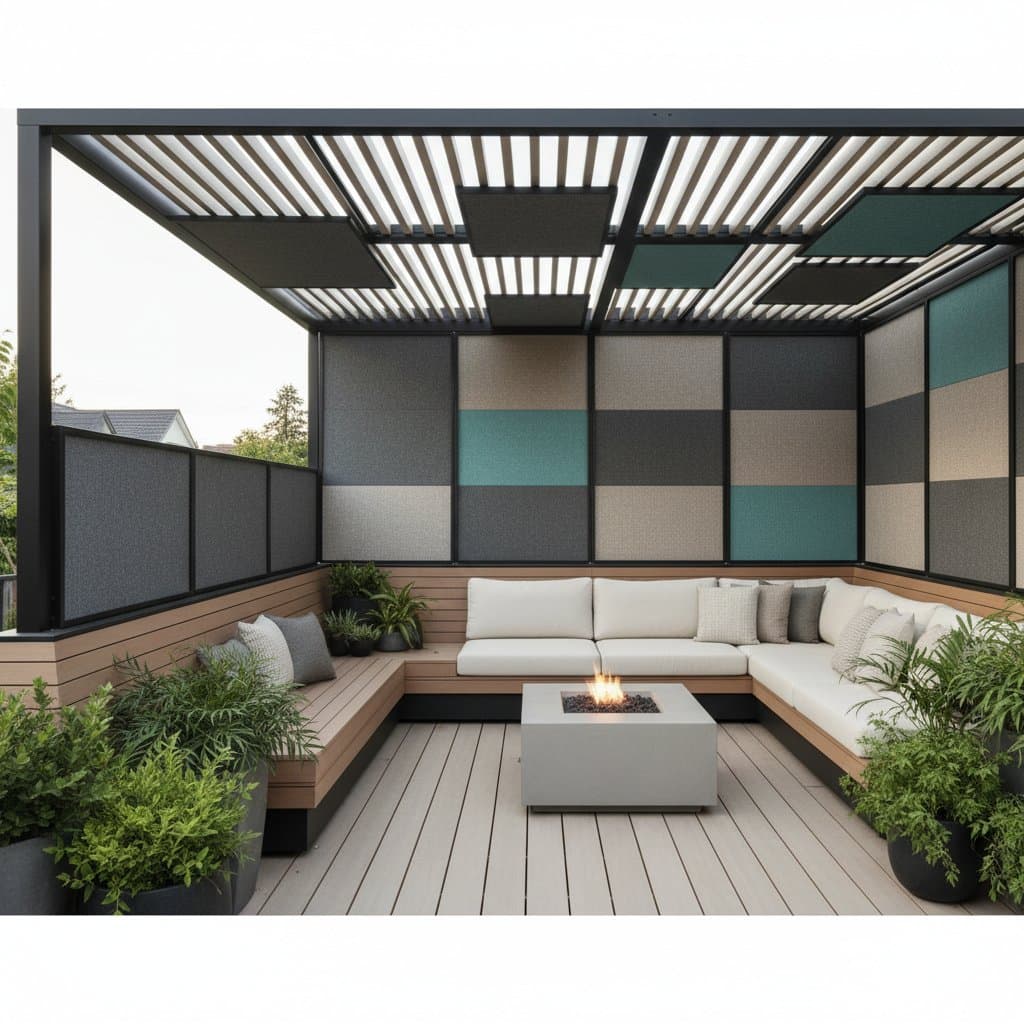
4. Mount the Panels
Position the panels with precision by employing a level to maintain alignment. Secure each panel with exterior-grade screws and sturdy metal brackets designed for outdoor durability. Maintain approximately 1 inch (2.5 centimeters) of separation between adjacent panels to facilitate minimal airflow, which mitigates moisture accumulation and enhances acoustic performance.
For installations incorporating layered privacy screens, affix the acoustic panels initially. Then, position the screen material 2 to 3 inches (5 to 7.5 centimeters) ahead of the panels. This intentional air gap amplifies sound attenuation by disrupting direct reflections and promoting diffusion of auditory waves.
5. Seal the Edges
Apply a continuous line of exterior-grade caulk along all edges susceptible to sound infiltration. Concentrate efforts on corners, joints where panels interface with the deck surface or railings, and any potential entry points for noise. Use a gloved finger to smooth the caulk evenly, achieving a professional and seamless appearance that bolsters both acoustic integrity and weather resistance.
6. Test the Setup
Activate a sound source, such as music from a portable speaker, positioned near the typical noise origin. Retreat to your deck and evaluate the auditory environment. Expect a noticeably subdued and localized sound profile, indicating successful noise reduction. Should the effect fall short, incorporate additional panels nearer to the disturbance source for further refinement.
Troubleshooting
Problem: Panels exhibit sagging or warping within weeks of installation.
Cause: Accumulation of moisture behind the fabric covering or within the frame structure.
Fix: Integrate a vapor barrier material during assembly and drill small drainage holes at the base of each frame. Opt for breathable fabrics that permit subtle air circulation without compromising sound absorption qualities.
Problem: Persistent noise penetration occurs from overhead or lateral directions.
Cause: Inadequate coverage due to gaps or inconsistent spacing.
Fix: Extend panel height by 1 to 2 feet (30 to 60 centimeters) to address upper voids, or mitigate side openings with vertical slats, dense foliage, or strategically placed potted plants that complement the aesthetic.
Problem: Panels develop discoloration under prolonged sunlight exposure.
Cause: Degradation of fabric pigments from ultraviolet radiation.
Fix: Substitute with fabrics engineered for UV resistance, or install a supplementary shade sail overhead to shield the panels from direct solar rays while preserving visibility and airflow.
Problem: Panels produce rattling sounds during windy conditions.
Cause: Insecure or insufficiently tightened fasteners.
Fix: Inspect and tighten all screws thoroughly. Insert soft rubber washers between the brackets and panel surfaces to absorb vibrations and eliminate mechanical noise.
Maintenance
Conduct thorough inspections of the panels biannually, ideally at the start of each season. Examine for signs of mildew growth, loosened screws, or fabric fading that could impair performance. Gently clean surfaces using a soft-bristled brush and a solution of mild soap diluted in water. Rinse with a low-pressure hose and allow complete air drying to prevent residual moisture issues.
Should the fabric covering become slack, access the rear of the frame and re-secure it with stainless-steel staples resistant to corrosion. Promptly replace any brackets showing rust formation to maintain structural stability. Regular minor adjustments every few months ensure sustained acoustic efficacy and visual appeal.
For removable panel designs, relocate them to an indoor storage area during severe weather events or extended periods of disuse. Fixed installations benefit from the addition of a custom waterproof cover along the upper edges, which diverts rainwater and avoids pooling that could lead to deterioration.
When to Call a Professional
Consider engaging a specialist if your deck spans a significant area or adjoins a communal building wall, where complex acoustic dynamics may arise. Select contractors experienced in outdoor soundproofing applications. Prior to commitment, pose these targeted inquiries:
- Which materials possess certifications for exterior sound absorption and weather endurance?
- What techniques ensure joints remain sealed against environmental moisture?
- Is it feasible to incorporate removable elements for seasonal disassembly and storage?
Expect professional services to range from 15 to 25 dollars per square foot, depending on scope and materials. Such expertise proves valuable for achieving a seamless, integrated design or complying with regulatory standards in multi-unit residential settings.
Implementing Your Deck Enhancement
Commence the project by drafting a simple sketch that identifies primary noise vectors affecting your space. Procure panels specifically rated for external applications, featuring fabrics treated for weatherproofing and durability. Secure them using robust brackets while incorporating intentional gaps to support ventilation.
Upon experiencing the enhanced quietude, contemplate complementary additions like lush plantings or ambient string lighting to elevate the ambiance. A serene deck fundamentally alters daily routines, rendering moments such as morning beverages more restorative and discussions more confidential.