
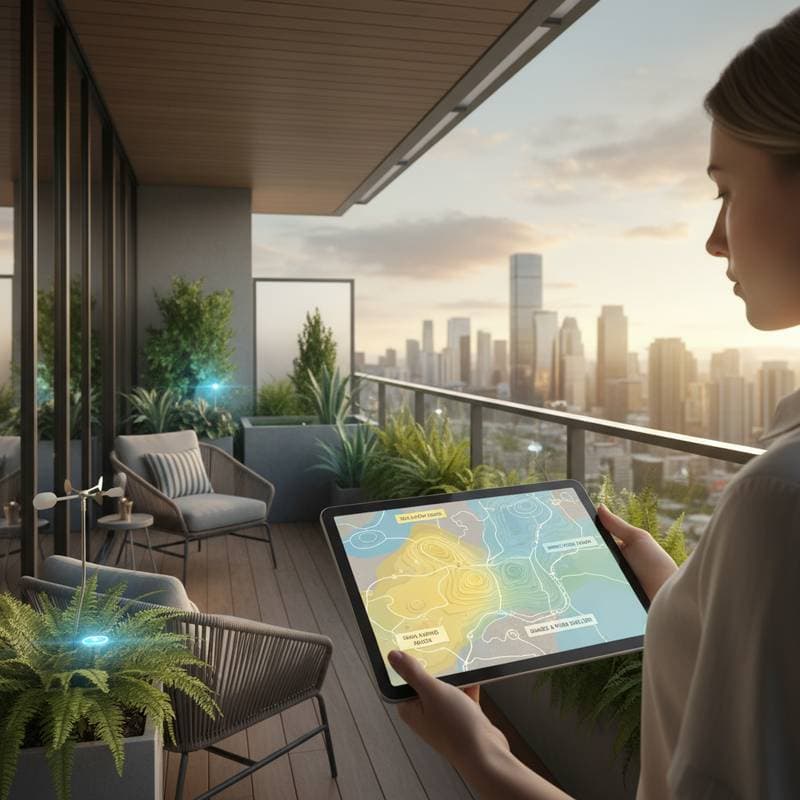
Track Sunlight Duration
Select a reliable sun path application to determine the exact hours of direct sunlight in each balcony area. Record these durations directly on your initial sketch for easy reference. Even a variation of two hours can significantly influence plant viability and placement choices.
Areas receiving more than six hours of direct sunlight qualify as full sun positions, ideal for sun-loving species. Spots with fewer than four hours fall into partial shade categories, better suited for shade-tolerant varieties. This precise mapping prevents mismatched plantings and promotes healthier growth overall.
Review Wind and Reflection Patterns
Balconies exposed to prevailing winds experience rapid moisture evaporation, stressing plants and drying out surfaces. Nearby reflective surfaces, such as glass panels or light-colored walls, can intensify heat by redirecting sunlight onto specific zones. Analyze your sensor data alongside visual observations to identify recurring patterns in wind flow and heat buildup.
Implement targeted solutions to mitigate these effects:
- Install a fine mesh windbreak screen along exposed edges to soften gusts without blocking views.
- Position light-colored or reflective pots in dimmer areas to distribute sunlight more evenly.
- Suspend a breathable shade cloth over glare-prone sections to reduce intense reflections during peak hours.
These adjustments create more uniform conditions, enhancing both plant resilience and human comfort.
Adjust Layout and Retest Measurements
Reposition plants and furniture according to the insights from your microclimate analysis. Allow two full days for the changes to settle, then repeat the initial measurements for temperature, humidity, and light exposure. Successful modifications typically result in reduced temperature fluctuations and more stable humidity levels across the space.
If variances persist, refine placements incrementally, such as elevating pots on stands to improve airflow or clustering items to shield vulnerable spots. Consistent retesting ensures ongoing optimization, adapting to daily and seasonal shifts.
Troubleshooting Common Issues
Uneven Plant Growth
Disparities in growth between balcony sections often stem from inconsistent sunlight or unintended heat reflection. Building glass elements can generate localized hot spots that scorch foliage. Relocate delicate plants at least six inches from such walls to allow better air circulation and prevent thermal damage.
Monitor affected areas with a thermometer during midday to confirm heat sources. Adjust shading elements accordingly to balance exposure without overcompensating.
Condensation on Furniture
Elevated humidity levels adjacent to building walls frequently lead to moisture buildup on cushions and frames. Opt for furniture covers made from moisture-wicking fabrics to repel dampness. Introduce a one-inch air gap between pieces and walls using spacers or risers to facilitate natural ventilation.
Regularly inspect for early signs of mildew, especially after rainy periods, and air out items indoors when possible.
Overheating Sensors
Sensor readings may appear inflated if devices sit in direct sunlight, skewing data accuracy. Protect them by fashioning a simple shield from cardboard or foil, positioned to block rays while permitting airflow. This setup maintains reliable measurements without altering the balcony's natural conditions.
Calibrate sensors periodically in shaded areas to verify performance before full deployment.
Inconsistent Data Across Apps
Variations arise because different applications draw from diverse weather databases and algorithms. Designate one primary app for core tracking and consult secondary ones solely for cross-verification. Prioritize data consistency over pinpoint accuracy to build a dependable baseline for decisions.
Document discrepancies in a log to track app reliability over time, refining your toolkit as needed.
Optimizing Storage with Microclimate Insights
Understanding your balcony's microclimate zones informs smarter storage strategies, preserving items against environmental wear.
- Position cushions in the least sunny corner or within a sealed storage bench to minimize UV fading and moisture exposure.
- Store gardening tools and potting soil along wall-adjacent areas where humidity remains consistently lower.
- Install wall-mounted hooks beneath protective overhangs for watering cans, keeping metal parts rust-free.
- Organize storage bins with clear seasonal labels, such as those for winter protective covers or summer padding.
Consider investing in a durable plastic or resin cabinet, priced around $80, which serves dual purposes as secure storage and a functional side table. These units resist weather elements while maximizing limited space.
Engaging Professional Assistance
Balconies equipped with electrical outlets, integrated lighting, or automated irrigation systems require expert intervention for modifications. Consult a licensed electrician or plumber to handle wiring or piping adjustments. Share your microclimate data with them beforehand to guide installations away from high-heat or high-moisture areas, thereby extending system durability.
Renters should review lease agreements and building policies prior to adding fixed sensors or shading structures. Many properties permit non-invasive options like suction-cup mounts or clip-on attachments to maintain flexibility.
Implementing Changes Step by Step
Significant transformations begin with modest actions; no complete redesign proves necessary for noticeable improvements. Initiate the process by deploying a compact sensor in the brightest balcony corner and logging temperature variations hourly throughout a single day.
Next, relocate one plant or seating element informed by these observations. Such incremental shifts foster familiarity with the space and yield quick enhancements in usability.
Sustain momentum through these practices:
- Log measurements monthly to anticipate and adapt to seasonal changes.
- Categorize plants according to their ideal light requirements, derived from app analyses.
- Stick to identical tools and methods for each assessment to ensure comparable results.
Mastering your balcony's microclimate empowers precise management of aesthetics, maintenance, and enjoyment. These apps convert raw data into practical strategies, aligning your outdoor haven with personal needs beyond mere weather predictions.