
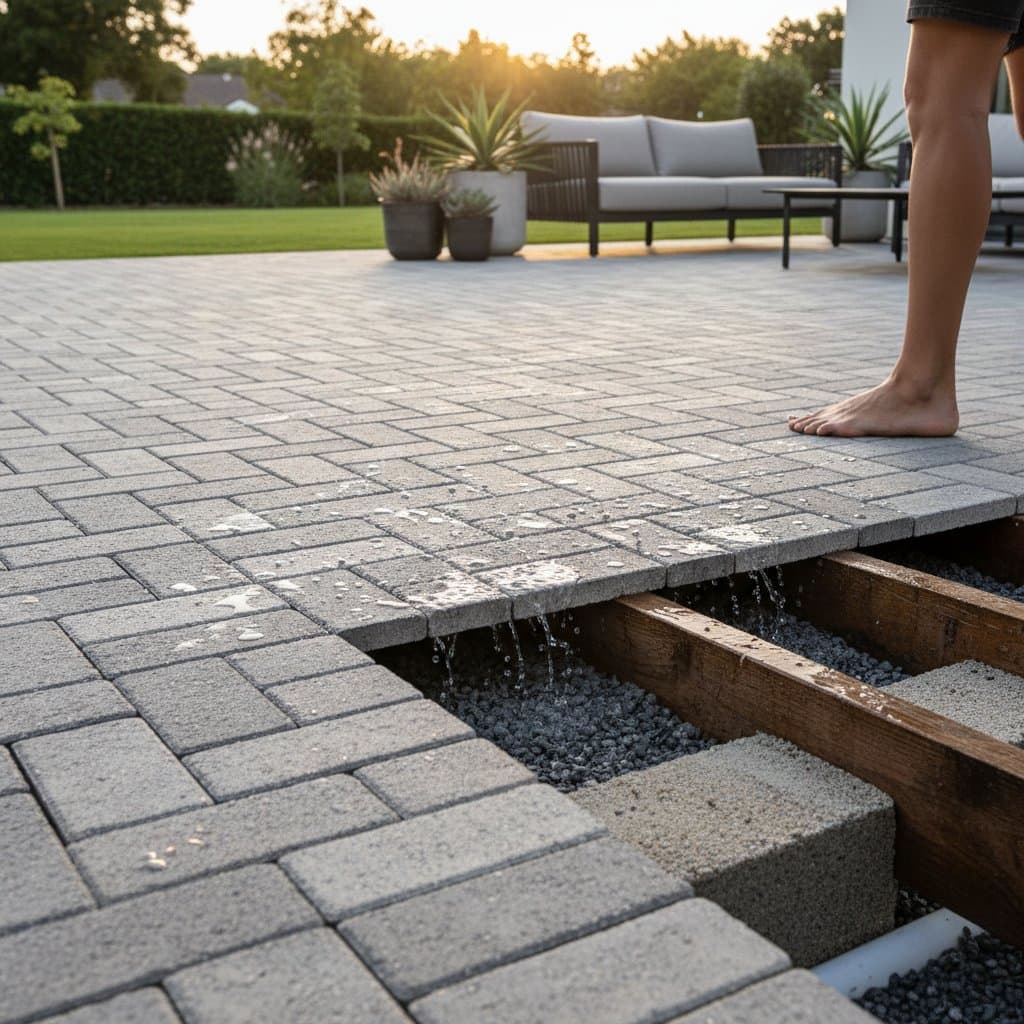
Eliminate Deck Rot and Standing Water with Permeable Pavers
Decks provide essential outdoor space for relaxation and gatherings, yet standing water after rainfall often leads to frustration. Puddles create slippery surfaces, promote mildew growth, and accelerate structural damage. The solution lies in permeable pavers, which allow water to infiltrate the surface rather than accumulate on top. These eco-friendly options not only resolve drainage problems but also extend the lifespan of your deck while benefiting the environment.
This comprehensive guide explains the mechanics of permeable decking, highlights suitable materials, details installation procedures, and offers maintenance strategies. Readers gain practical knowledge to implement these systems effectively, including guidance on professional assistance and long-term care.
The Importance of Effective Drainage
Moisture accumulation poses significant risks to deck integrity. Constant dampness causes wood framing to rot, corrodes metal fasteners, and fosters algae buildup on walking surfaces. Remediation efforts, such as board replacements or mold treatments, demand considerable time and expense. Permeable pavers address these issues by channeling water downward through the material, preventing surface pooling.
Beyond structural protection, these systems contribute to environmental health. Water percolates through gravel layers and into the soil, minimizing runoff that contributes to erosion and pollutes local waterways. In urban settings, permeable surfaces alleviate strain on municipal stormwater infrastructure, promoting sustainable water management.
Installation Process
Successful permeable paver installation requires careful preparation and execution. Follow these steps to achieve a durable, functional surface.
1. Evaluate the Existing Site
Inspect the deck for signs of water damage, including discoloration, buckling boards, or spongy areas. Verify the stability of the underlying framework and ensure adequate ventilation. Address any compromised joists by replacing them prior to proceeding, consulting a structural engineer if extensive repairs appear necessary.
2. Design the Layout
Measure the deck dimensions accurately and draft a detailed plan. Define the placement of pavers, incorporating a gentle slope of one inch per eight feet to facilitate water flow. For decks adjacent to entry points, position the finished surface at least one-half inch below door thresholds to prevent interior flooding.
3. Build the Foundation
For ground-level installations, excavate the top six inches of soil and compact the subgrade using a plate compactor or hand tamper. Install geotextile fabric to inhibit weed growth and prevent soil migration into drainage layers. Distribute four inches of angular gravel base material, compact it thoroughly, then add one inch of coarse sand or fine crushed stone for leveling.
On elevated deck frames, thoroughly clean the structure and position adjustable pedestal supports at intervals of 16 inches. These pedestals elevate the pavers, maintaining airflow and drainage beneath the surface.
4. Position the Pavers
Begin placement from a straight edge, such as a corner or perimeter border. Align each paver tightly with its neighbors, securing it by tapping with a rubber mallet. Check levelness periodically across rows to ensure uniformity. Trim edge pavers using a wet saw equipped with a diamond blade, and always don protective eyewear and gloves during cutting operations.
5. Secure the Joints
After completing the layout, broom polymeric sand or fine gravel into the interstices between pavers. This material stabilizes the installation while permitting water infiltration. Lightly spray the surface with water to activate the sand and promote settling.
6. Reinforce the Perimeter
Apply metal or plastic edging along the deck boundaries to resist movement from temperature fluctuations. Secure the edging with galvanized spikes spaced every 12 inches, driving them fully into the base layer for maximum hold.
7. Verify Performance
Test the system by pouring one gallon of water onto the center of the surface. Observe as it drains; infiltration should occur within 30 seconds. If pooling persists, remove sections of pavers, redistribute base material, and recompaction to optimize flow.
Common Issues and Solutions
Even well-installed permeable surfaces may encounter challenges over time. Address them promptly to maintain functionality.
Uneven Surface After Rainfall:
Examine the base for subsidence. Introduce additional gravel to low areas, compact firmly, and reinstall pavers to restore evenness.
Weed Growth in Joints:
Remove visible weeds and debris, then refresh the joints with fresh polymeric sand or crushed stone to seal gaps effectively.
Persistent Pooling in Low Spots:
Reassess and adjust the slope by elevating affected sections with extra base material, ensuring consistent drainage across the entire area.
Loose or Noisy Pavers:
Inspect and tighten perimeter restraints. Reapply joint filler to eliminate movement and secure the assembly.
Ongoing Maintenance Practices
Permeable pavers demand minimal upkeep compared to traditional wood decks, yet routine checks preserve their performance.
- Sweep the surface monthly to clear debris and maintain open joints.
- Remove accumulated leaves with a leaf blower or shop vacuum to prevent organic clogging.
- Conduct quarterly inspections for signs of settling or displacement.
- Refresh joint materials every two to three years as needed.
- Treat stains with a solution of mild detergent and water; steer clear of chemical cleaners that could contaminate groundwater.
Annual rinsing with a hose dislodges fine particles and confirms drainage efficiency. For stubborn blockages, selectively lift pavers, clean the sub-layers, and reposition the units.
Practical Storage and Usage Tips
To safeguard the permeable system during use, position furniture and equipment thoughtfully. Elevate heavy items like planters or benches on permeable mats or risers to avoid obstructing water flow. Select grill pads designed for drainage to prevent heat damage and moisture trapping.
Maintain a stock of replacement materials in a dedicated storage container, including joint sand, spare pavers, and fastening hardware. This preparation enables swift repairs and sustains the deck's appearance and utility.
Selecting Sustainable Materials
Choose pavers that align with environmental goals and site demands. Each option offers unique benefits for permeability and durability.
Recycled Plastic Pavers:
These lightweight units, derived from post-consumer plastics, simplify handling and customization. They withstand impacts without fracturing, making them suitable for elevated or rooftop applications.
Porous Concrete Pavers:
Engineered with voids for water passage, these provide robust strength for high-traffic zones. Their density ensures longevity in patios or driveways subject to frequent use.
Clay Brick Pavers:
Offering timeless aesthetics, these naturally porous bricks retain vibrancy under exposure. They support disassembly for future modifications without waste.
Natural Stone Pavers:
Options like granite or sandstone deliver premium textures and enduring performance. Though weightier, proper installation yields decades of service with minimal degradation.
Prioritize products with verified sustainability credentials, such as those meeting LEED standards or incorporating recycled aggregates. Sourcing locally minimizes transportation impacts and bolsters regional economies.
Achieving Lasting Outdoor Enjoyment
Integrating permeable pavers transforms decks into resilient, low-maintenance retreats. By mitigating water-related damage and supporting ecological balance, these installations enhance usability across seasons. Homeowners realize cost savings through reduced repairs and enjoy safer, more inviting spaces for years to come.