
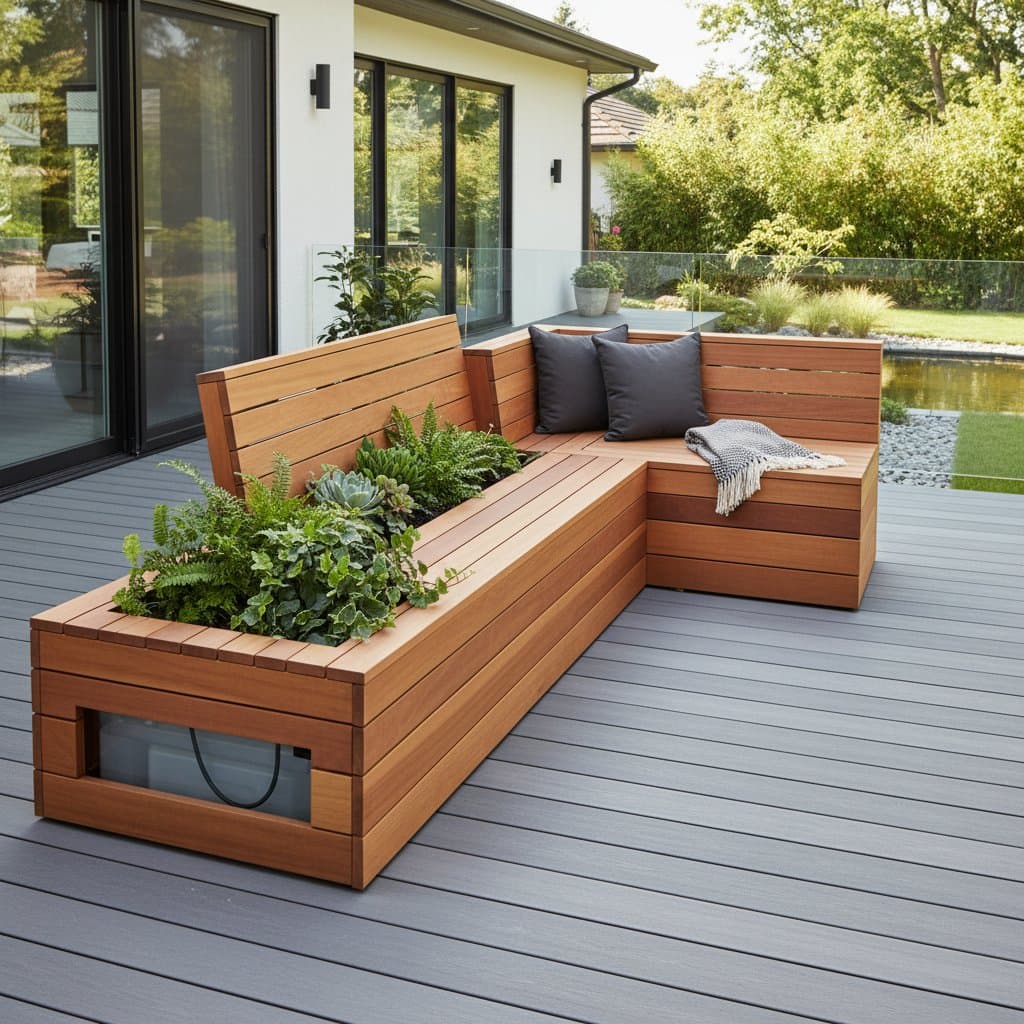
7. Apply Finishing Details
Incorporate outdoor cushions or weather-resistant pillows for enhanced comfort. Mark planters with plant identifiers. Site the bench to provide adequate sunlight for selected vegetation.
Essential Safety Guidelines
- Don protective goggles during wood cutting or drilling operations.
- Empty the reservoir before lifting to minimize strain risks.
- Ensure the overflow hole remains unobstructed to avoid water accumulation.
- Select non-toxic sealants approved for outdoor plant proximity.
- Examine tubing biannually for obstructions or algal development.
Common Issues and Solutions
Issue: Soil remains excessively saturated.
Solution: Verify overflow functionality and wick depth. Trim wicks by 0.5 inches if necessary.
Issue: Plants show wilting despite reservoir water.
Solution: Confirm wick extension to soil base or clear tubing clogs. Test moisture transfer by extracting one wick; replace or flush affected components.
Issue: Leaks appear on the deck surface.
Solution: Drain the reservoir and check for fractures or insecure joints. Reapply waterproof caulk prior to refilling.
Issue: Mosquitoes congregate around the bench.
Solution: Secure the lid and confirm complete overflow drainage. Install fine mesh screening beneath the lid to deter insects.
Issue: Wood near planters discolors.
Solution: Add an additional sealant layer and insert a plastic liner within the planter to limit moisture exposure.
Cost and Timeline Estimates
This project remains budget-friendly, particularly with recycled materials. Anticipate expenditures of $120 to $250, varying by dimensions and treatments.
Sample Cost Breakdown:
- Lumber: $60 to $100
- Reservoir bin or liner: $15 to $30
- Tubing and connectors: $10 to $20
- Screws, hinges, and sealant: $20 to $40
- Soil and plants: $15 to $60
One individual can finish the build over a weekend. Allocate 4 to 6 hours for cutting and assembly, 2 hours for sealing and curing, and 1 hour for planting.
Economy Tip: Incorporate reclaimed wood from pallets or discarded furniture, ensuring thorough sanding and sealing to eliminate splinters or residues. Invest adequately in the reservoir to prevent failures from inadequate containers.
Ongoing Maintenance Practices
Upkeep proves straightforward post-construction, focusing on water purity and component stability.
Monthly Routines:
- Monitor and replenish water when the reservoir falls below half capacity.
- Clean the lid interior to eliminate condensation buildup.
- Scan tubing for algae or deposits; rinse with a vinegar solution as required.
Seasonal Protocols:
- Drain the reservoir in freezing regions prior to winter to avert cracking.
- Reapply sealant annually to sustain appearance and deter decay.
- Swap out deteriorated wicks or tubing.
Cleaning Advice: Employ a mild soap mixture for wood surfaces. Steer clear of bleach or abrasive cleaners that could harm plants or coatings.
Enhancing Storage Functionality
The bench surface serves as covert storage space. Store minor gardening implements, gloves, or watering accessories in a dry adjacent compartment using a dedicated plastic bin or sealed container.
Apply waterproof labels to sections. Organize pruning shears and trowels in zippered cases to shield the wood. These measures streamline access and curb deck clutter.
For tighter spaces, adopt a modular approach with two independent segments. Assign the reservoir to one unit and cushions or games to the other, facilitating rearrangements for visitors or optimal light.
Adapting to Seasons
Spring Preparation: Review joints for loose fasteners following winter shifts. Reseal roughened areas and refresh or replant with annuals.
Summer Vigilance: Inspect water weekly amid heat-driven evaporation. Layer mulch over planter surfaces to moderate soil temperature.
Fall Procedures: Vacate the reservoir against frost risks. Relocate cushions inside and brush the bench with mild soap.
Winter Protection: Drape with a waterproof cover or shelter if feasible. Permit minor ventilation to inhibit wood expansion.
Professional Assistance Indicators
Most users handle construction and care independently, yet certain scenarios warrant expert input.
-
Load Assessments: Engage a carpenter if the deck exhibits sagging or deterioration to evaluate capacity pre-installation.
-
Advanced Systems: Consult a licensed electrician for pump or smart irrigation integrations to ensure safety.
-
Specialized Features: Hire a finish carpenter for lighting or secure compartments requiring exact craftsmanship.
Request estimates covering sealing and setup. Inquire about climate-suited woods and finishes, verifying outdoor and moisture compatibility.
Implementing Your Deck Upgrade
Constructing a self-watering deck bench elevates small outdoor areas into efficient, vibrant retreats. This project demands initial effort but yields enduring benefits in space management, plant vitality, and relaxation. Begin planning today to enjoy a customized oasis that harmonizes form, function, and sustainability.