
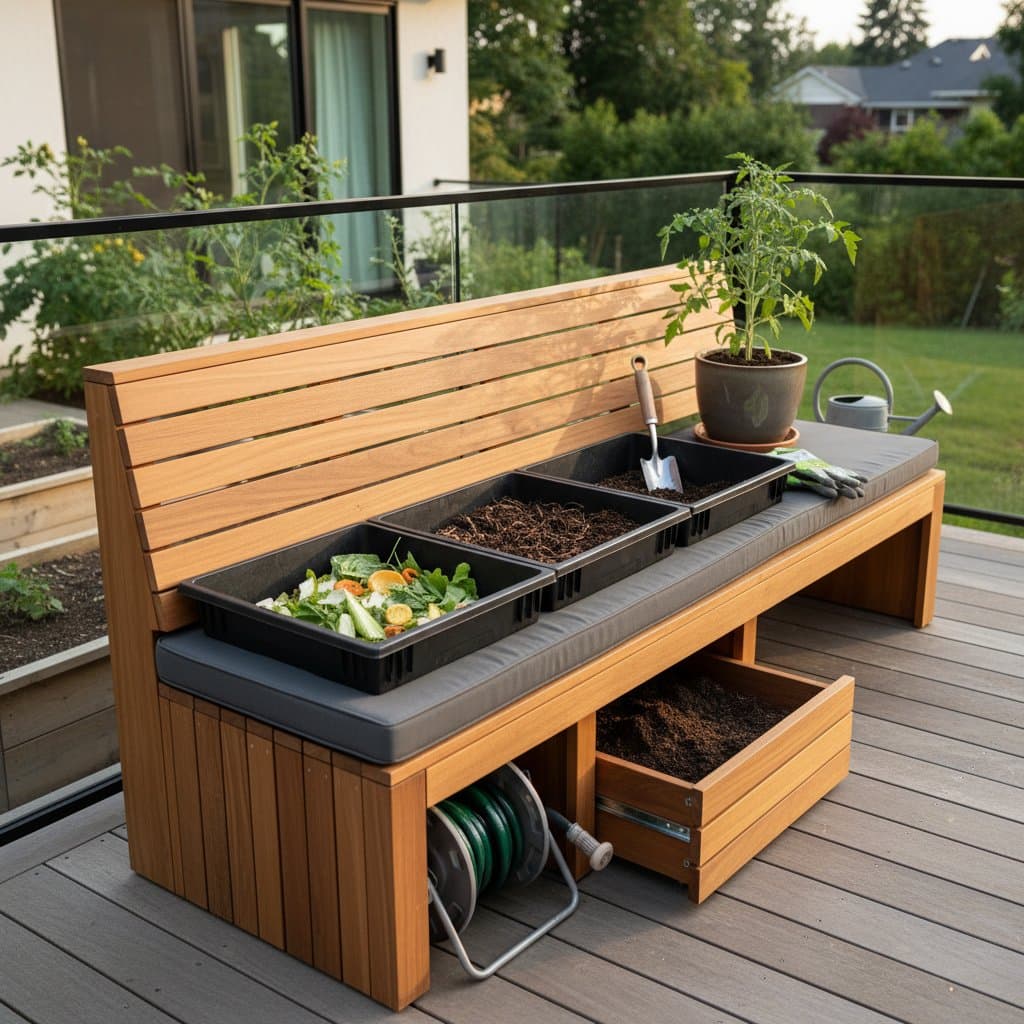
Deck Benches That Compost Scraps Into Garden Soil
Property owners seek cleaner outdoor spaces, reduced food waste, and nutrient-rich soil for plants. A deck bench that functions as a composting system achieves these objectives. This design provides seating, storage, and an efficient method to convert kitchen scraps into usable soil. The approach integrates composting into everyday outdoor routines without introducing disorder or unpleasant odors.
This guide explains composting benches, their relevance for compact areas, safe installation procedures, and year-round maintenance strategies. Readers receive details on expenses, solutions for typical challenges, and guidance on engaging professionals for bespoke constructions.
Overview
A composting deck bench combines outdoor furniture with an integrated compost container. The unit resembles a standard storage bench, yet it conceals an insulated compartment beneath the seat for organic materials. Ventilation openings and moisture management features facilitate the decomposition process into fertile soil.
This setup offers dual advantages: reliable seating and an organized approach to waste management. In confined settings such as patios or balconies, the compact form preserves space while positioning compost near gardening areas. The resulting soil nourishes planters, raised beds, or container herbs effectively.
Composting benches connect leisure with environmental responsibility. Individuals relax on the bench while contributing to soil vitality. This eliminates the need to transport scraps across a property or to off-site facilities, enabling composting directly in living spaces.
Tools and Materials
Construction or upkeep of a composting bench requires essential tools and components. These items support assembly, repairs, and ongoing care, even for prefabricated models.
- Cordless drill equipped with bits suitable for wood
- Measuring tape extending at least 10 feet, or 3 meters
- Circular saw or handsaw for precise panel cuts
- Safety gloves and protective eyewear
- Screws measuring 1.5 to 2 inches, or 38 to 50 millimeters, in length
- Exterior-grade lumber, including cedar or pressure-treated pine
- Compost bin liner or durable plastic container with approximately 18-gallon, or 68-liter, capacity
- Ventilation covers or fine mesh screens to promote airflow
- Heavy-duty hinges for the hinged seat lid
- Waterproof sealant formulated for outdoor wood protection
For prefabricated options, select units certified for exterior composting applications. Prioritize models with rot-resistant interiors and secure lids that prevent water infiltration.
Steps
Step 1: Select an Optimal Location
Identify a flat section of the deck receiving partial sunlight. Excessive direct sun accelerates drying, while full shade hinders decomposition rates. Maintain a minimum 6-inch, or 15-centimeter, gap behind the bench to ensure adequate air circulation.
Step 2: Construct or Position the Frame
Assemble the bench framework using precut lumber or panels. Secure corners at right angles for stability. Install any plastic liner within the frame prior to attaching the seating surface.
Step 3: Incorporate Ventilation Features
Create three to five holes, each 1 inch or 2.5 centimeters in diameter, along the upper sides of the compost chamber. Secure mesh screens over these openings to deter pests. Proper airflow sustains microbial activity and minimizes odors.
Step 4: Establish the Initial Compost Layer
Introduce a 2-inch, or 5-centimeter, base of absorbent materials known as browns, such as shredded newspaper, dried leaves, or fine wood chips. This foundation manages excess moisture and initiates microbial breakdown.
Step 5: Introduce Organic Scraps
Incorporate items like vegetable peels, used coffee filters, citrus rinds, and comparable plant-based wastes. Exclude animal products, dairy items, or greasy residues to prevent pest attraction and imbalance. Follow each addition of scraps with a light covering of browns.
Step 6: Regulate Moisture Levels
Ideal compost consistency resembles a damp, wrung-out sponge. Add water via a spray bottle if dryness occurs. Incorporate additional dry materials if sogginess develops.
Step 7: Aerate the Contents
Employ a compact hand trowel or fork to stir the mixture weekly. This action introduces oxygen, accelerating the transformation into soil.
Step 8: Extract Finished Compost
After four to eight weeks, harvest the dark, crumbly material that accumulates at the base. Apply this nutrient-dense soil to pots, window boxes, or vegetable patches for enhanced growth.
Safety Considerations
Always don protective gloves when manipulating compost to prevent irritation or contamination. Secure the bench lid to exclude rainwater and insects. Limit filling to two-thirds capacity, allowing space for decomposition. For wooden decks, position the bench on rubber mats or concrete blocks to shield underlying surfaces from moisture.
Troubleshooting Common Issues
Odor Development: Excessive smells indicate imbalance. Remedy by blending in additional browns and aerating thoroughly to restore equilibrium.
Fruit Fly Infestations: Bury new additions under dry layers immediately. Install a fine fabric barrier beneath the lid for extra protection.
Slow Decomposition: Lack of heat or progress signals insufficient nutrients. Boost with green wastes like fresh peels or grounds, and verify balanced moisture.
Mold on Wooden Elements: Surface growth requires gentle cleaning with soapy water followed by fresh sealant application to restore protection.
Maintenance and Storage Practices
Perform seasonal cleaning by removing completed compost, rinsing the interior liner, and wiping vents and lid surfaces. Allow complete drying before reuse. Examine hardware for corrosion and tighten as necessary. Refresh wood sealants annually to combat weathering.
In non-composting periods, utilize the bench for storing pillows, gardening implements, or recreational items. Store a dedicated scoop nearby for convenient access. Position a supply of browns in a sealed container adjacent to the bench.
Residents in cooler regions should cease additions prior to frost. Insulate the pile with a layer of dry foliage. Activity pauses during freezes but resumes with warming temperatures.
Cost and Time Estimates
A do-it-yourself composting bench typically requires 150 to 300 dollars in materials. Ready-to-assemble units cost between 250 and 600 dollars. Allocate one full weekend for from-scratch construction or about one hour for kit assembly.
Ongoing expenses remain low, limited to occasional purchases of absorbent materials. The homemade soil eventually replaces commercial fertilizers, yielding long-term savings.
Seasonal Adjustments
During summer, monitor moisture biweekly to counteract evaporation. In wet periods, angle the lid for drainage. Arid environments benefit from a nearby water source for hydration. Winter care involves infrequent turning while clearing vents of debris.
These adaptations ensure consistent performance across weather variations, sustaining the conversion of waste to valuable soil.
Engaging Professional Assistance
Consult a certified woodworker or landscape specialist for tailored designs that complement existing deck features. Professionals integrate compost elements discreetly, incorporating effective drainage. Request specifications including:
- Durable, weather-resistant timbers such as cedar or teak
- Concealed air channels that maintain structural integrity
- Detachable interiors for simplified sanitation
Persistent problems like ongoing smells or seepage warrant advice from a composting expert. Such consultants assess ventilation and hydration, providing targeted resolutions.
Implementing Your Plan
Commence by designating an indoor collection bin for scraps. Transfer contents to the bench composter upon filling. Maintain a reserve of browns for layering. This routine gradually produces abundant soil resources.
For new installations, assess available deck area and seating needs. Evaluate options accommodating at least 15 gallons, or 57 liters, of volume. Review user feedback on longevity and containment efficacy.
Each processed scrap diverts waste from landfills, fostering a self-sustaining deck ecosystem where refuse fuels flourishing greenery.