
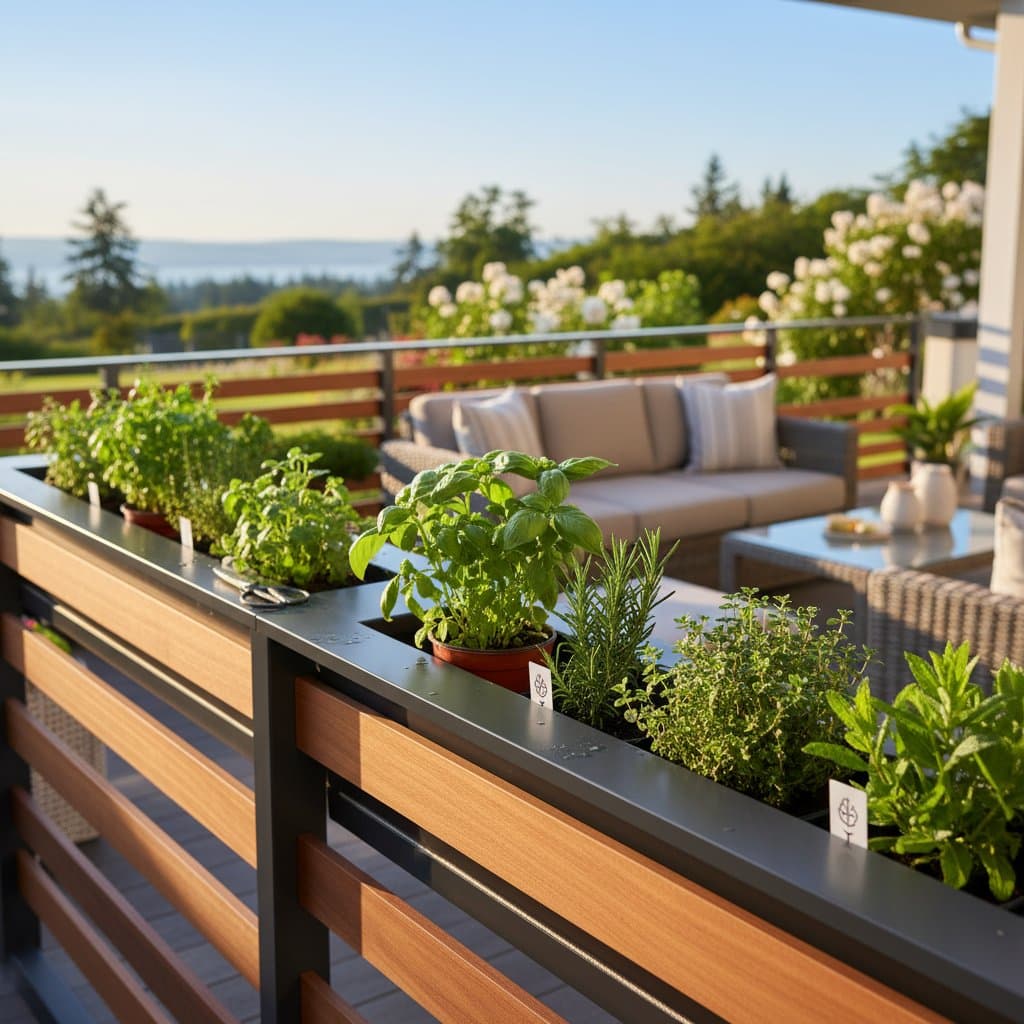
Introduction to Railing Herb Gardens
Urban decks often face space constraints, yet they offer prime opportunities for gardening. Installing herb planters along railings utilizes vertical space effectively, creating an edible landscape that enhances aesthetics and functionality. This approach suits apartments, townhouses, and small patios, allowing residents to grow fresh ingredients without sacrificing floor area.
Herb gardens on railings provide immediate access to basil, mint, and thyme for cooking. They also attract pollinators and improve air quality. With proper planning, such setups withstand weather variations and deliver consistent yields.
Selecting Compact Herbs
Choose herbs that thrive in confined containers and require minimal pruning. Basil varieties like Genovese stay bushy and produce abundant leaves. Mint, such as spearmint, spreads quickly but benefits from containment in individual pots to prevent overgrowth.
Consider rosemary for its evergreen foliage and durability in partial shade. Parsley and chives offer versatility in recipes and tolerate cooler temperatures. Opt for disease-resistant strains suited to your climate zone; check local nurseries for regionally adapted options.
Assess sunlight exposure on your deck. Most herbs need four to six hours of direct sun daily. If shade dominates, select tolerant species like cilantro or lemon balm to ensure success.
Essential Tools and Materials
Gather supplies before starting to streamline the process. You will need planters designed for railings, typically 12 to 18 inches long with built-in brackets. Select durable plastic or metal models that resist fading and cracking.
Secure brackets, screws, and a drill facilitate installation. Potting mix formulated for containers ensures good drainage. Slow-release fertilizer supports steady nutrition. Waterproof labels and pruning shears aid in organization and harvesting.
For safety, include locking clips or heavy-duty screws rated for outdoor use. A level tool verifies even placement, preventing instability.
Step-by-Step Installation
1. Measure and plan
Evaluate your railing's length and height. Standard deck railings measure 36 to 42 inches tall; ensure planters fit without obstructing views or access. Space them 8 to 12 inches apart to allow air circulation.
Sketch a layout to visualize coverage. Prioritize high-traffic areas near cooking zones for convenience. Account for weight distribution to avoid stressing any single section.
2. Prepare the railing
Clean the railing surface with mild soap and water to remove dirt or residue. Dry thoroughly to promote adhesion. Inspect for loose boards or rust; repair as needed to create a stable base.
If painting or sealing the wood recently, wait 48 hours before attaching hardware. This step prevents chemical interactions that could weaken connections.
3. Attach brackets
Position brackets along the railing at consistent intervals. Use a level to align them horizontally. Mark screw holes with a pencil for precision.
Drill pilot holes to avoid splitting wood. Secure brackets with screws, tightening firmly but not excessively. Test stability by applying gentle pressure.
4. Fill and plant
Fill each planter with potting mix to within one inch of the rim. Incorporate slow-release fertilizer according to package directions, typically one tablespoon per gallon of soil. This provides balanced nutrients over several months.
Position herb seedlings or starts approximately six inches apart, depending on mature size. Gently firm the soil around roots to eliminate air pockets. Water lightly after planting to settle the mix.
5. Water and secure
Saturate the soil until water drains from bottom holes, indicating full hydration. Direct excess runoff away from deck surfaces using slight tilts or drip trays. Monitor for pooling, which can lead to slips or damage.
Re-tighten brackets after the soil settles, usually within 24 hours. This adjustment accounts for any shifting caused by moisture.
6. Label and enjoy
Affix waterproof labels to identify each herb variety and planting date. This practice simplifies rotation and tracking growth progress. Harvest leaves regularly with clean scissors to encourage bushiness.
Observe plants daily during the establishment phase. Adjust watering based on weather; drier conditions may require more frequent sessions.
Safety Considerations
Distribute weight evenly to prevent railing overload. Limit each linear foot to eight pounds, factoring in saturated soil and mature plants. Regularly inspect attachments for wear.
Secure all planters with screws or clips to minimize detachment risks. Position them to avoid interference with movement on the deck.
Manage drainage to protect wooden elements from rot. Employ saucers or liners if drips persist. For households with children or pets, elevate setups beyond reach, noting that some herbs feature sharp or woody parts.
Common Troubleshooting Issues
Address drooping foliage by allowing the top inch of soil to dry between waterings, as excess moisture often causes this symptom. Improve aeration by poking holes in compacted areas.
Treat yellowing leaf edges with diluted liquid fertilizer applied every two weeks during active growth periods. Test soil pH if issues recur, aiming for a neutral range.
Boost sparse development by ensuring at least five hours of sunlight exposure. Relocate or rotate planters weekly to equalize light distribution.
Reinforce loose brackets by tightening fasteners and checking for corrosion. Replace any rusted components promptly to maintain structural integrity.
Budget and Time Investment
A basic setup for four planters costs between 60 and 90 dollars, varying with material choices and herb selections. High-quality brackets justify the expense through longevity and reliability.
Assembly and planting typically require two to three hours for novices. Experienced gardeners complete the task in under two hours. Annual reuse extends value, provided seasonal cleaning occurs.
Prioritize investments in secure hardware and quality soil to safeguard plants and property.
Ongoing Maintenance Practices
Prune herbs weekly to stimulate fresh shoots and maintain compact forms. Discard faded leaves promptly to avoid deck staining.
Replenish the surface soil layer midseason with compost for renewed fertility. In winter, dismantle planters and store indoors or shield with frost-resistant covers.
Clean hardware using mild soap solutions, then dry completely to inhibit rust formation.
Efficient Storage Solutions
Designate a deck-side container for tools like shears, gloves, and nutrients. This keeps essentials accessible without clutter.
Stow watering equipment in protected spots, such as beneath seating or in sealed bins, to shield from elements.
Advancing Your Herb Garden
Begin with one or two planters to master local conditions like sun patterns and watering needs. Expand gradually as you identify thriving varieties.
Conduct monthly bracket checks and seasonal soil refreshes to sustain performance. Experiment with herb rotations for balanced growth and diverse harvests. Soon, your railing evolves into a vibrant, productive feature that enriches meals and outdoor experiences.