
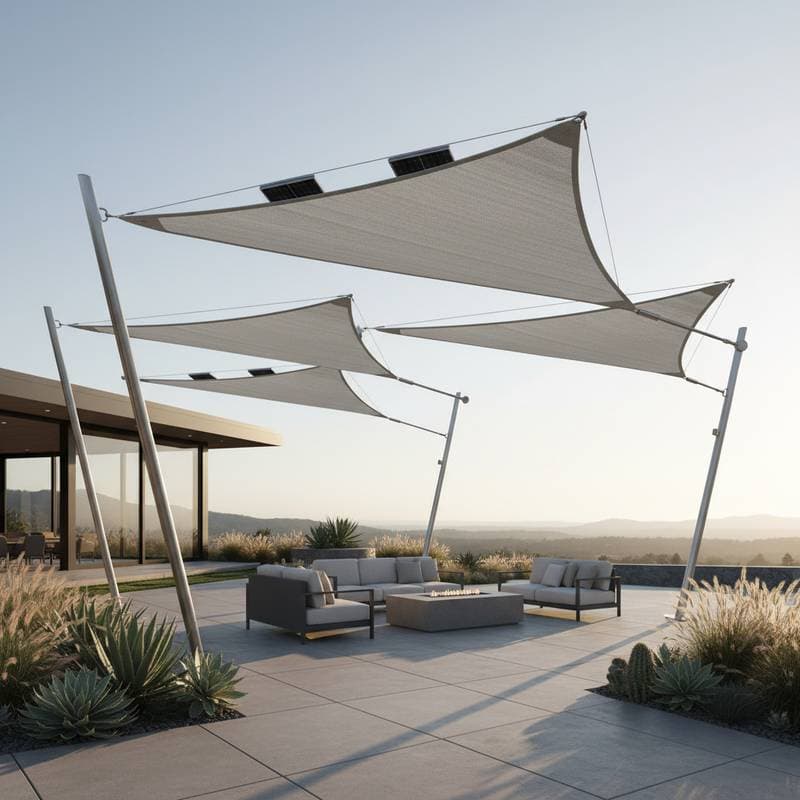
Automated Solar Shade Sails for Consistent Patio Comfort
Your patio offers an open feel until the afternoon sun turns it uncomfortably warm. Fixed umbrellas and stationary sails leave uncovered spots as light shifts throughout the day. Automated solar shade sails address this issue through built in sensors and solar powered motors that reposition the fabric in real time. The result is steady coverage without manual adjustments or external power sources.
This guide covers how these systems function, the required tools, step by step installation, routine care, and situations that benefit from professional help.
Core Components and Operation
A smart solar shade sail consists of durable fabric stretched between fixed anchors and equipped with a compact tracking mechanism. Solar panels collect energy to run a sensor array that detects light angle and intensity. Small motors then tilt the sail by several degrees each hour to maintain shade directly beneath it. Many units store excess power in an internal battery for overnight repositioning or early morning adjustments.
The design suits compact outdoor areas such as balconies, rooftop decks, and small patios. Because the system operates independently, it requires no wiring to household circuits in most cases.
Required Tools and Materials
Installation of a standard two point or three point sail calls for common hand tools. Collect the following items before starting:
- Drill with masonry bit for creating anchor holes
- Wrench set to secure turnbuckles and bolts
- Level and tape measure to confirm alignment
- Stainless steel anchors or eye bolts sized for the chosen design
- Complete smart sail kit containing fabric, sensor, control unit, and motors
- Mounting brackets suited to walls, posts, or existing beams
- Protective gloves, safety glasses, and a stable ladder
Adjustable cables or ropes at each corner allow tension tweaks of one to two inches for a flat, even surface.
Installation Process
- Select anchor locations on sturdy walls or posts at heights between eight and ten feet, ensuring a gentle downward slope of about ten degrees for water runoff.
- Drill holes and insert weather resistant hardware. Tighten bolts firmly without excessive force that could damage masonry.
- Secure the sail corners to the anchors with supplied carabiners. Maintain uniform tension to prevent sagging.
- Position the solar sensor on the upper edge of the sail or an adjacent pole that receives at least six hours of direct light daily.
- Link the low voltage cables from the panel to the control box and onward to the motors. Seal all connections against moisture.
- Activate the system via its app or switch and observe incremental movements. Recalibrate through the menu if motion appears inconsistent.
Safety Measures During Setup
Verify that overhead wires and tree limbs will not obstruct sail movement. Stabilize the ladder with assistance from another person while anchoring. Disconnect power before any wiring adjustments or panel cleaning. Remain clear of the fabric while motors operate.
Common Issues and Fixes
When the sail stays motionless, clean the solar panel and confirm it faces the correct direction for your hemisphere. Reposition a tilted sensor so its face lies parallel to the sail surface. Equalize tension by loosening one corner and retightening all cables in matching increments. Clear any debris from motors if they bind or halt unexpectedly.
Cost Expectations and Timeframe
A mid range triangular sail measuring ten feet typically ranges from four hundred to seven hundred dollars. Larger rectangular models with heavier motors may exceed one thousand dollars. One person can complete basic installation in two to three hours. Existing posts or pergola beams reduce material costs while quality fabric and hardware remain essential for weather resistance.
Routine Care Practices
Clean the fabric twice each season using a soft brush and mild detergent. Rinse thoroughly and allow complete drying before any retraction. Inspect cables and anchors for corrosion annually and apply silicone lubricant to moving parts once per year. Wipe the solar panel monthly to avoid efficiency losses from accumulated dust. Release one corner during high winds to reduce stress and reattach once conditions improve.
Seasonal Storage Recommendations
Roll the sail rather than fold it to avoid permanent creases when storing for winter. Mark cables and anchors with tape for quicker reinstallation. Store motors and sensors indoors in a dry location. A wall mounted tube four inches wide provides convenient protection for smaller patios.
Situations Requiring Professional Assistance
Engage a technician for anchors on brick surfaces above ten feet or when integrating the control box with a home automation system. Confirm the installer uses stainless fasteners and proven weatherproofing techniques. Professional calibration of tracking angles for your specific latitude can increase positioning accuracy by roughly fifteen percent.