
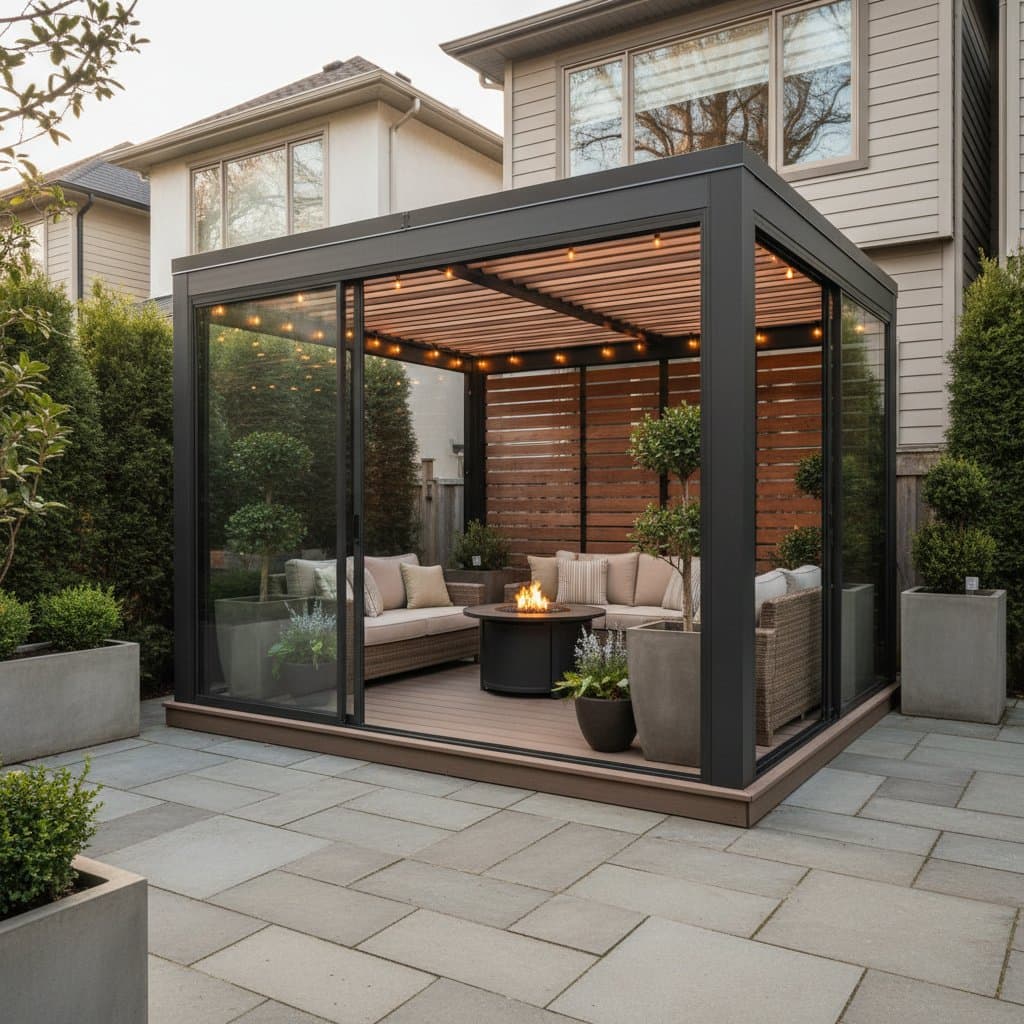
5. Add Sides and Finishing Touches
Incorporate side elements such as lightweight curtains, decorative lattice panels, or retractable sliding screens to enclose the space while preserving airflow. Verify that all drainage holes and weep channels remain unobstructed to manage rainwater effectively. Integrate ambient lighting fixtures, like solar-powered string lights, or a compact electric space heater to enhance evening usability and warmth during transitional seasons.
Apply a high-quality sealant to every exposed fastener to shield against moisture infiltration. Address any surface scratches promptly by applying touch-up paint that matches the original finish, thereby inhibiting rust formation and extending the structure's lifespan.
Safety Considerations
Consult local building regulations prior to construction, as certain jurisdictions mandate permits for any covered outdoor installations. Refrain from installing substantial shelves, swings, or other heavy accessories unless the pergola frame explicitly supports load-bearing applications; always review the manufacturer's weight capacity guidelines.
Position electrical outlets designated for lighting on circuits equipped with ground-fault circuit interrupter protection to minimize shock risks in damp environments. Prohibit the use of open-flame devices, such as candles or fire pits, beneath polycarbonate or fabric roofing materials; opt instead for safe alternatives like electric radiant heaters or battery-operated lanterns.
Common Issues and Solutions
Leaks at Joint Seams: Apply a fresh layer of exterior-grade silicone sealant to affected areas, ensuring complete coverage around bolts and edges. Conduct annual inspections during dry weather to identify and preempt potential vulnerabilities early.
Condensation Buildup on Panels: Enhance air circulation by periodically opening side enclosures or installing small vents in the roofline. In humid climates, consider adding a dehumidifying mat beneath seating areas to absorb excess moisture.
Sagging in Roof Panels: Reinforce the structure by installing additional support beams at mid-span intervals, particularly for lightweight aluminum frames. In regions prone to heavy snow or intense rainfall, select panels with reinforced ribs to distribute weight evenly and prevent deformation.
Loose Anchor Points: Inspect and secure all ground anchors biannually, adhering strictly to the manufacturer's recommended torque settings for bolts. Use corrosion-resistant hardware, such as galvanized steel, to withstand soil shifts and weather exposure over time.
Fading or Degradation of Curtains and Screens: Transition to fabrics engineered with ultraviolet inhibitors for prolonged color retention and durability. Avoid budget options that succumb to sun damage within a single season; invest in modular replacements that allow easy updates without full disassembly.
Planning Your Budget and Timeline
Assembling a basic 10-by-10-foot pergola pod typically requires two weekends of effort for a pair of skilled individuals, assuming access to standard tools like a drill, level, and ladder. Professional installation services can expedite the process but often double labor expenses, making DIY viable for those with moderate handyman experience.
To optimize costs, select pressure-treated lumber for the primary posts if a wooden aesthetic appeals; this material proves more economical than extruded aluminum, though it demands periodic staining to maintain weather resistance. Opt for translucent polycarbonate roofing over tempered glass to reduce expenses by approximately one-third while retaining ample natural light diffusion.
Prioritize quality in foundational components like anchors and sealants, as subpar choices invite structural failures during gusty winds or storms. Factor in ancillary expenses, such as gravel base preparation or custom side panels, to avoid surprises; a detailed material list from reputable suppliers aids in accurate quoting.
Ongoing Maintenance Practices
Perform biannual cleaning of roof panels and enclosure screens using a solution of mild dish soap diluted in water, followed by a gentle rinse and soft-bristle brush to remove debris without scratching surfaces. Steer clear of abrasive cleaners or chemical solvents, which can etch polycarbonate and compromise transparency over time.
Apply a silicone-based lubricant to all moving parts, including sliding tracks and pivot hinges, at the start of each season to ensure smooth operation. Routinely examine base areas for signs of rust or corrosion, where moisture tends to pool; treat affected spots with a rust-inhibiting primer before repainting.
Maintain clear pathways for water runoff by clearing gutters, channels, or sloped edges of accumulated leaves and dirt monthly. In arid areas, a quick hose-down suffices, but in leaf-heavy environments, install fine-mesh guards to minimize manual intervention.
Residents in snowy regions should remove buildup from the roof promptly after each precipitation event, employing a long-handled broom or leaf blower to distribute weight safely. Regular upkeep not only preserves aesthetics but also safeguards against costly repairs from prolonged neglect.
Maximizing Everyday Use
Integrate a pergola pod seamlessly into daily routines by arranging a compact bistro table for leisurely morning beverages or positioning a cushioned loveseat with overhead lanterns for serene dusk gatherings. Select modular, stackable furniture pieces that facilitate quick reconfiguration, allowing the area to adapt for yoga sessions, reading nooks, or casual entertaining as needs evolve.
Promote year-round comfort through simple additions: install a ceiling-mounted fan during warmer months to circulate breezes and deter insects, then switch to a plug-in radiant heater in fall for toasty evenings without invasive permanent installations. These portable solutions maintain flexibility while elevating the space's appeal across seasons.
Incorporate greenery to blend the structure with its surroundings, such as trailing ivy on lattice sides or potted ferns that flourish in the dappled shade provided by the roof. Hardy herbs like mint or basil in self-watering containers add fragrance and utility, fostering a biophilic connection that encourages frequent visits.
Store essentials efficiently with nearby, lockable weatherproof storage bins for tools, pillows, and accessories. This organization reduces setup hassles, making spontaneous outdoor enjoyment more accessible and routine.
Practical Steps Forward
- Assess your yard's dimensions today by measuring potential installation sites and noting sun patterns or wind directions that influence placement.
- Research prefabricated pergola pod kits from online retailers or neighborhood home improvement stores, comparing features like roof opacity and frame durability.
- Determine your involvement level: tackle the build personally for savings, or engage certified contractors for precise anchoring and any integrated electrical components.
Investing in a thoughtfully designed pergola pod redefines a modest yard as a private sanctuary, offering reliable protection from elements and a dedicated zone for rejuvenation mere steps from indoors.