
Understanding Solar Shade Sails
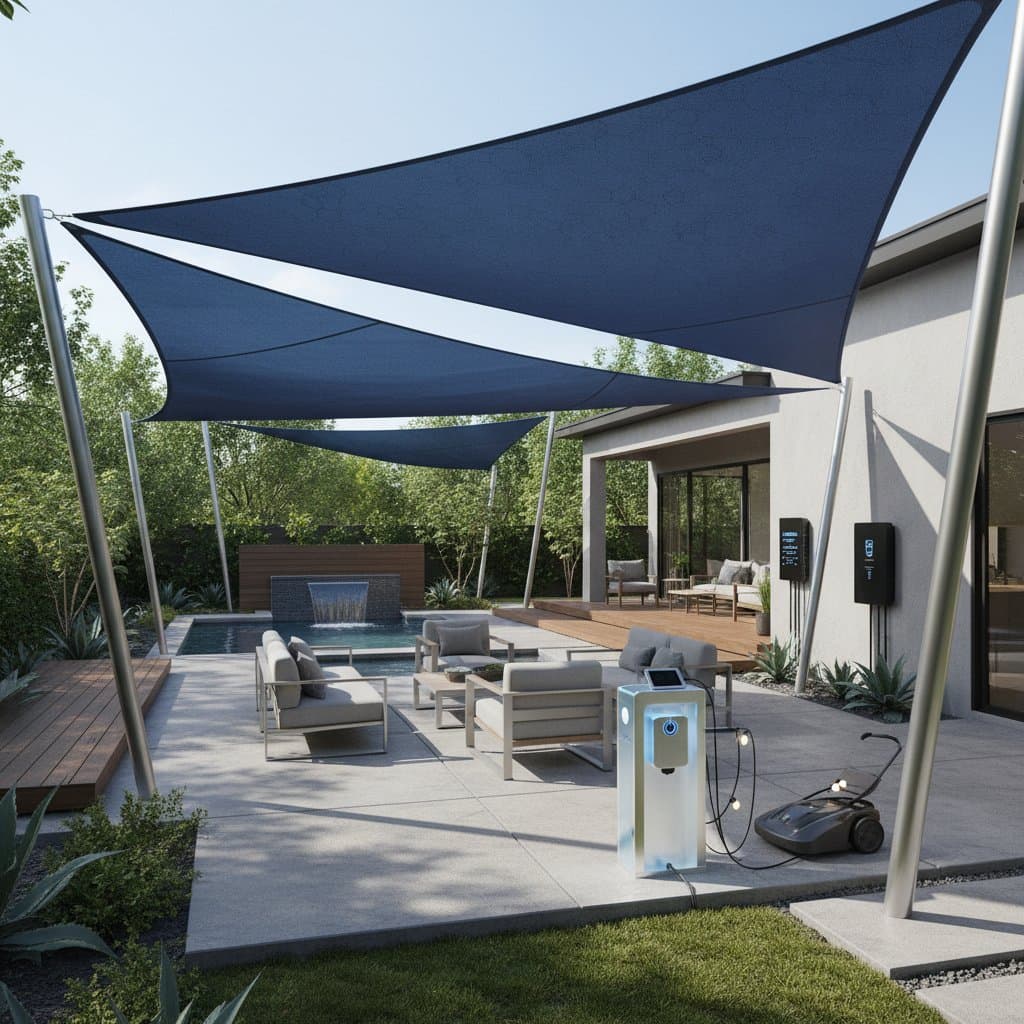
Solar shade sails combine traditional shading with photovoltaic technology. These structures feature flexible solar panels integrated into durable fabric canopies. They mount above patios, play areas, or gardens to block sunlight while capturing rays to generate electricity.
Homeowners install them over seating zones or pathways. The sails connect to inverters that convert power for direct use or storage in batteries. This setup turns passive shade into an active energy source, ideal for urban yards with limited space.
Select sails based on coverage needs and power output. Smaller units suit spot shading, while larger ones power multiple devices. Materials resist UV damage and weather exposure, ensuring longevity in varied climates.
Benefits of Solar Shade Sails
These installations lower temperatures under the canopy by up to 20 degrees Fahrenheit on hot days. They reduce reliance on air conditioning by creating cooler microclimates in yards. Generated energy offsets costs for outdoor lighting or irrigation systems.
Environmentally, sails promote sustainability by producing clean power without emissions. They decrease fossil fuel dependence for backyard activities. Financially, payback occurs through bill reductions and potential incentives for renewable setups.
Aesthetically, sails add modern appeal to landscapes. Custom shapes and colors blend with existing designs. They enhance usability of outdoor spaces during peak summer heat, extending enjoyment from dawn to dusk.
Step-by-Step Installation Guide
Begin by assessing your yard for optimal placement. Choose spots with maximum sun exposure, at least six hours daily, while avoiding overhead obstacles. Measure the area to determine sail dimensions, typically 10 to 20 feet across.
Gather materials including the sail kit, stainless steel cables, turnbuckles, and anchor points like posts or wall mounts. Secure anchors into concrete footings or existing structures rated for tension loads. Position them at 45-degree angles for stability.
Attach the sail to anchors using D-rings and cables. Adjust tension evenly with turnbuckles to prevent sagging. Connect solar panels to a micro-inverter, then wire to batteries or devices. Test the system under load to verify output.
Professional tools such as a tension gauge ensure proper setup. Follow manufacturer guidelines for wiring to avoid hazards. Complete the process in phases if working alone, starting with framework before electrical integration.
Safety Considerations
Use waterproof junction boxes for all electrical connections to prevent moisture ingress. Select components rated for outdoor use, including IP65 seals. Ground the system properly to protect against electrical faults.
Clean solar panels monthly with mild soap and a soft brush. Rinse thoroughly to remove residue that blocks efficiency. Avoid climbing on the sail or suspending heavy objects, as this risks structural failure.
Inspect after severe weather events like high winds or heavy rain. Check for loose fittings or fabric tears. A slack sail may whip around and harm the integrated solar cells, so maintain firm tension at all times.
Position sails away from high-traffic zones to minimize collision risks. Educate family members on safe zones beneath the canopy. If children play nearby, add padding to anchor bases for added protection.
Budgeting for Your Solar Shade Sail Project
Basic kits for a single sail range from $400 to $900, varying by size and power capacity. A 10-foot sail with 100-watt output falls at the lower end, while a 15-foot model with 200 watts approaches the higher price.
Installation requires two to three hours if anchors exist. Factor in additional costs for posts or concrete, adding $100 to $300. Systems with battery storage elevate totals to $1,200, though they eliminate separate wiring expenses for outdoor features.
Consider long-term savings: A typical setup generates 300 to 500 kilowatt-hours annually, offsetting $50 to $100 in utility bills. Initial investment recovers in three to five years through energy production and reduced cooling needs.
Compare suppliers for warranties covering 10 to 25 years on panels. Look for bundles including inverters to streamline costs. Track expenses with a simple spreadsheet to monitor return on investment over time.
Maintenance Routines
Examine cables, anchors, and hardware every few weeks for wear. Tighten loose bolts or replace frayed lines promptly. For battery-integrated systems, recharge units seasonally or swap them every three to five years based on usage.
Monitor energy output with a built-in meter. Declines may signal dirt buildup or shading from growing trees. Relocate the sail slightly or trim branches to restore full exposure.
Winterize by loosening tension before storms to reduce stress. In spring, re-tension and test all connections. Annual professional inspections catch issues early, extending the system's lifespan beyond a decade.
Keep records of maintenance dates and observations. This log helps predict patterns, such as seasonal output variations, and informs adjustments for peak performance.
Organizing Storage for Accessories
Designate a central power hub near the sail for easy access. Use weatherproof bins to store spare connectors, extension cords, and cleaning supplies. Label compartments clearly for quick retrieval during upkeep.
Include essentials like multimeters for voltage checks and wrenches for tension adjustments. Secure tools against moisture with silica packs inside bins. After storms, these organized kits enable rapid repairs to minimize downtime.
Integrate storage with landscape features, such as mounting bins on posts. This keeps the yard tidy while ensuring readiness. Rotate stock annually to avoid degradation of unused parts.
Seeking Professional Help
Engage an electrician for grid-tied connections to ensure compliance with local regulations. Discuss grounding requirements and surge protectors to safeguard the home system. Verify inverter compatibility with the sail's output voltage.
Professionals handle permitting and inspections, avoiding fines or rework. They assess site-specific factors like soil stability for anchors. Costs range from $200 to $500, depending on complexity.
Consult structural engineers for large installations over 20 feet. They confirm load-bearing capacity against wind forces. Early involvement prevents costly errors and optimizes energy yield.
Expanding Your Solar Shade Setup
Launch with a single sail over a key area like a dining table. Log daily energy production using a simple app or notebook. Analyze patterns to refine placement for better results.
Once proven, incorporate a second sail to energize path lighting or a water fountain. Link units in series for higher output if space allows. This phased approach builds confidence and scales benefits gradually.
With consistent attention to placement and care, solar shade sails deliver enduring value. They foster comfortable, powered outdoor havens that align with sustainable living goals. Enjoy the blend of shade, energy, and style year-round.